Skip to content
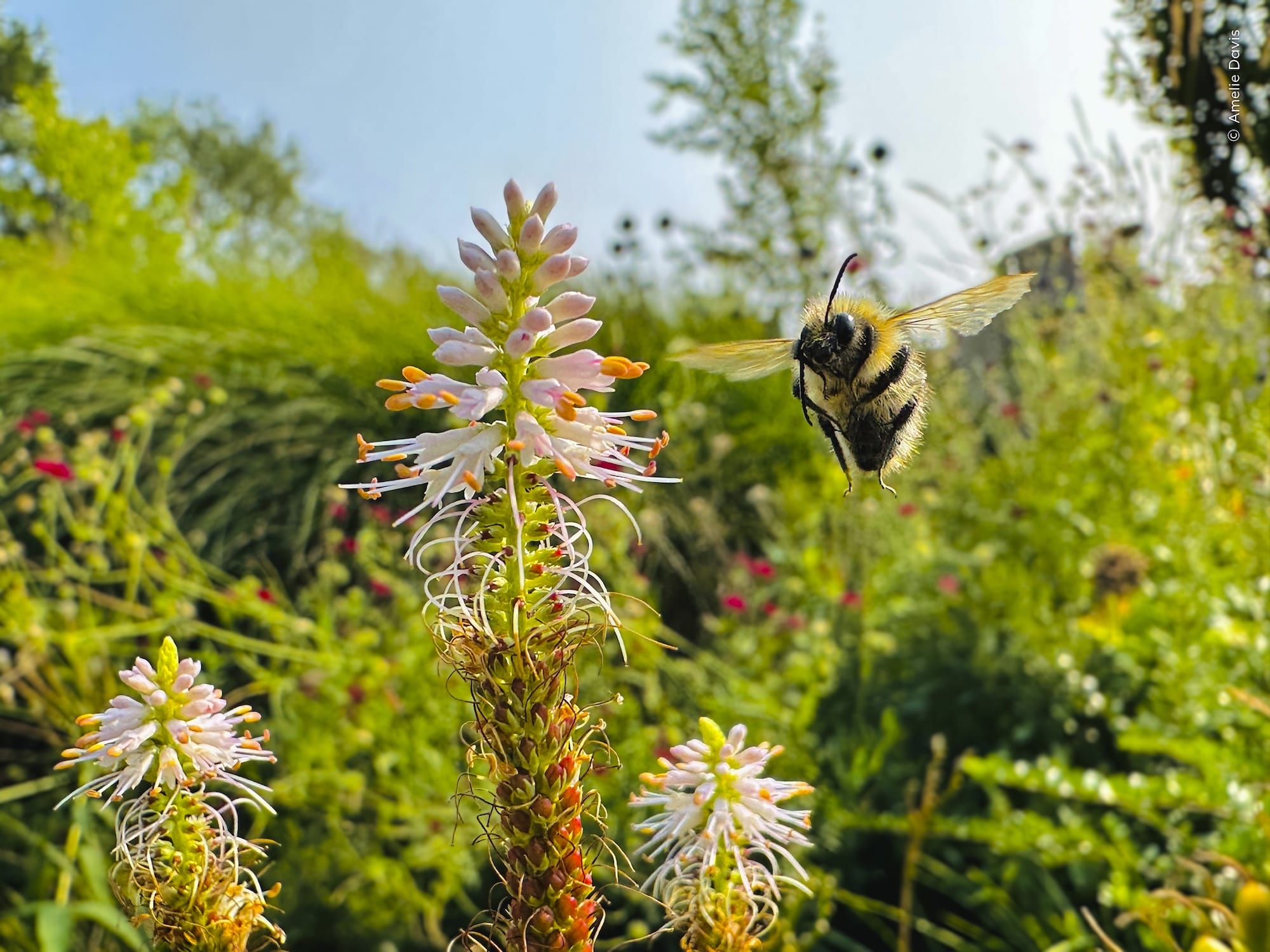
a close-up photograph of a bee coming in for a landing on a flower
Amelie Davis (U.K.), “Flight of the Bumblebee.” Winner, 10 Years and Under category. A common carder bee is suspended in mid-air as it flies in to land and feast on a flower in southern England. All images © the photographers, courtesy of Wildlife Photographer of the Year, shared with permission

The Wildlife Photographer of the Year 2026 Winners Showcase Nature’s Power and Vulnerability

Federico Veronesi received the top honor of the 2026 Wildlife Photographer of the Year for his poignant black-and-white image of a female elephant carrying her deceased calf. The portrait represents a rare insight into animals’ habits we have yet to fully understand and demonstrates the power of timing and persistence in photography.

Veronesi had been tracking elephants in the Huab River Valley of Namibia when he encountered some unusual drag marks on the earth. He eventually caught up with the family, and the adult emerged with the calf’s leg wedged between her trunk and tusk. “Behaviours centering on death have been observed in both Asian and African elephants, including vocalisations, guarding the dead, inspecting and handling bones, and carrying the deceased,” a statement says. “Some researchers suggest these behaviours could indicate an elephant’s journey to understanding death, while others interpret these actions as possible displays of grief.”
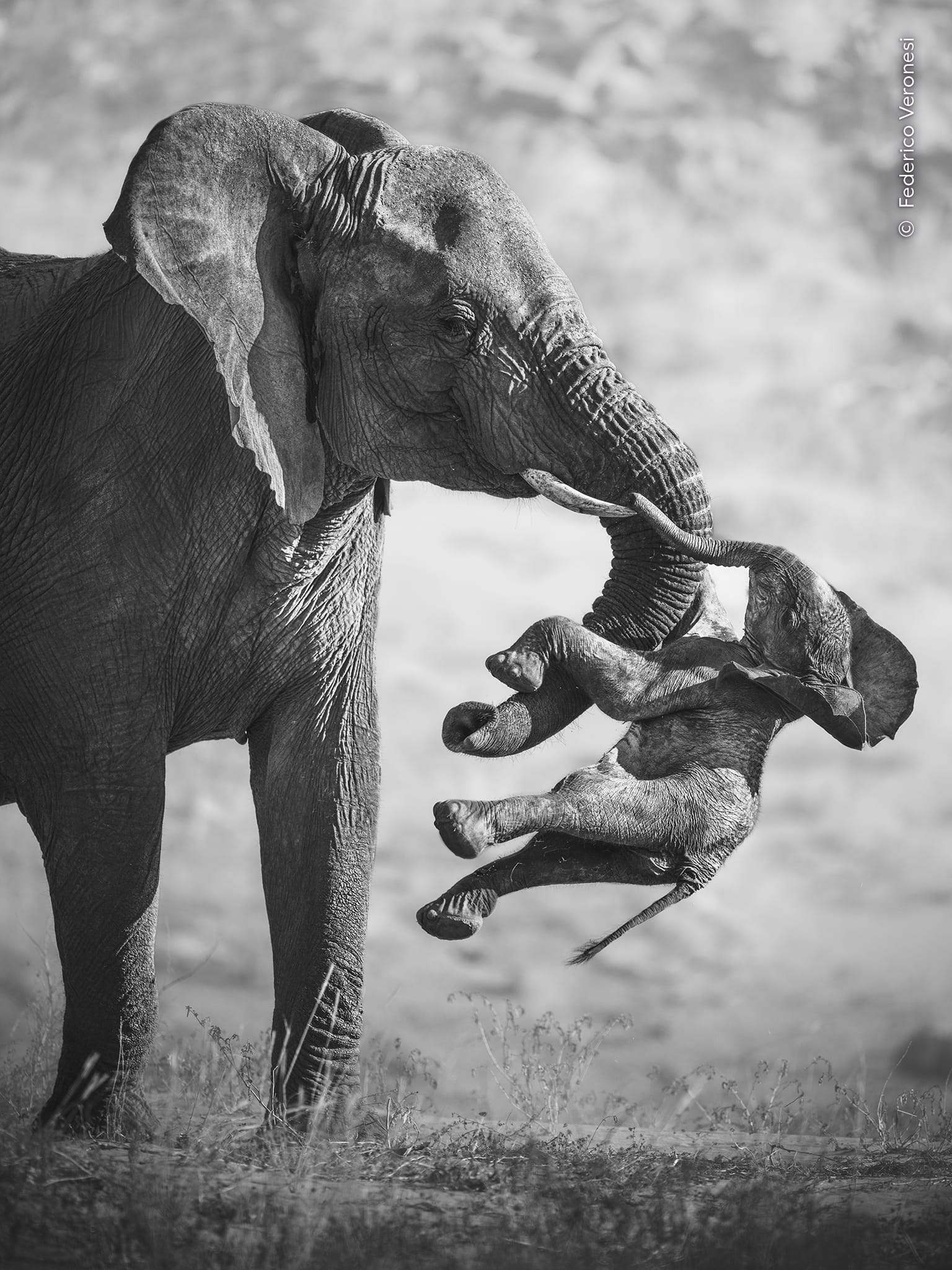
a black-and-white image of an elephant carrying its dead calf with its trunk
Federico Veronesi (Italy), “The Aftermath.” Winner, Wildlife Photographer of the Year and Behaviour: Mammals category. An elephant carries a dead calf in a rare glimpse into complex animal behaviours

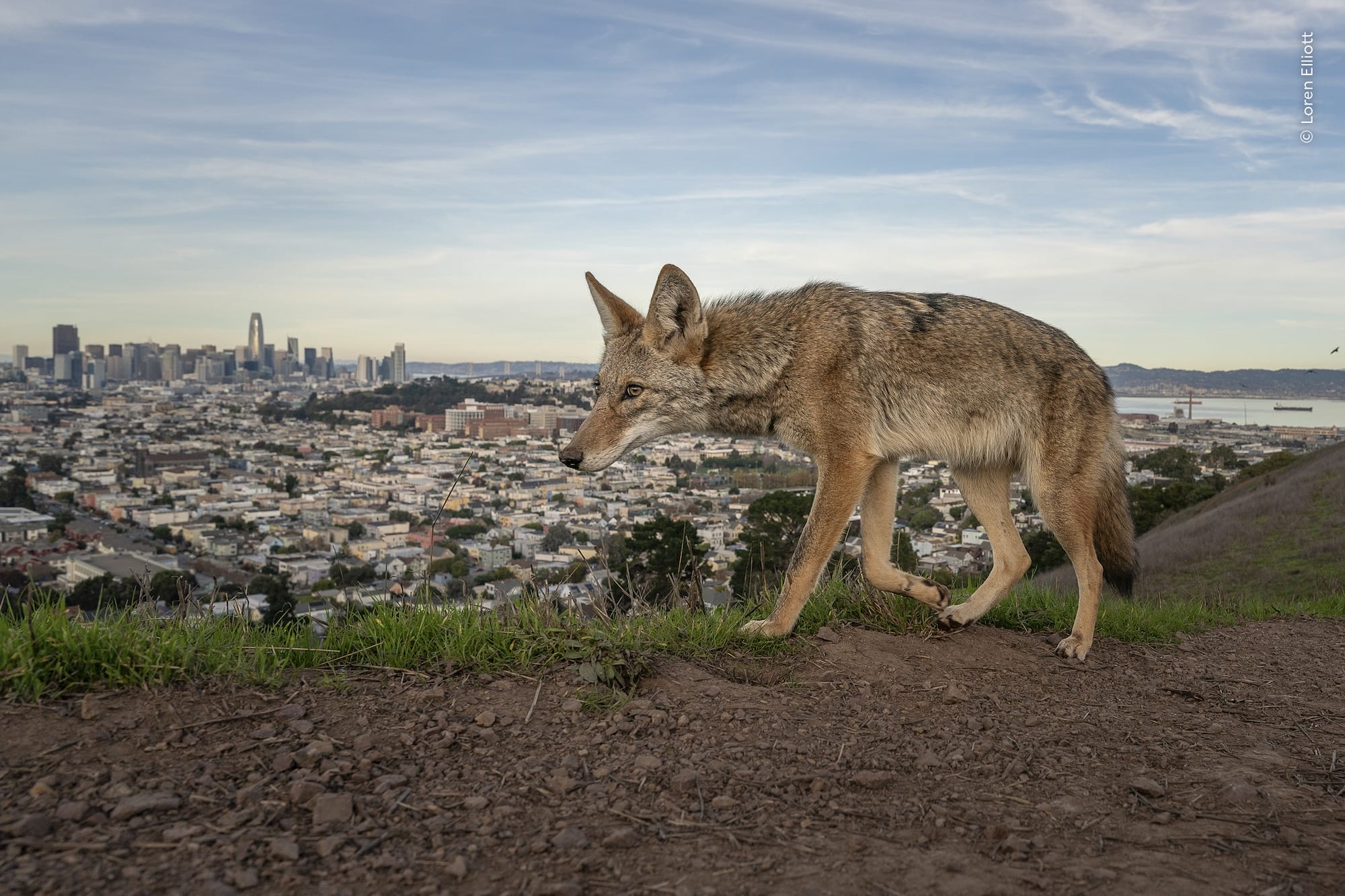
Additional winners include Kutub Uddin’s capture of elegant slime molds, Loren Elliott’s portfolio featuring the coyotes of San Francisco, and Amelie Davis’ portrait of a bee coming in for a landing on a flower in Surrey, England, in the 10 and Under category. “This year’s winning photographs demonstrate the extraordinary power of wildlife photography to help us see nature differently,” says Dr. Doug Gurr, Director of the Natural History Museum. “Together they remind us that every species plays a role in the complex web of life, and why understanding and protecting the natural world has never been more important.”

At 65,403 entries from photographers in 121 countries, this year’s competition saw the largest turnout of submissions in its 62-year history. Categories run the gamut of photojournalism, wetlands, plants and fungi, behavior, portfolios, youth categories, and more. The 100 top images from this year’s contest go on view tomorrow, October 16, at the Natural History Museum in London, where they’ll be exhibited through July 11, 2027.
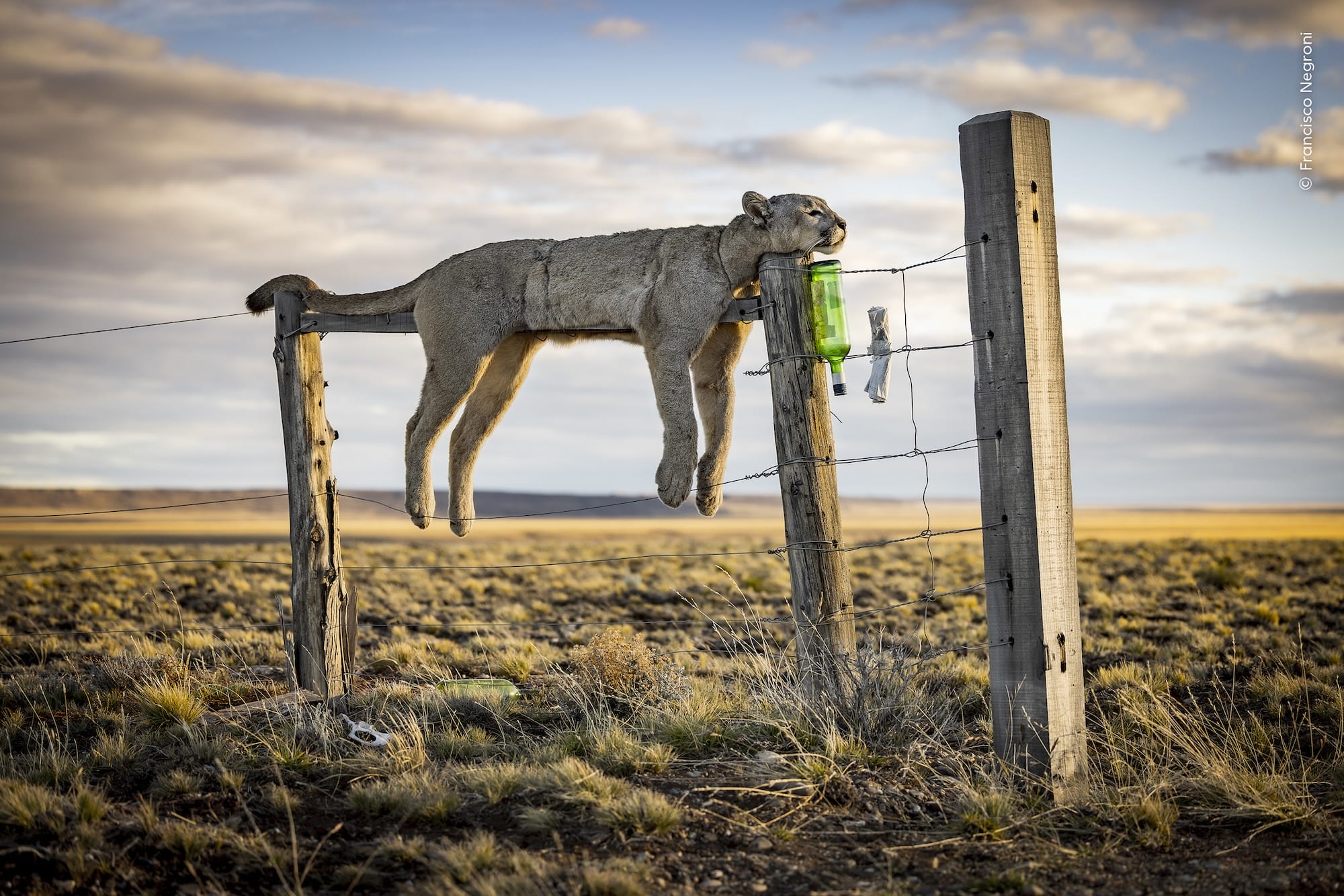
a dead puma is displayed on top of a fence in Argentine Patagonia
Francisco Negroni (Chile), “Warning Sign.” Winner, Photojournalism category. The photographer captures this scene of a dead puma amid the rugged, windswept beauty of Argentine Patagonia
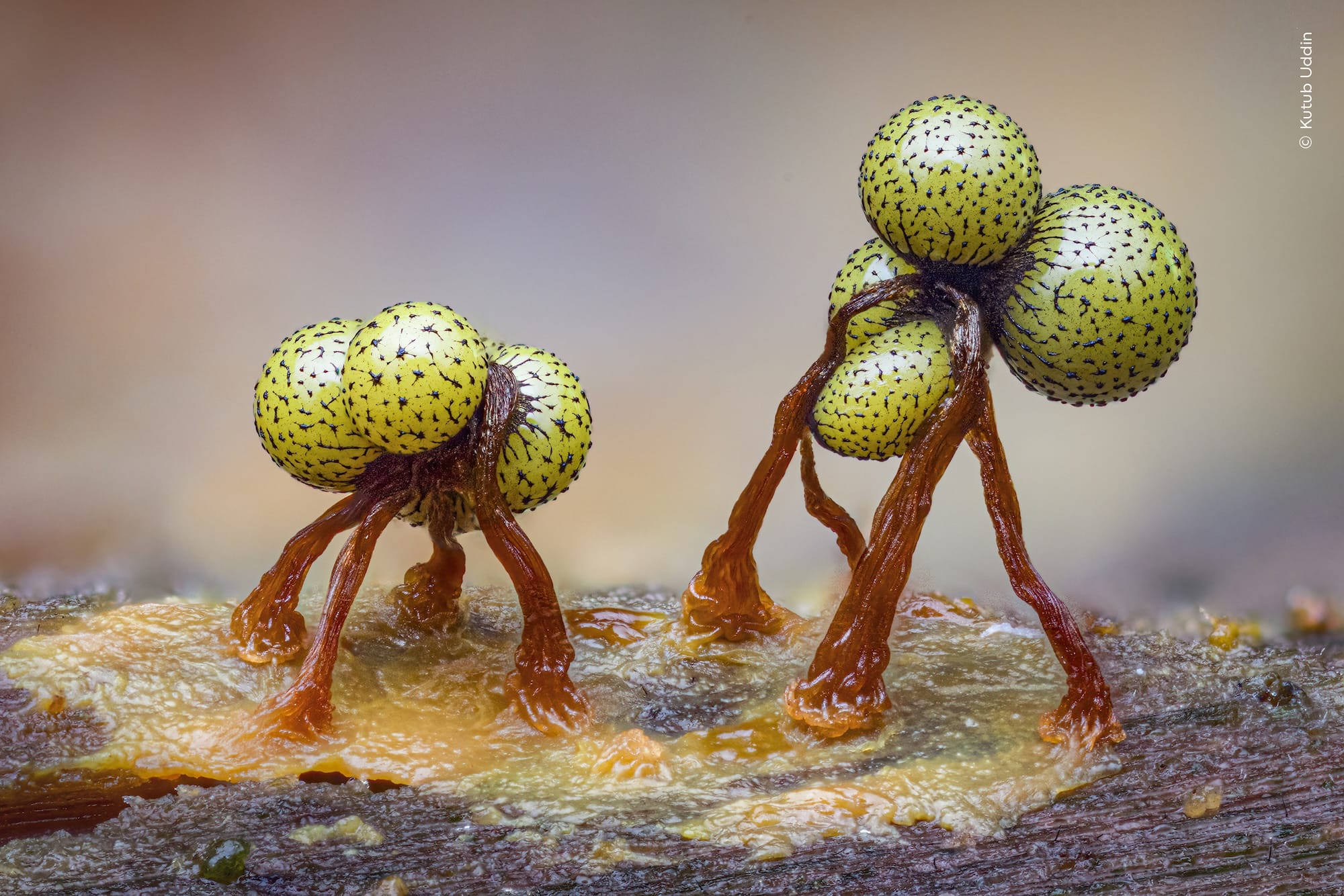
an up-close view of slime molds
Kutub Uddin (Bangladesh/U.K.), “Tiny Dancers,” from the ‘Secret Worlds’ portfolio. Winner, Portfolio Award. Fine threads, known as capillitium, emerge on the round, yellow-green bodies, which will eventually help disperse reproductive spores
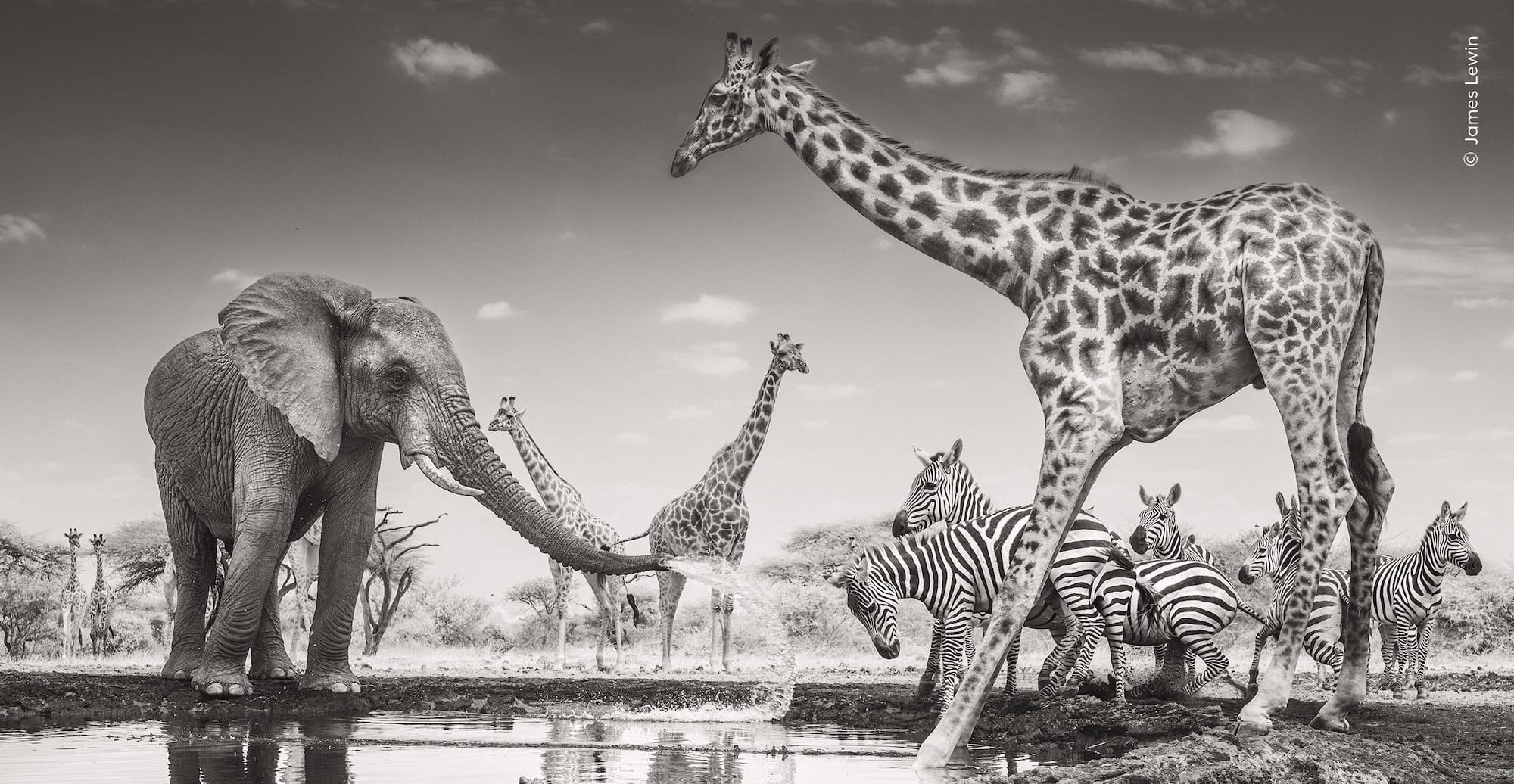
a black-and-white photo of giraffes, elephants, and zebras at a watering hole in Kenya
James Lewin (U.K.), “The Meeting Place.” Winner, Animals in their Environment category. A young bull elephant sprays a group of zebra as they congregate in the Kenyan Chyulu Hills
a photograph of a fox with the San Francisco skyline in the background
Loren Elliott (U.S.), “On the Outskirts” from the ‘Wily Coyotes of San Francisco’ portfolio. Winner, Photojournalist Story Award. A coyote pads along a trail in Bernal Heights Park, overlooking the city and bay of San Francisco
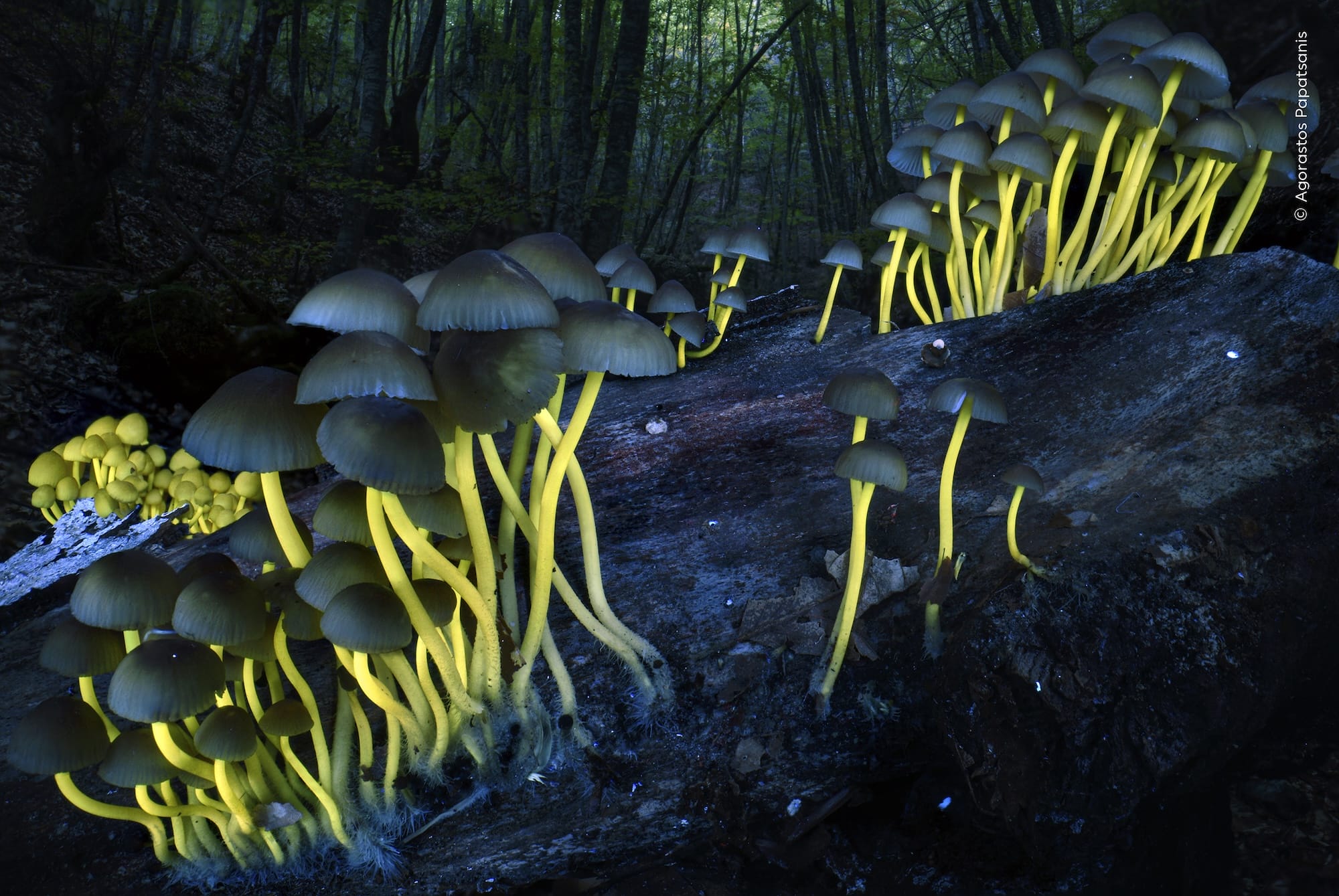
a patch of bioluminescent mushrooms
Agorastos Papatsanis (Greece), “Shedding Light.” Winner, Plants and Fungi category. Ultraviolet light reveals the glowing yellow stems of bonnet mushrooms growing from a decaying log
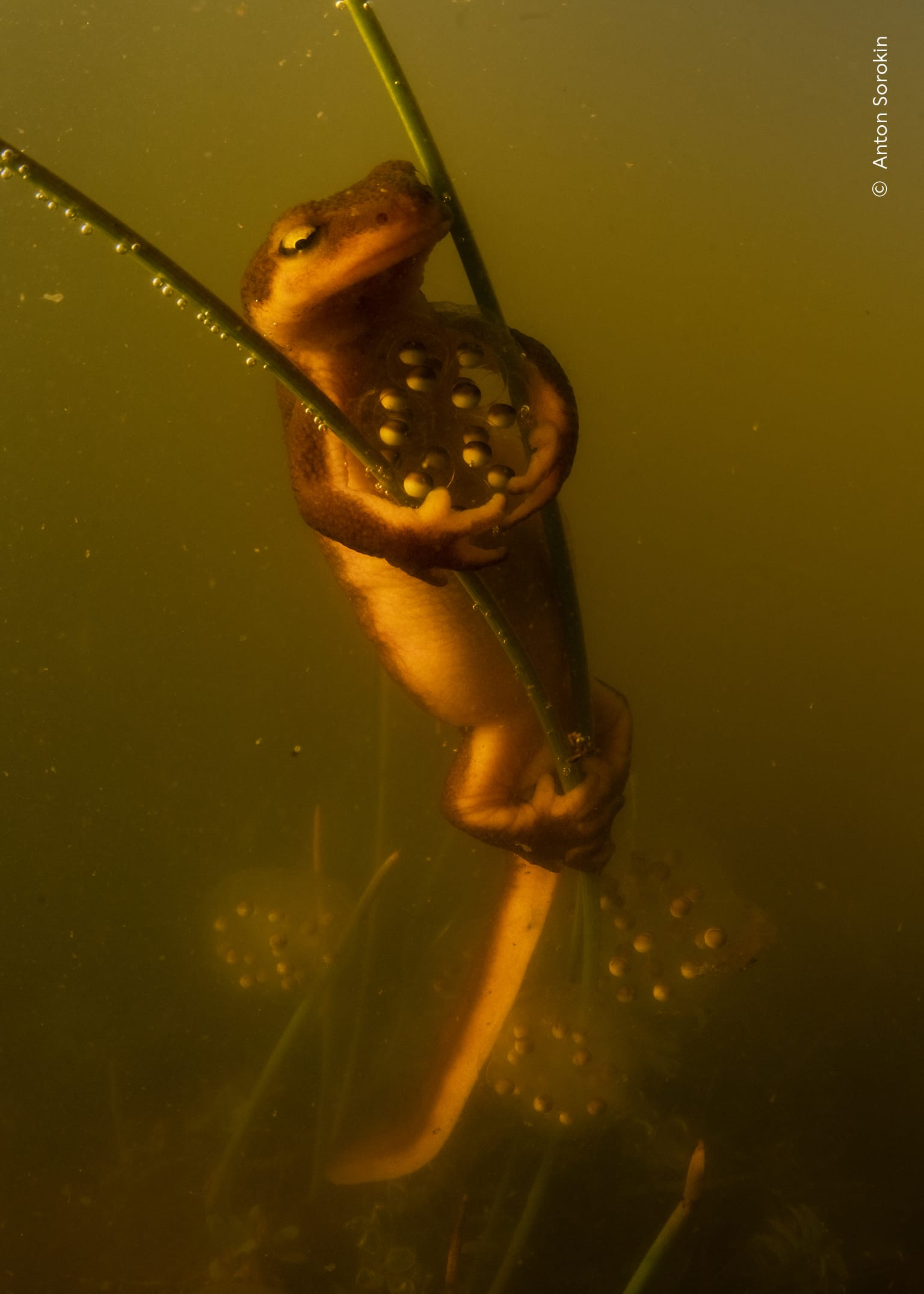
a newt grasps onto underwater reeds to lay its eggs
Anton Sorokin (U.S.), “Protective Pose.” Winner, Behaviour: Amphibians and Reptiles category. A California newt lays its eggs as it clasps vegetation that already holds another newt’s egg clutch
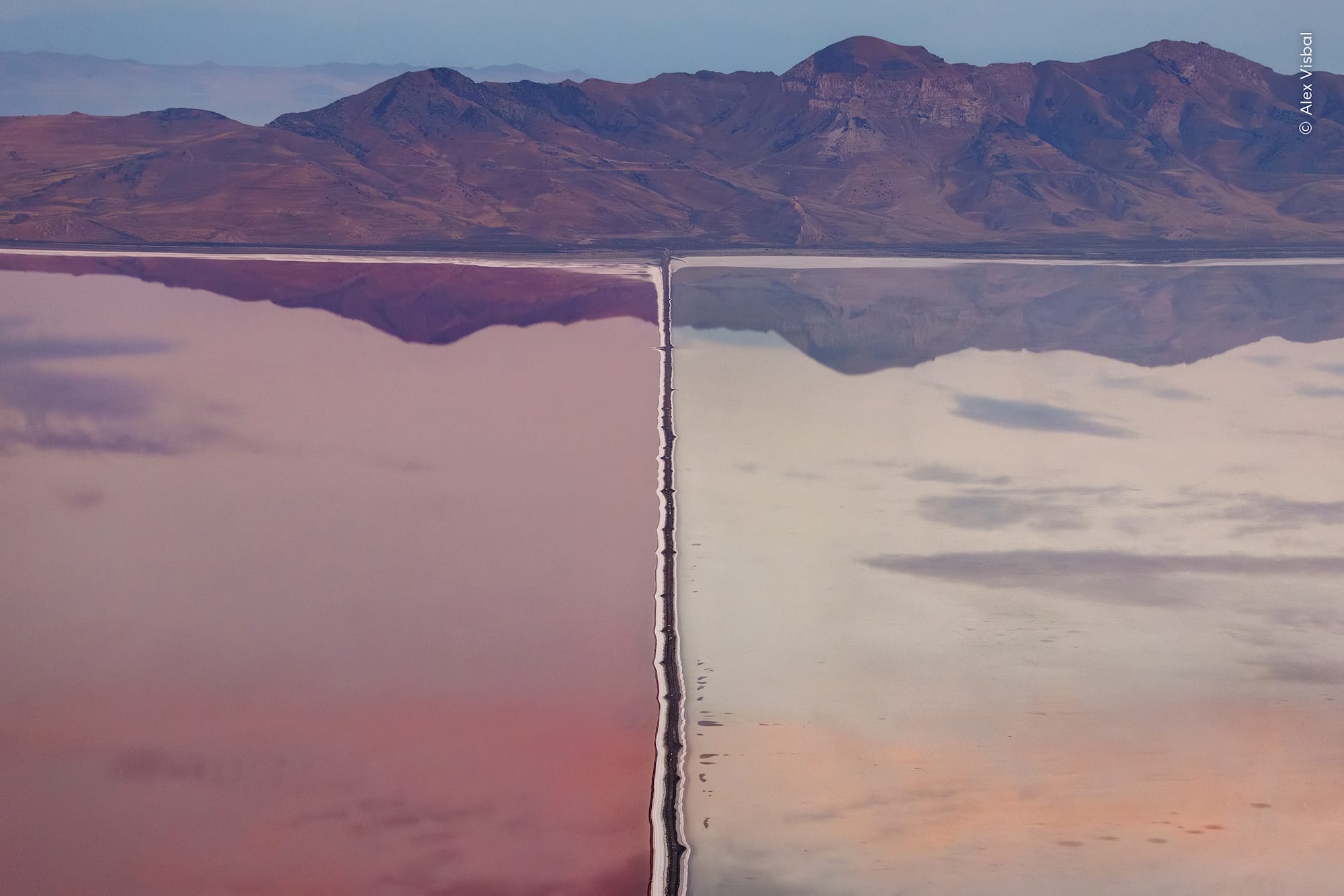
an aerial view of an engineered line trough a wetland with reflections of mountains that seem almost abstract
Alex Visbal (Colombia), “The Great Divide.” Winner, Wetlands: The Bigger Picture category. A single engineered line reshapes an entire wetland
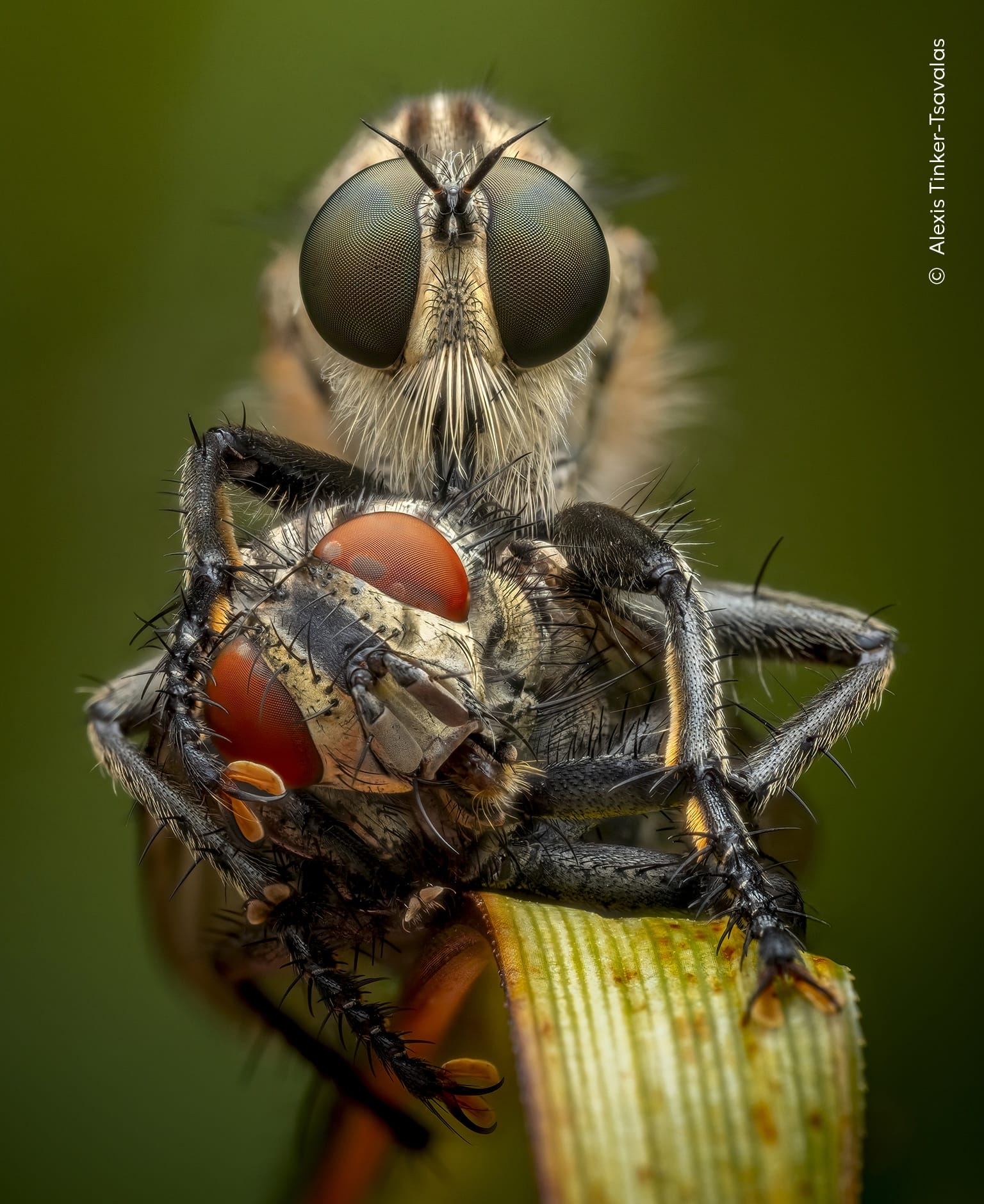
a close-up photo of a robber fly feeding on a flesh fly
Alexis Tinker-Tsavalas (Germany), “Afternoon Snack,” from the ‘Hidden Depths’ portfolio. Winner, Rising Star Award. A robber fly impales a flesh fly with its needlelike mouthparts

Related articles