Yoshitomo Nara’s Beloved Wide-Eyed Figures Return to New York
The first time I encountered Yoshitomo Nara’s work was when I opened the mailbox as an angsty teenager. A friend a few years older had recently visited the Walker Art Center, where she bought a postcard printed with two of the artist’s portraits and scribbled a note to her friend (me) still stuck in their tiny Wisconsin hometown. As is wont to happen to teenagers on the cusp of adulthood, I took that postcard as a sort of guiding light—a reminder that the world was bigger than the tractors and small-town gossip I was surrounded by—and promptly cut and taped the works to fit within my clear phone case. I carried this pair of strange characters everywhere I went for years after.
Nara also was born and raised in a rural region, albeit on the other side of the globe. The artist has described his childhood in Aomori on the northern tip of Japan’s main island as solitary and removed from the culture of the cities, instead flanked by the endless expanse of the Pacific Ocean and the snowy ridges of the Hakkōda Mountains. These early years indelibly informed his sensibility, and even in his most emotionally charged works, there’s a deep sense of calm that comes from immersion in nature.
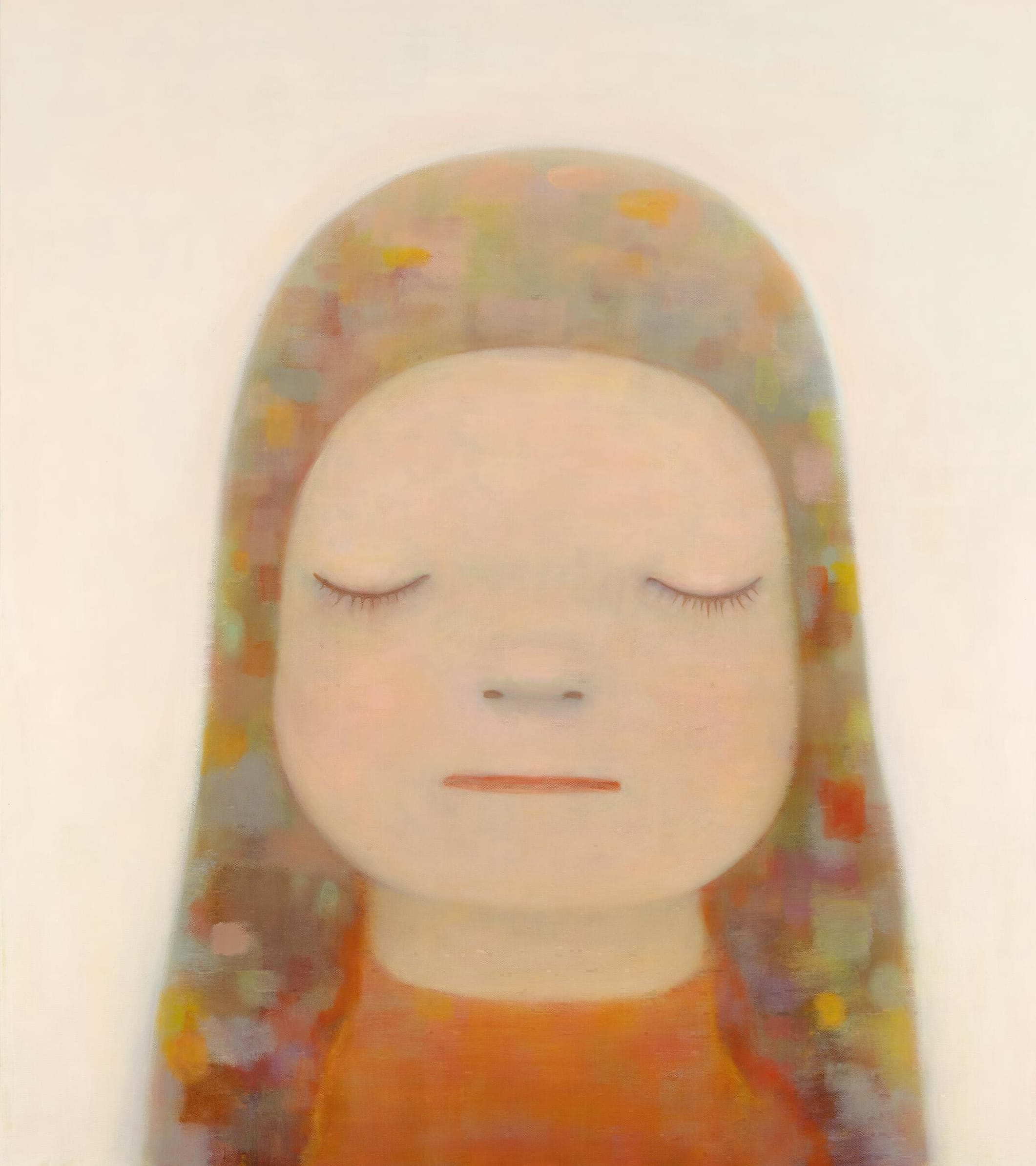
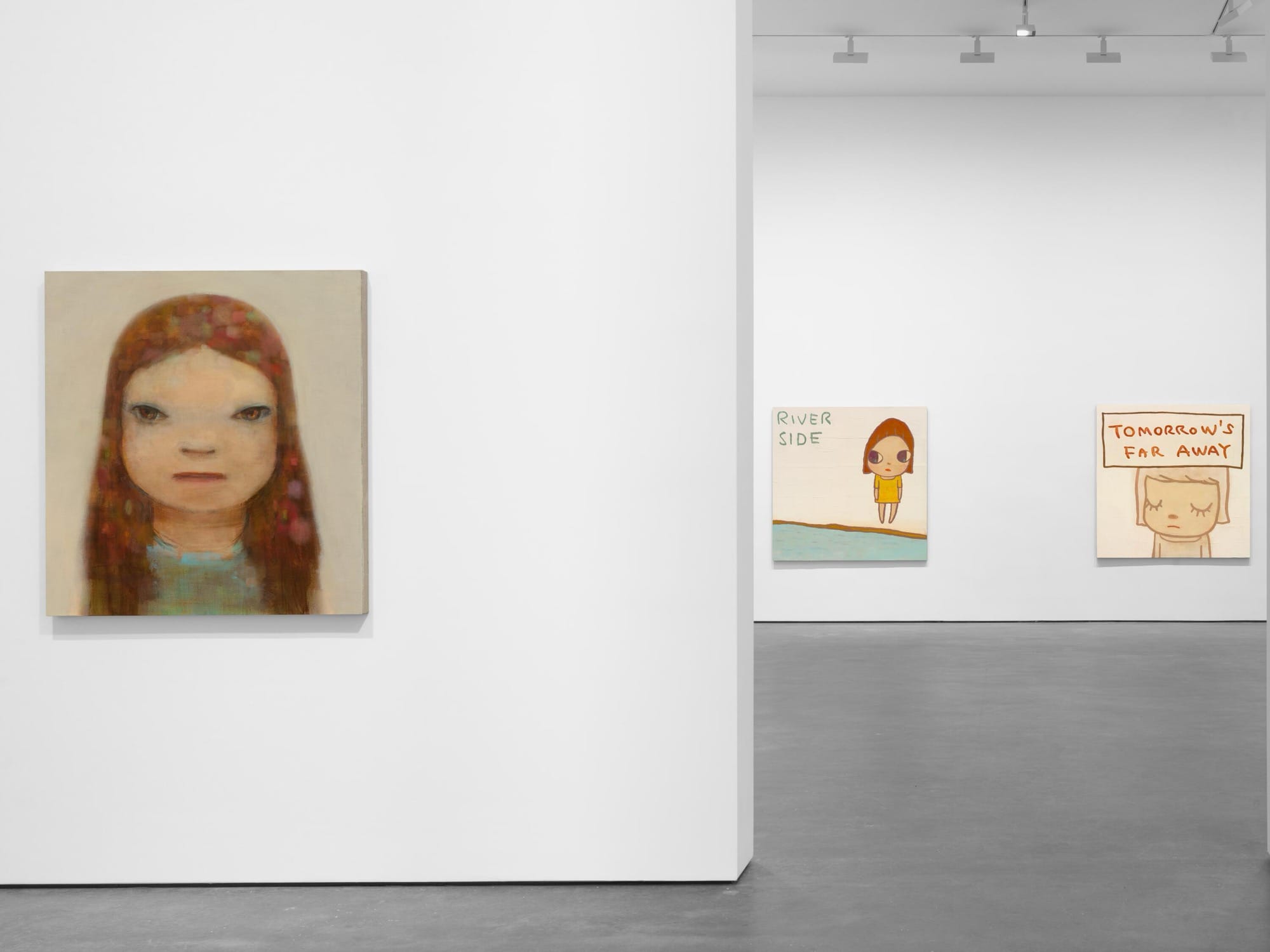
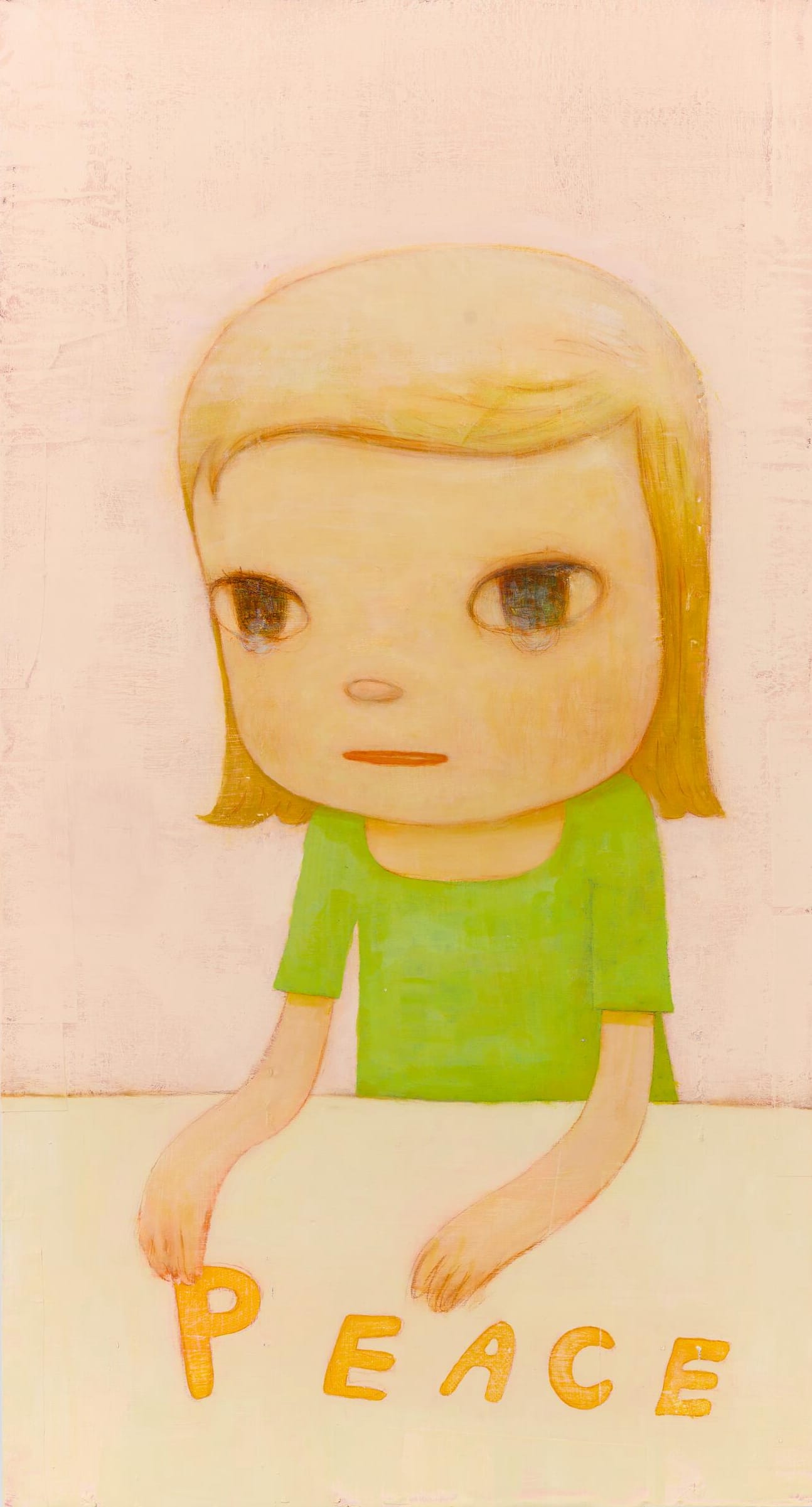
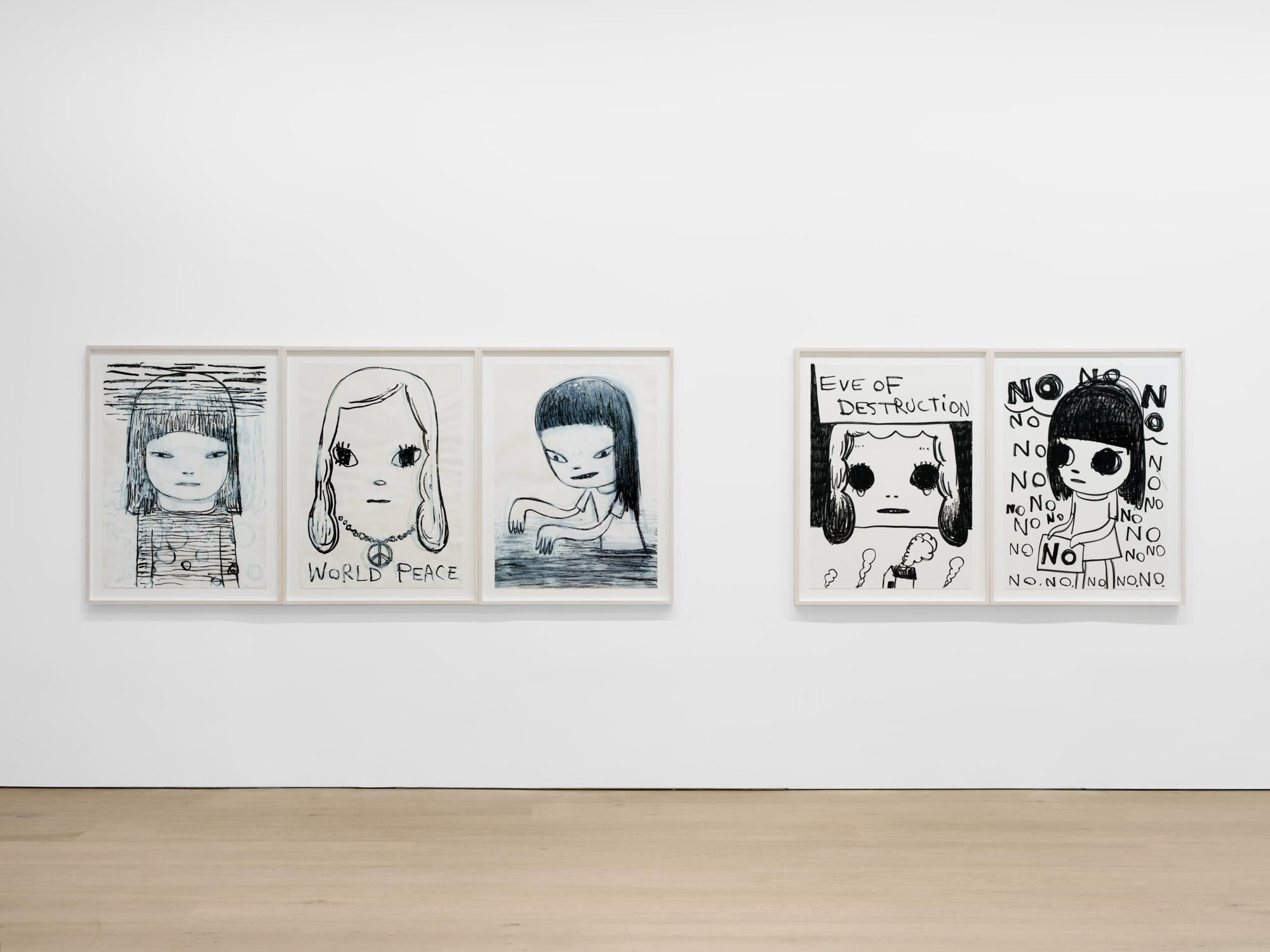
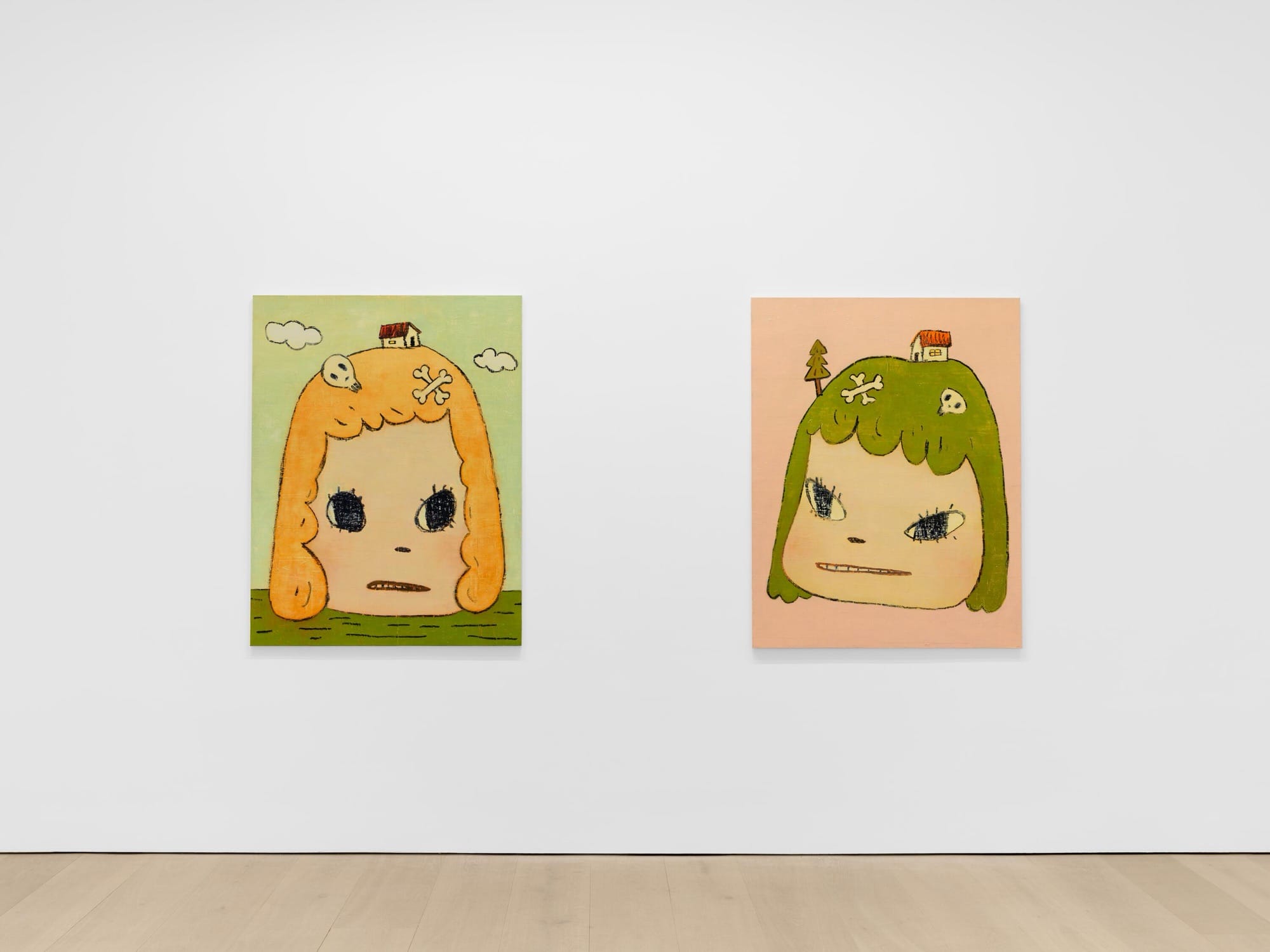
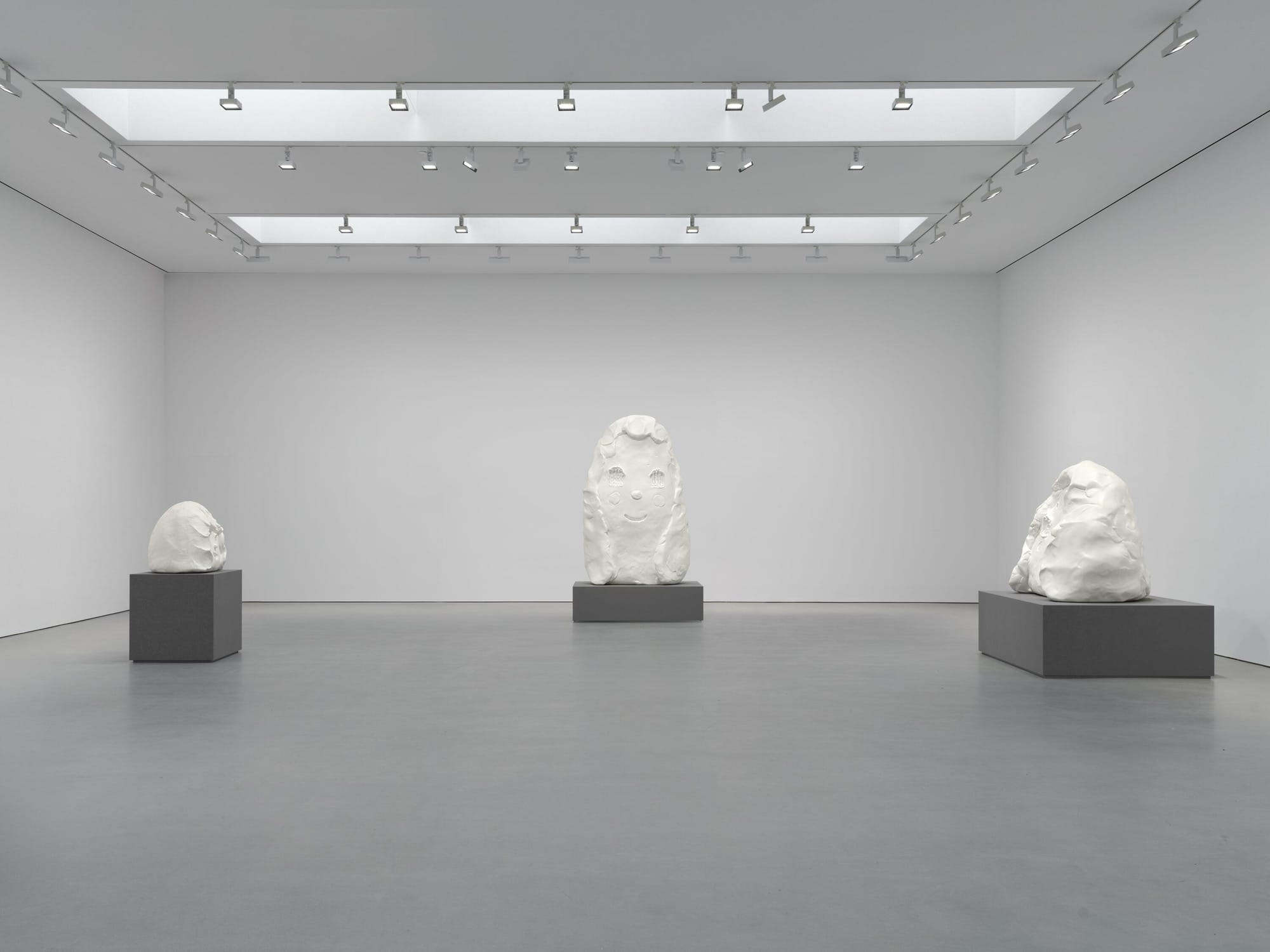
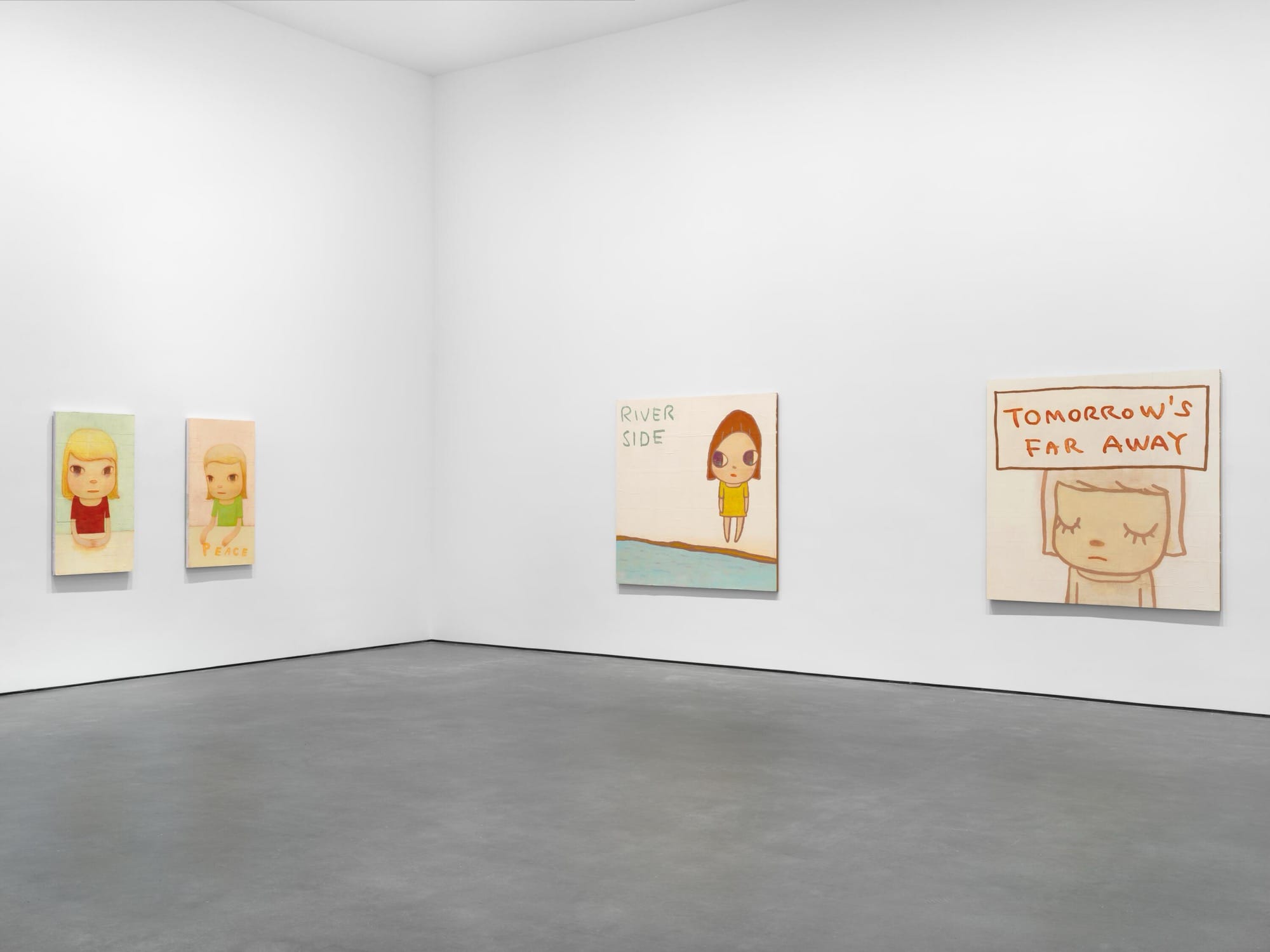
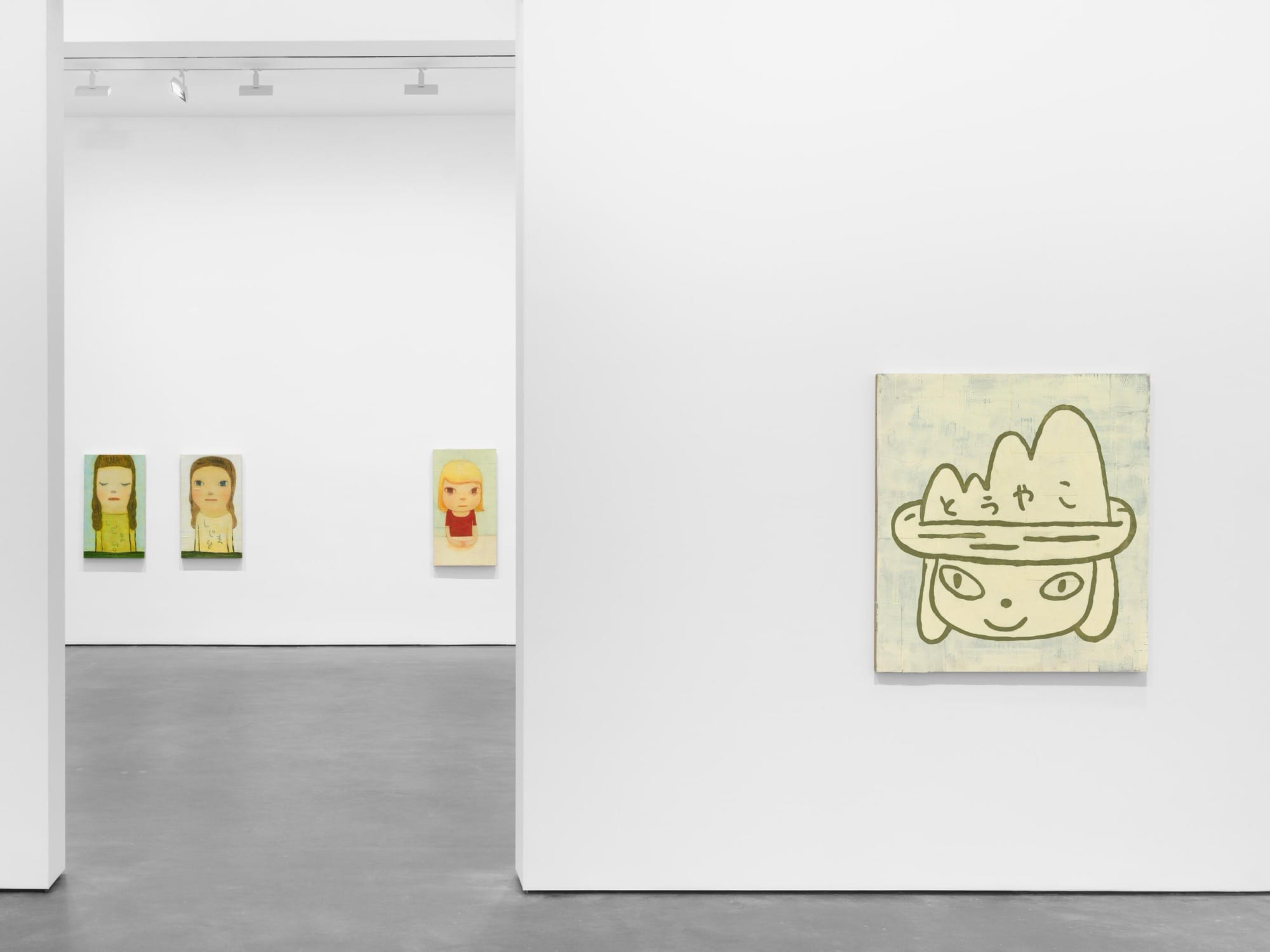
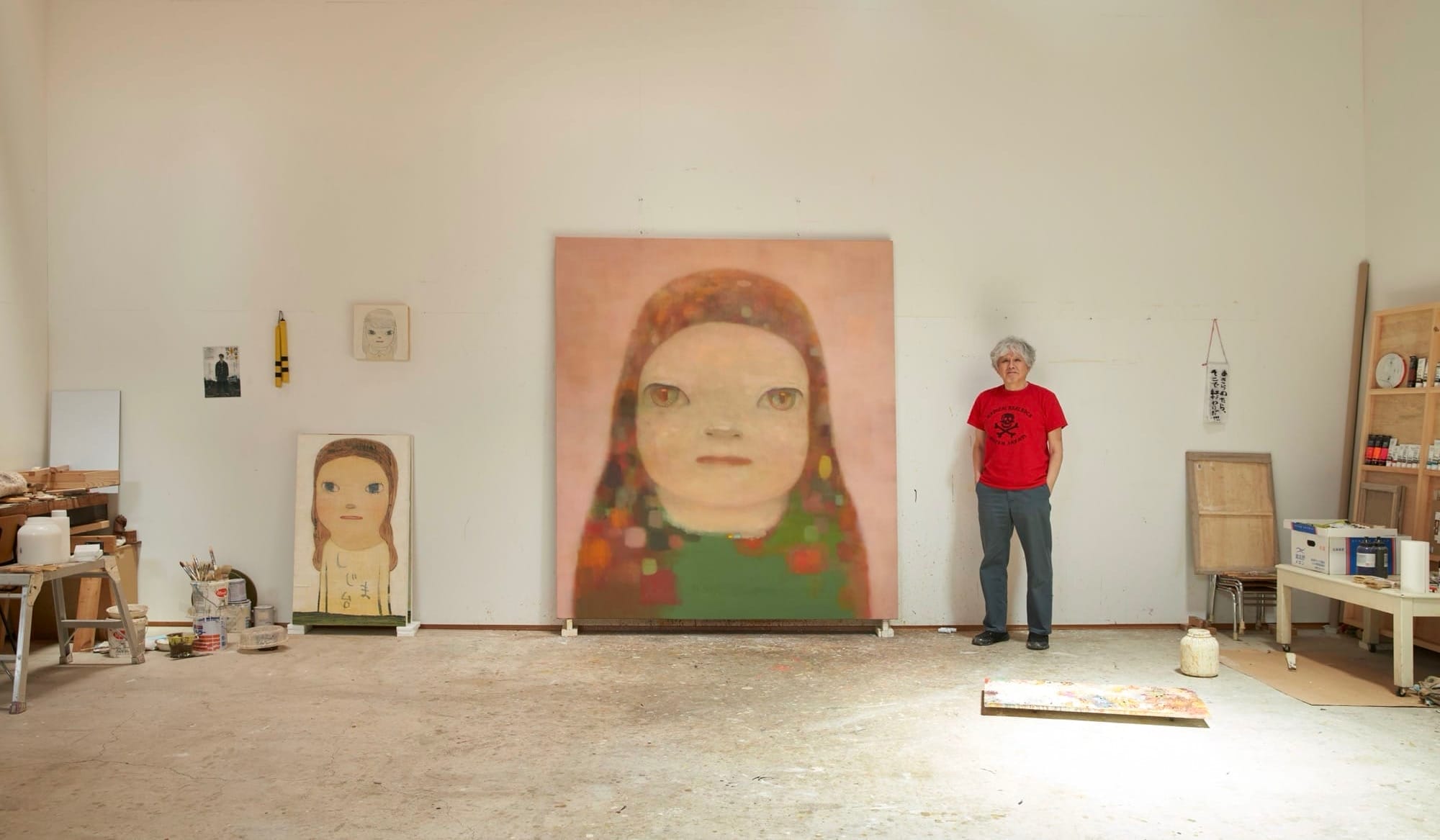
In his first solo presentation in New York in almost a decade, Nara takes over two of David Zwirner’s galleries. The self-titled exhibition includes nearly 100 works from the last several decades, spanning paintings, drawings, and monumental bronze sculptures. Central are the artist’s signature childlike figures with large heads and eyes and an underlying sense of innocence, their skeptical, bored, and even rebellious expressions providing a necessary counterbalance—one that also spoke to my teenage sensitivities.
Profoundly enigmatic, Nara’s works are also instantly recognizable, relatable, and broadly appealing. According to the gallery, 4,000 visitors lined up to see the exhibition on opening night, with 26,000 attending in the first week alone.
Ranging in scale from intimate miniatures to larger-than-life, Nara’s two-dimensional portraits emerge from soft, pastel-hued palettes. Several also often contain pithy phrases that hearken to our collective challenges. Both “world peace” and “tomorrow’s far away” drip with longing and speak to the artist’s broader concern for the contentious state of human relations.
Introducing clay into his practice also emerged from unease and grief, when Nara picked up the earthen material after the 2011 Tōhoku earthquake. The disastrous event killed nearly 20,000 people and injured and displaced many more around the artist’s hometown. In the moment, the tactile medium offered a reprieve the canvas couldn’t.
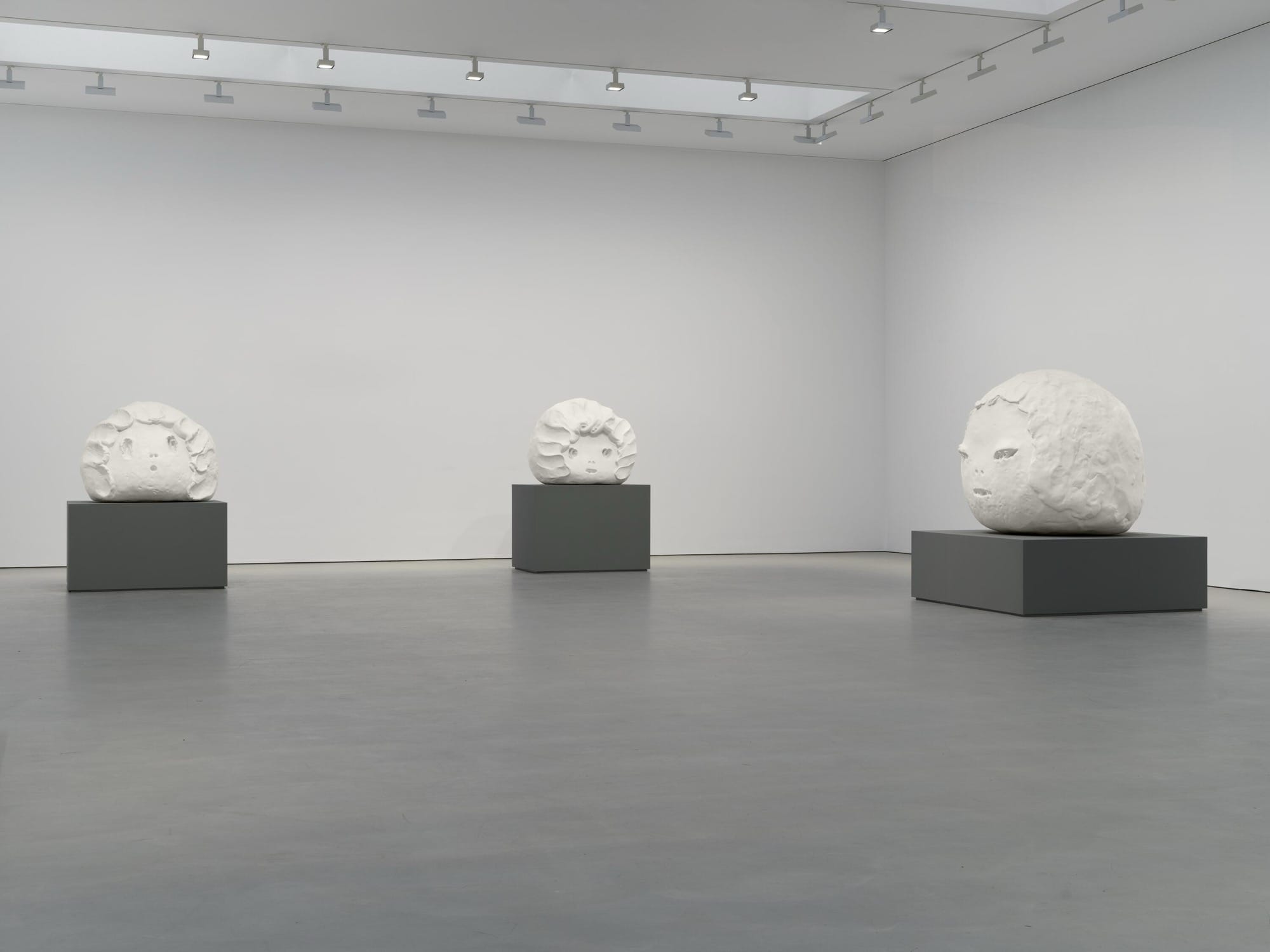
In the exhibition, Nara’s monochromatic bronzes, coated in white urethane paint, capture these forays into three-dimensions and evoke the icy, snow-blanketed landscapes of his youth. Based on smaller ceramic prototypes, the sculptures bear the traces of the handmade, as if he had sculpted each head with an enormous thumb.
As an exhibition statement says, Nara’s overarching impulse is simple: he “creates art in order to express and communicate what he feels unable to convey in words, and his distinctive body of work has evolved through his ongoing search to identify what is uniquely his: his upbringing in rural northern Japan at a particular moment in time and, above all, his profound concern for humanity, including those outside mainstream society.”
The artist recently wrapped up a large-scale project at the Hirshorn Sculpture Garden, and next fall, the San Francisco Museum of Modern Art will host a major retrospective of his work. Until then, see Yoshitomo Nara through December 12 in New York.