Hannah Lim Draws on Her British-Singaporean Heritage in Sculptural Snuff Bottles
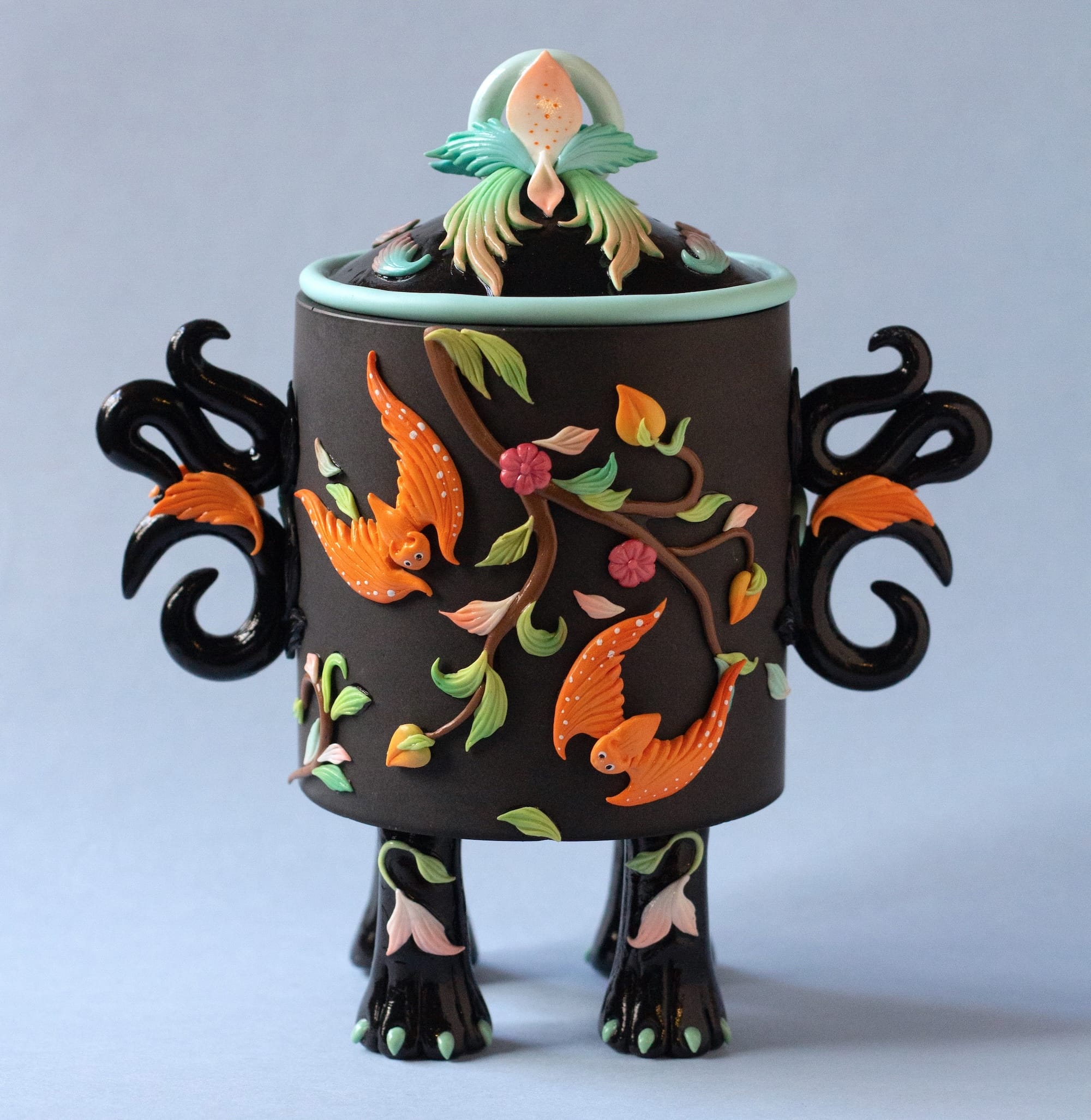
In playful, anthropomorphized sculptures, Hannah Lim takes inspiration from historical ceramics, classical Chinese literature, and her British-Singaporean heritage. For several years, the London-based artist has been interested in the 17th- and 18th-century design phenomenon known as Chinoiserie, in which European producers mimicked Chinese and other Asian motifs, appropriating a variety of regional aesthetics that catered to a Western market. “In my own work, I attempt to reclaim and re-imagine this practice in a more conscientious way,” Lim says in a statement. “My sculptures often draw inspiration from specific cultural styles or processes.”
Snuff bottles represent a consumer trend that emerged in China in the 17th century. Its namesake substance, which originated in the Americas, is a kind of powdered, scented tobacco that’s scooped with a tiny spoon and inhaled directly into the nose. As in Europe, its popularity spread especially among the affluent. When Lim observed several examples in museum collections around the U.K., she was fascinated by their ornate designs and variation and began experimenting with sculpting similar motifs. Then, she began to scale up.
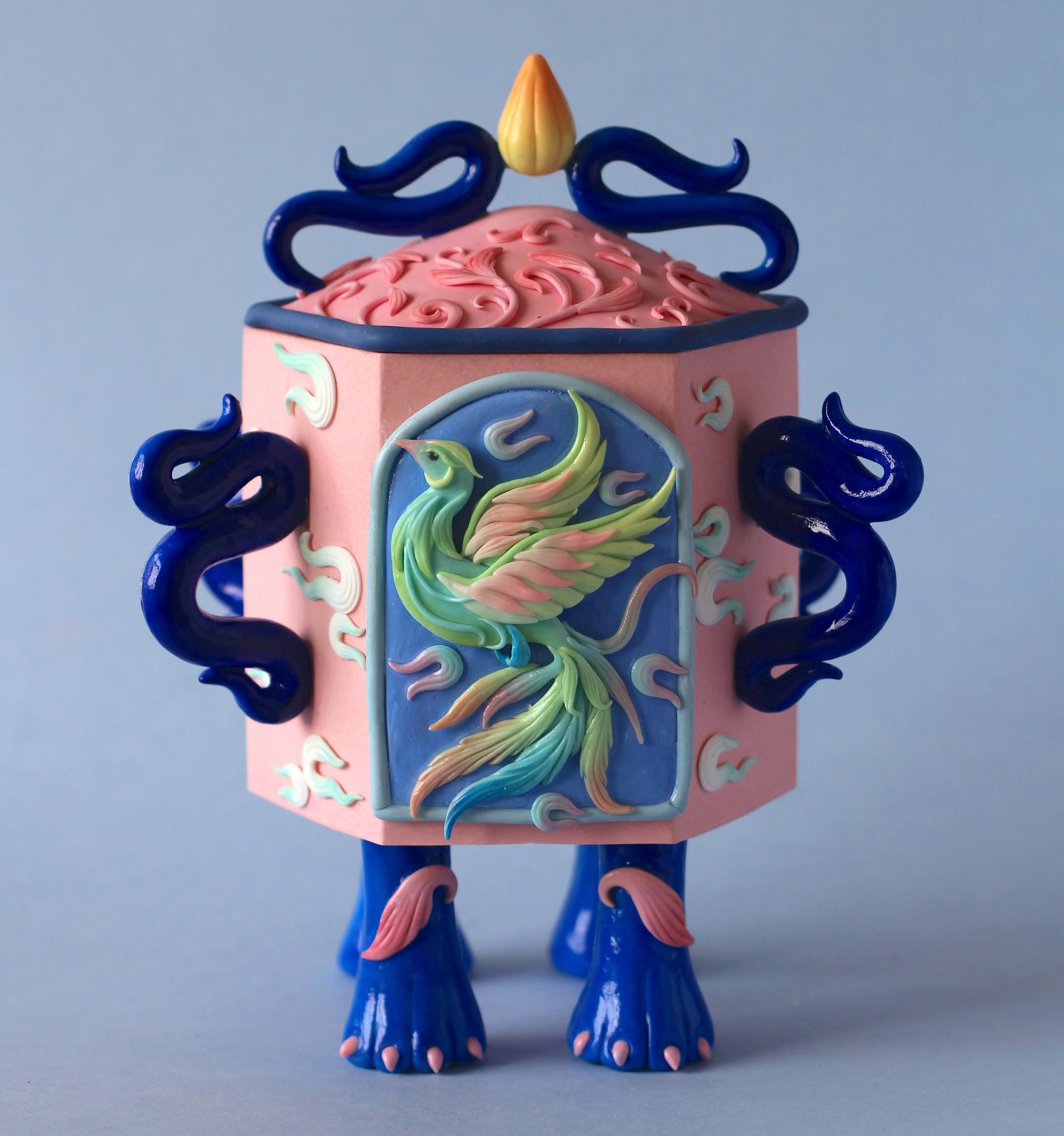
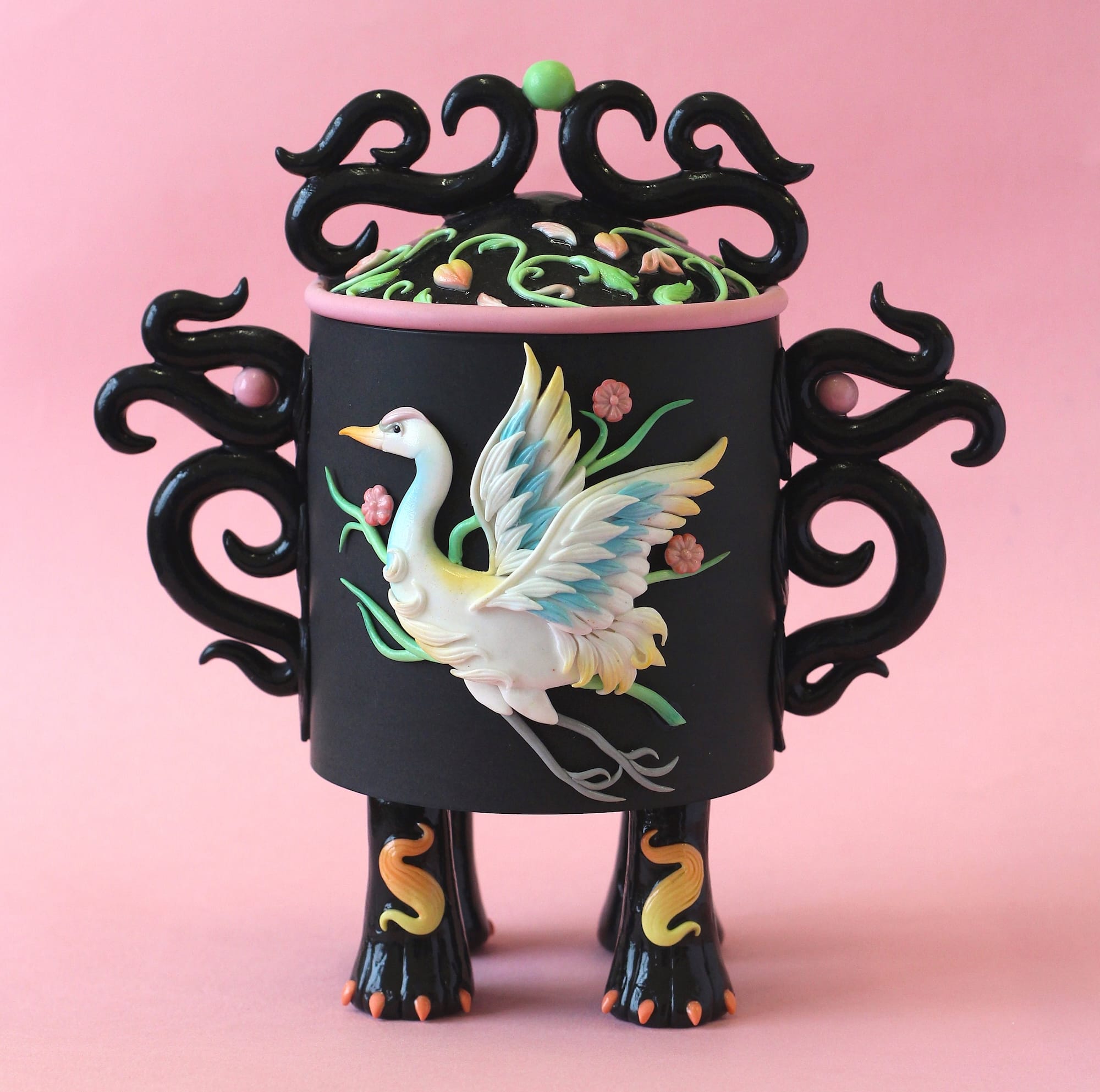
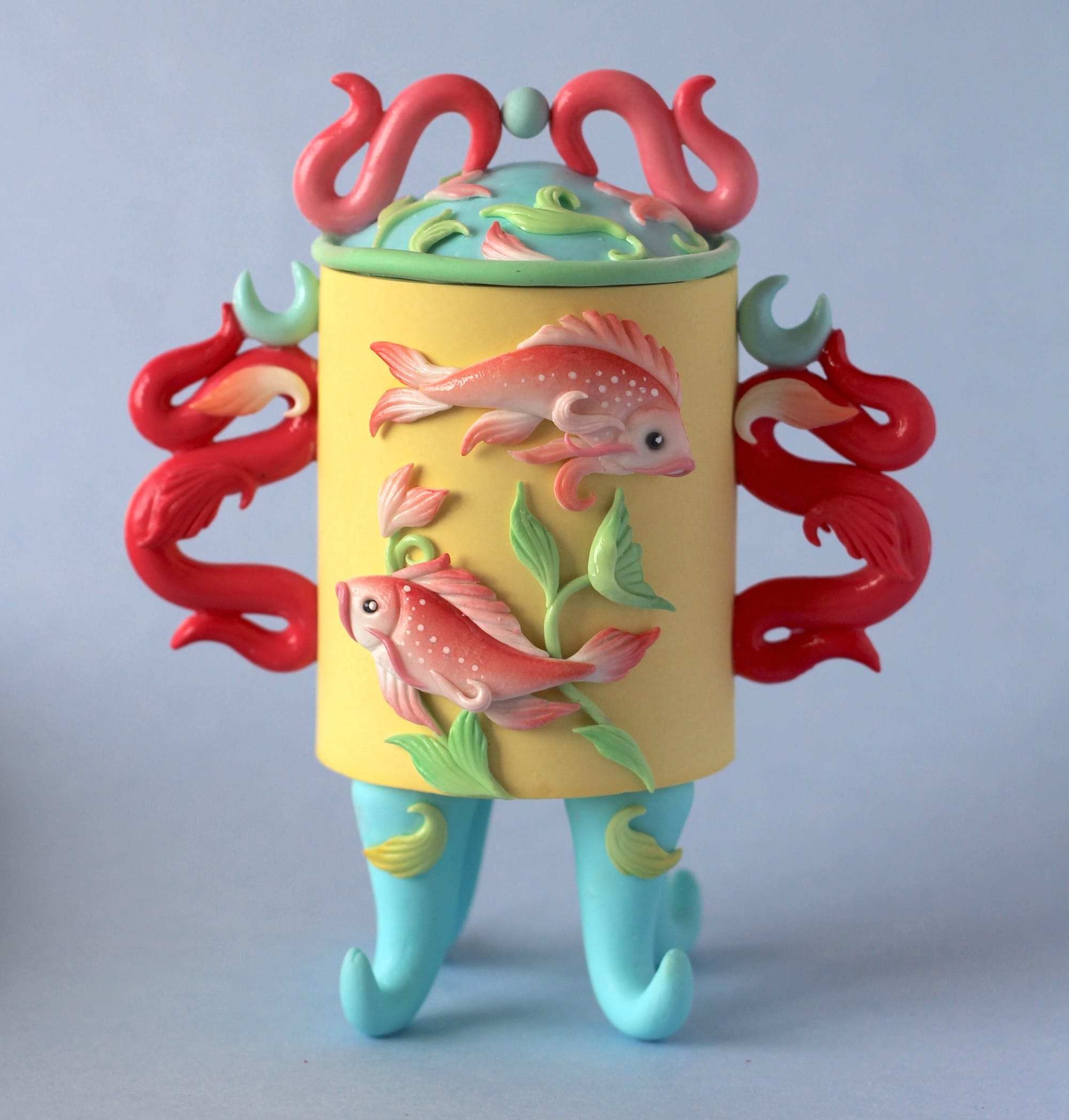
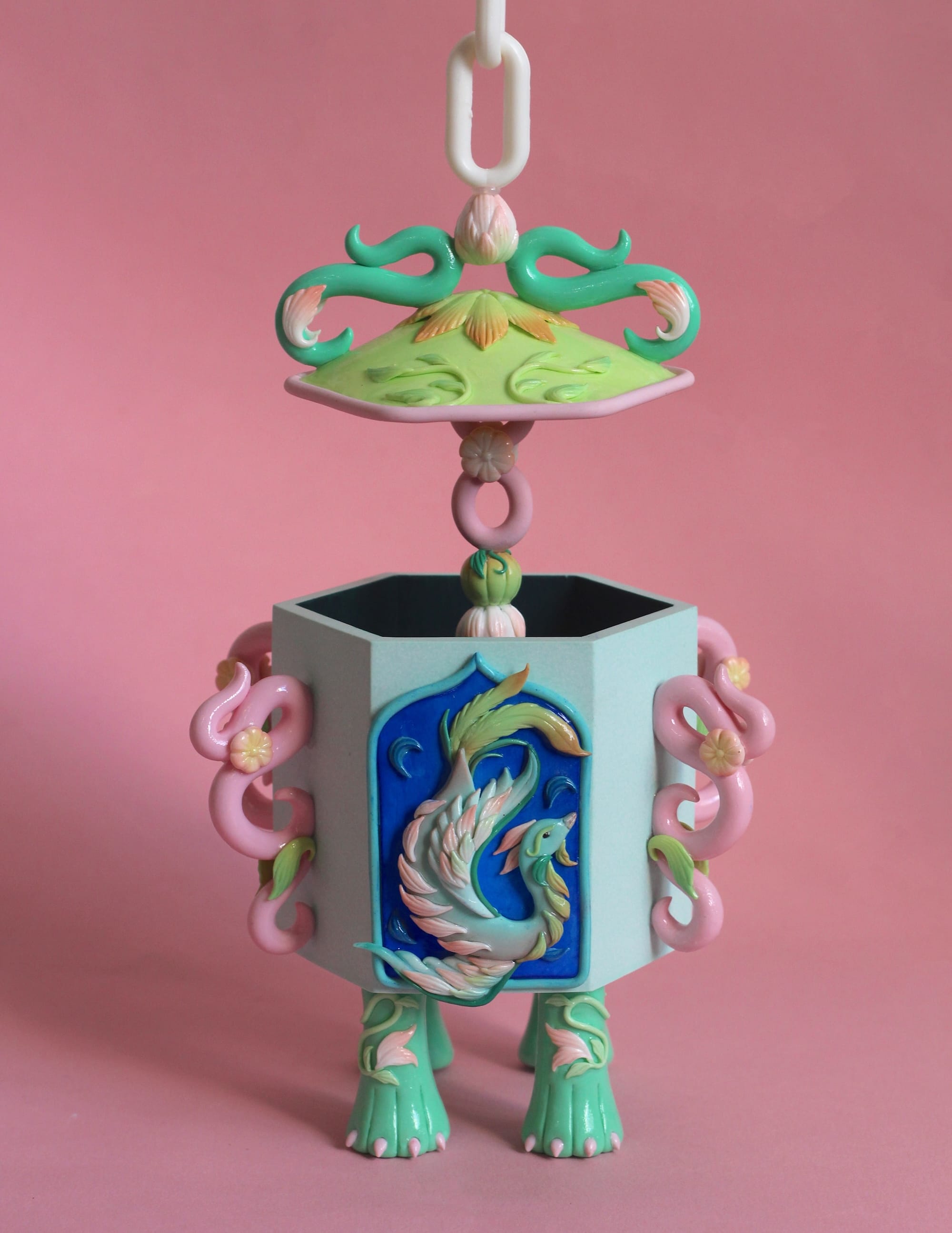
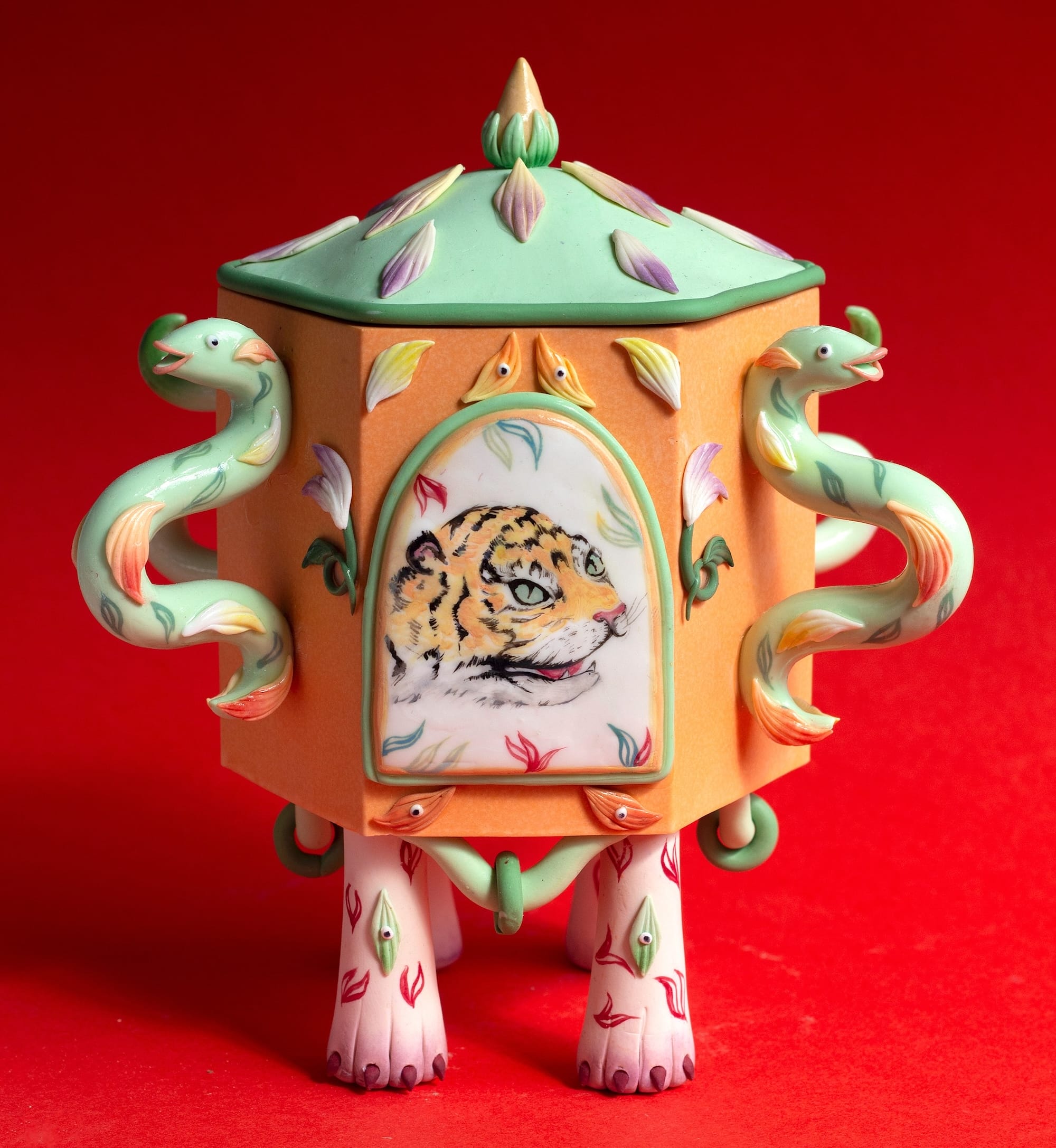
A typical snuff bottle is diminutive and jewel-like, typically just a couple of inches in diameter so that it could be both portable and easily tucked away. Lim’s are several inches tall and usually need to be held with both hands. “Initially, my own snuff bottle works were designed in a way to highlight certain personal aspects of my heritage. Over time, they’ve come to reflect different points in my research,” Lim tells Colossal. “Each of my own snuff bottles also has a hanging charm hidden within its lid. The hanging charm references the tiny spoon attached to the lid of traditional snuff bottles.”
For the structure, Lim uses a combination of polymer clay and Jesmonite, a casting material made by blending a mineral powder with liquid acrylic polymer. She also applies chalk, acrylic paint, and a layer of gloss to give each piece its finishing touches, including small painted or relief portraits of animals and imaginary creatures.
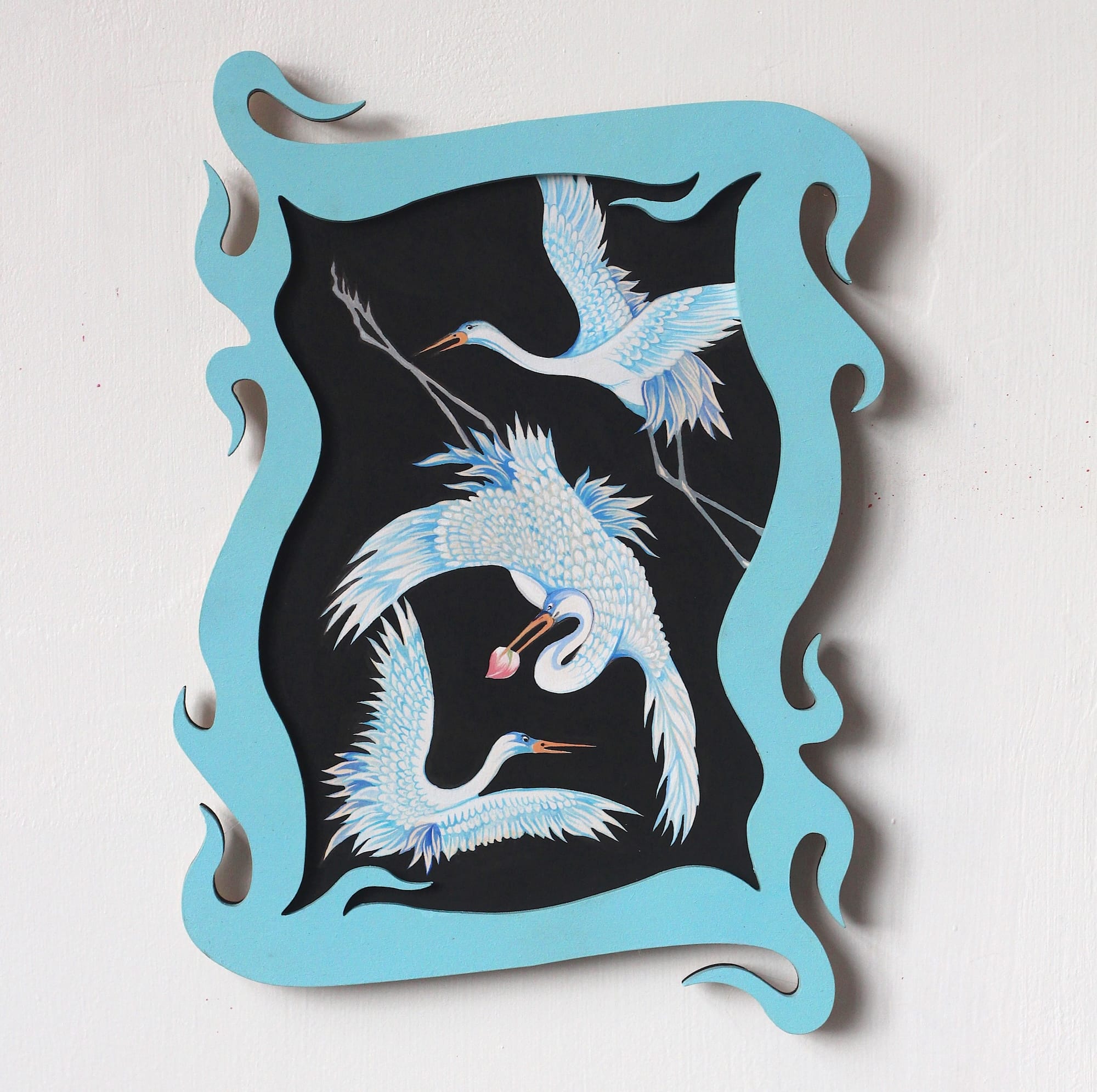
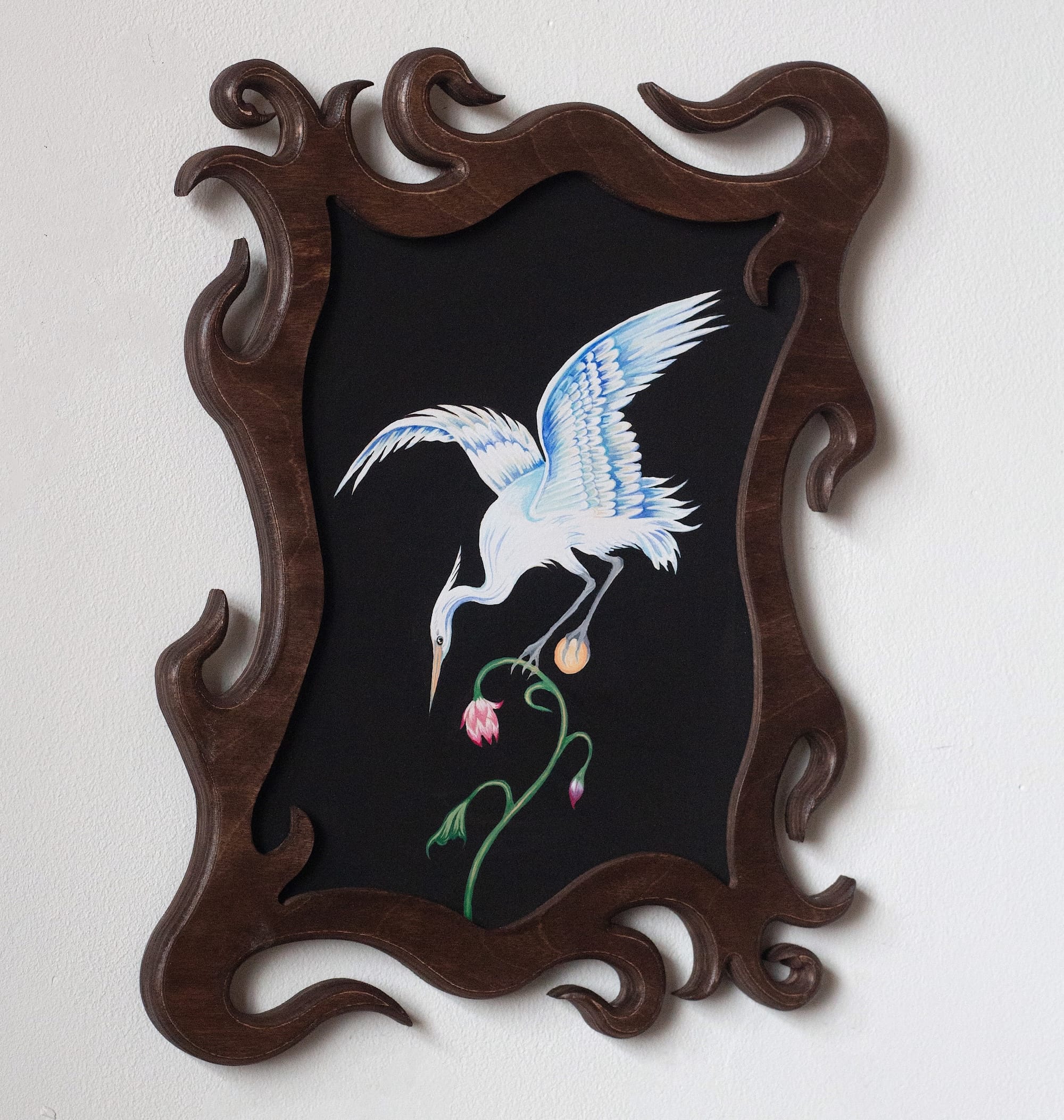
Inspiration comes from a wide range of mythological writings, particularly an ancient Chinese tome called The Classic of Mountains and Seas, which is a mostly fantastical account of more than 550 mountains and 300 waterways. “I’ve been attempting to interpret the text through my work, using the enchanting alchemic descriptions of these creatures as inspiration for my most recent series of sculptures and paintings,” the artist says.
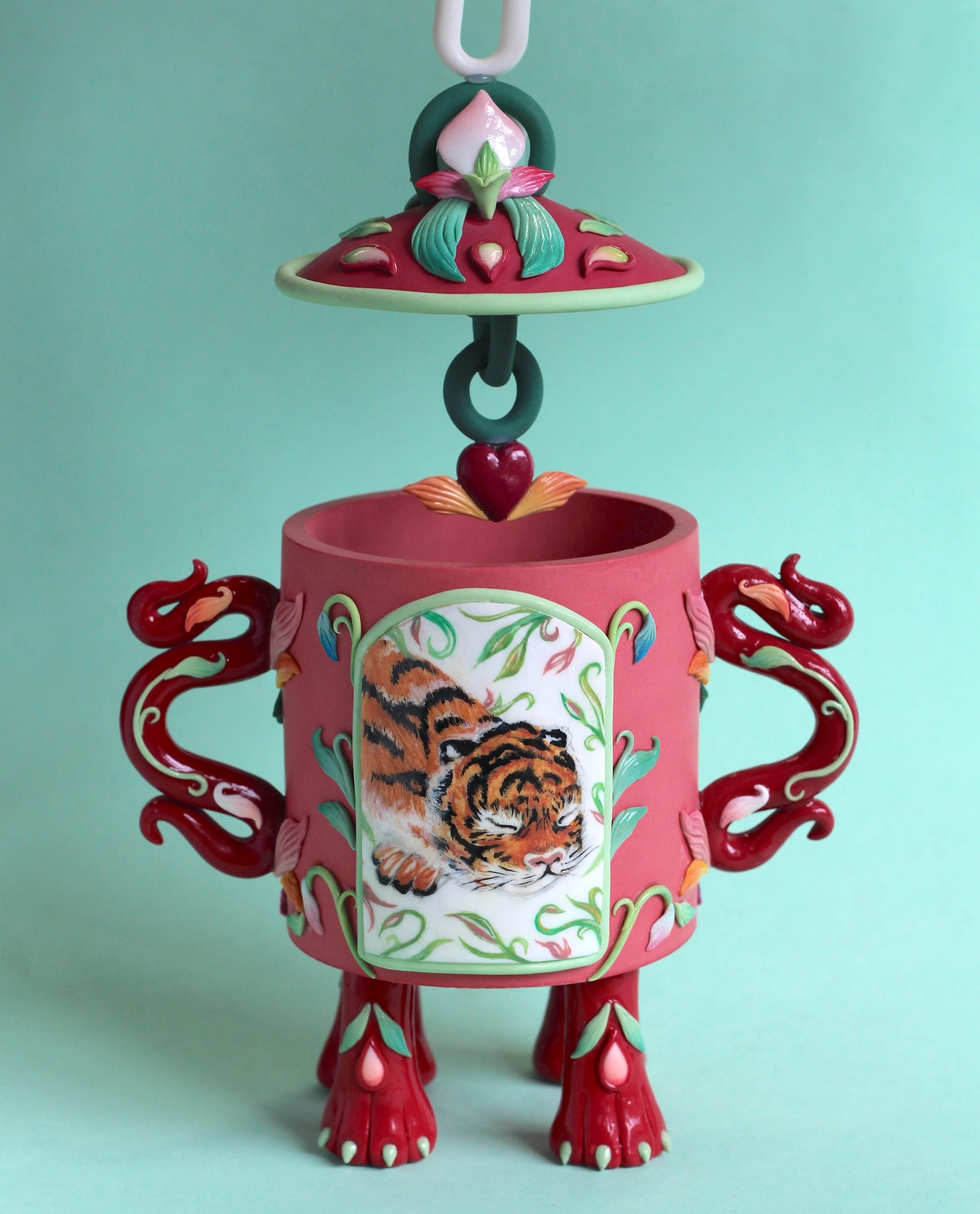
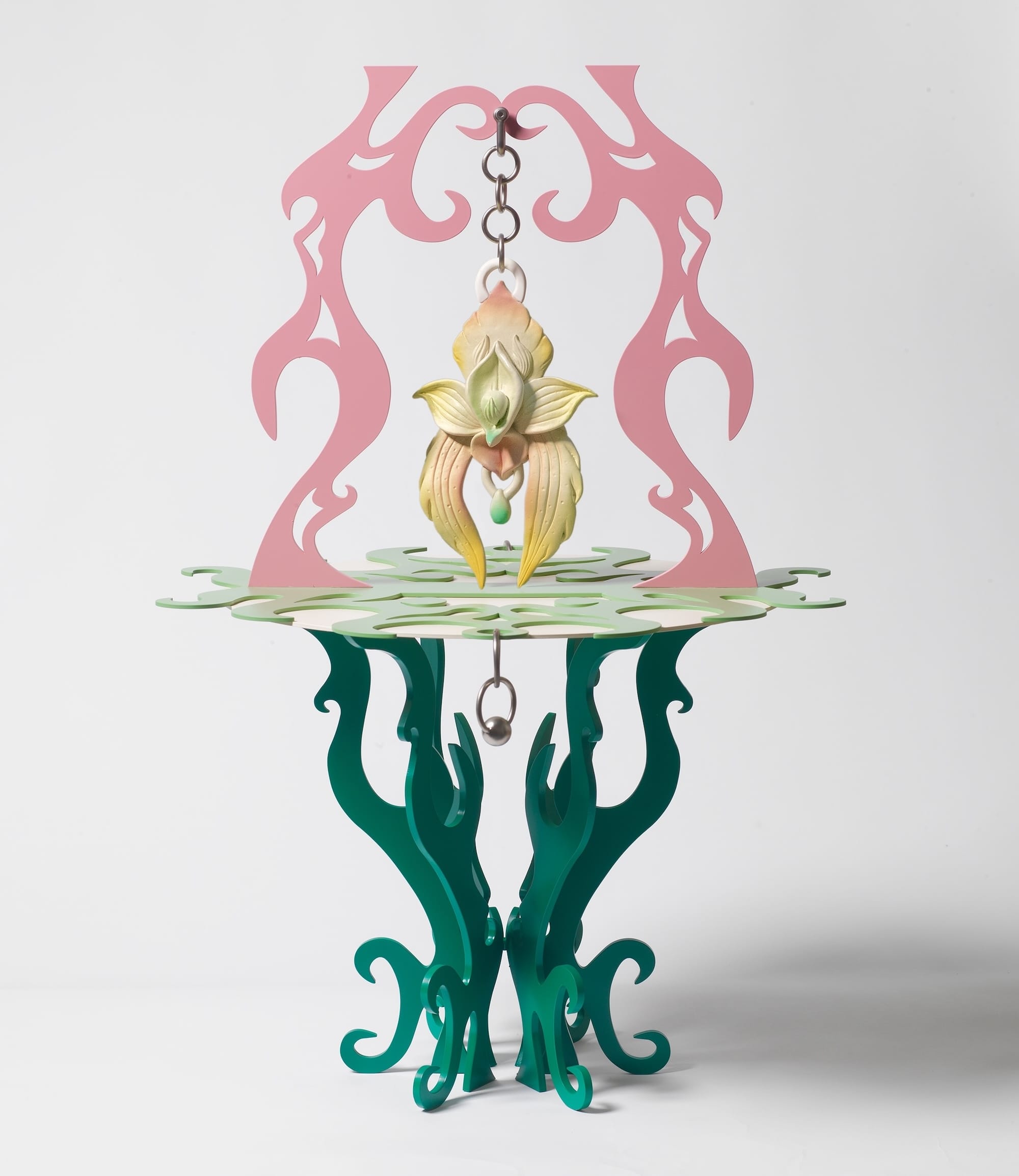
Lim is continuing to experiment with scale and materials, especially through the use of metal, and recent sculptures like “Orchid Table” incorporate laser-cut elements. She’s also frequently making bespoke frames that serve as extensions of her paintings, and she plans to incorporate motifs onto the frames themselves.
If you’re in the U.K., see Lim’s solo exhibition Reimaginings through November 14 at the Museum of East Asian Art in Bath. She’ll also have some works on view later this month with Cynthia Corbett Gallery in Paris, and later this year, she’ll unveil a new public artwork in Paddington, London. See more and follow updates on the artist’s Instagram.