Pre-Columbian Archaeology Meets Science Fiction in Max Lehman’s Quirky Sculptures
In archaeology, discoveries typically prompt more questions than answers. For Max Lehman, who studies Pre-Columbian art history, what we don’t know—and may never—about ancient peoples and civilizations is what makes the discipline so compelling. The ancient Mayans, for example, bedecked their elaborate temples with images on carved rock slabs, and the Aztec sun stone, or calendar stone, is a remarkable example of Mexica sculpture.
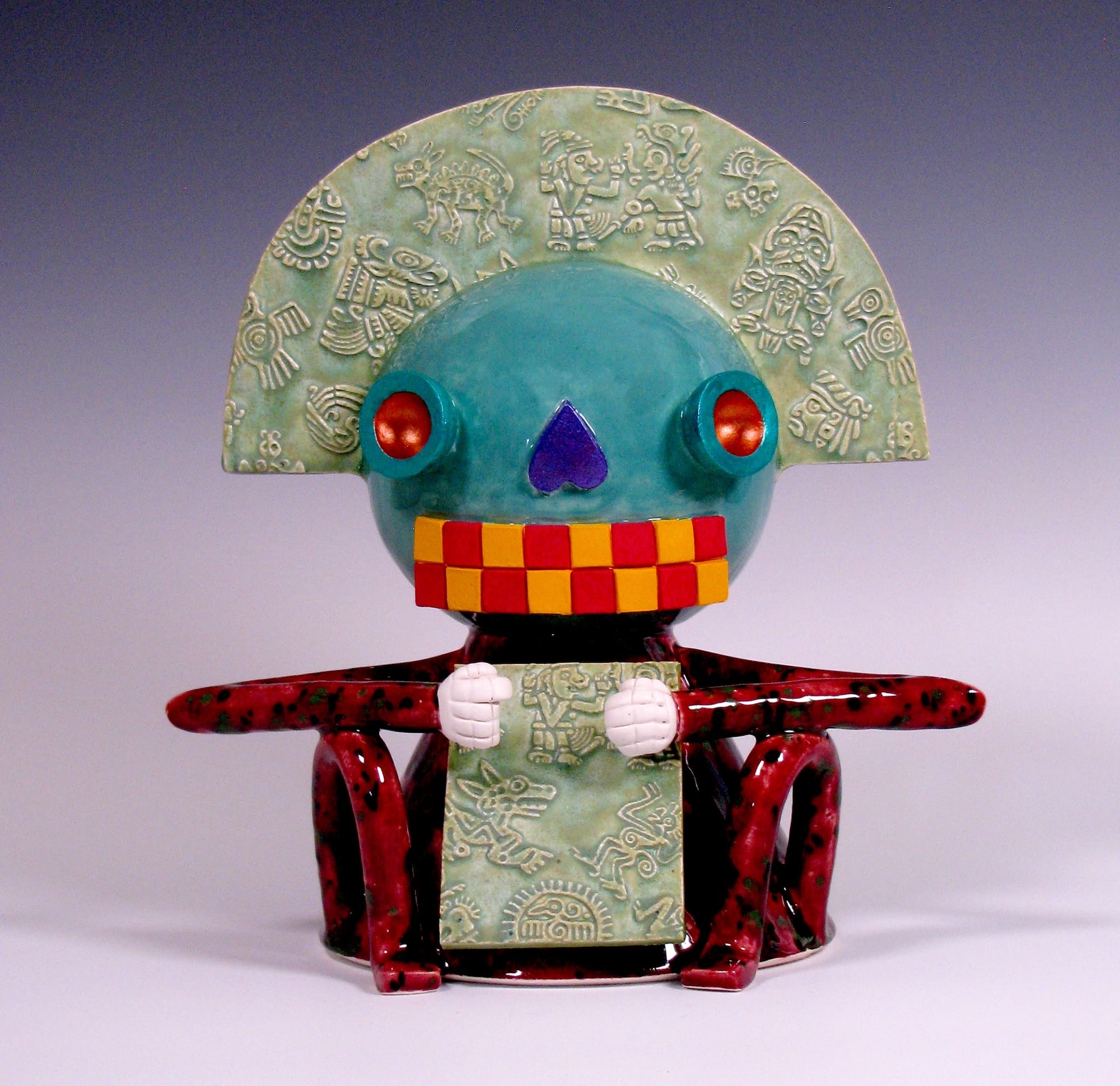
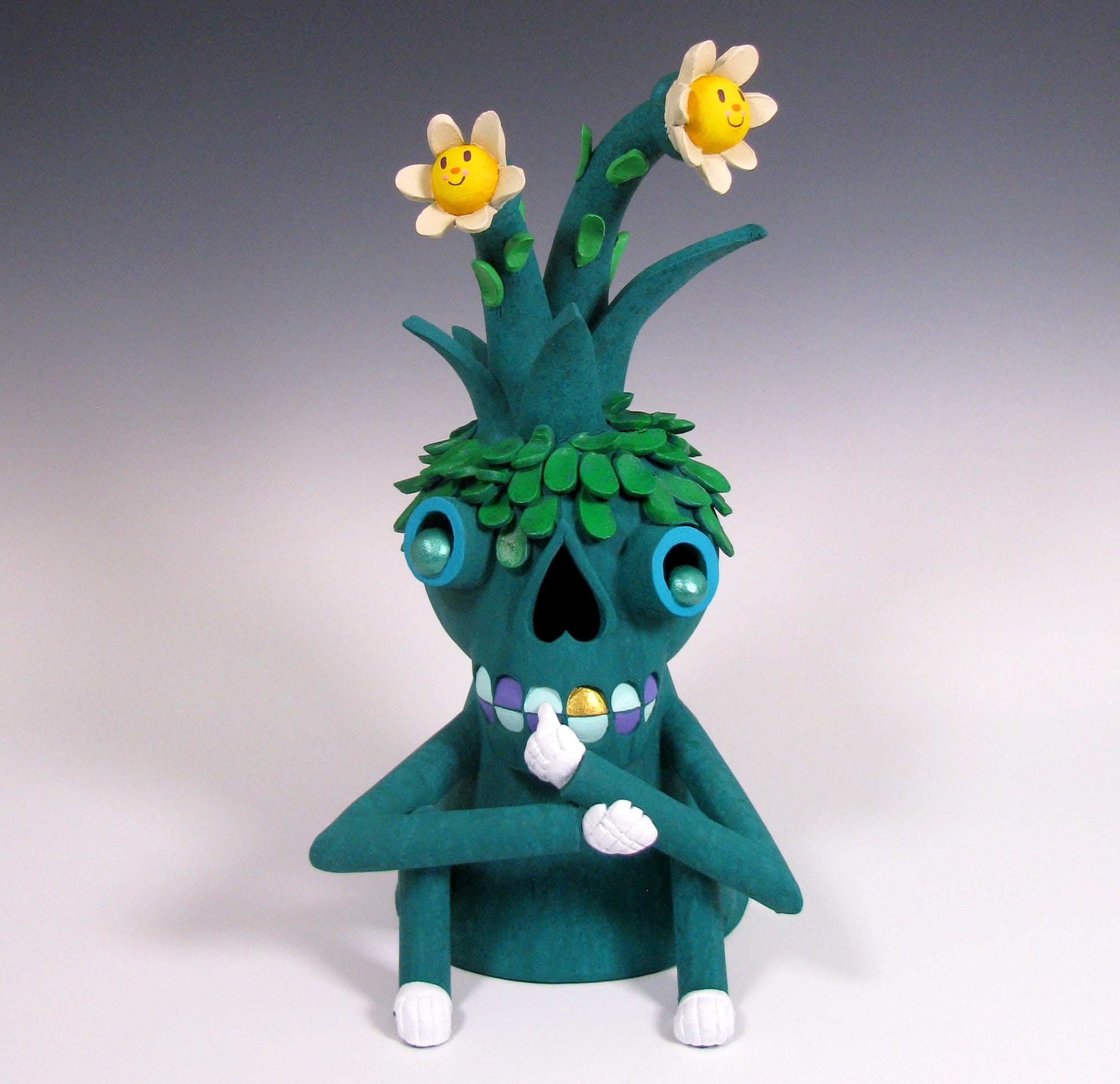
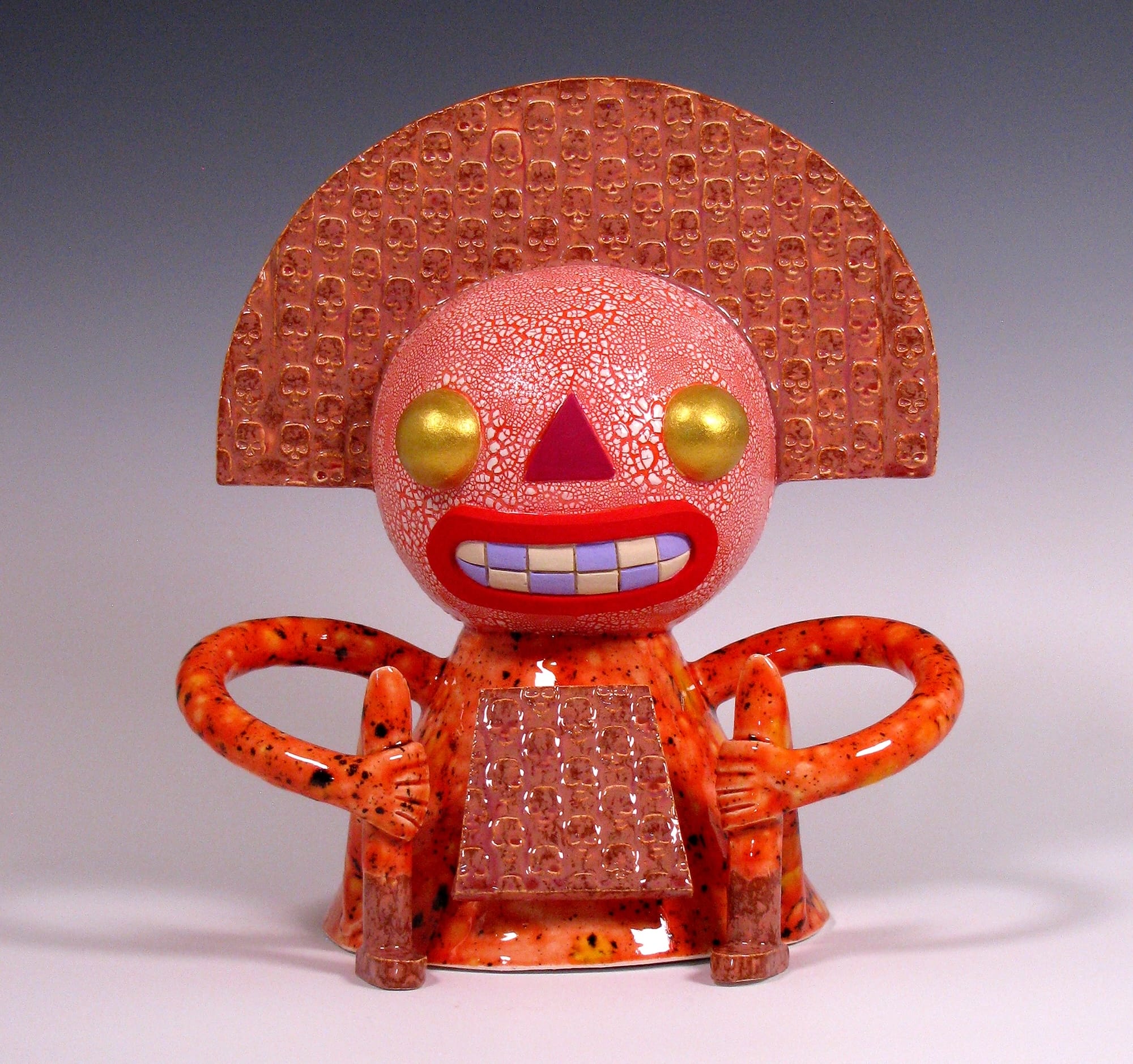
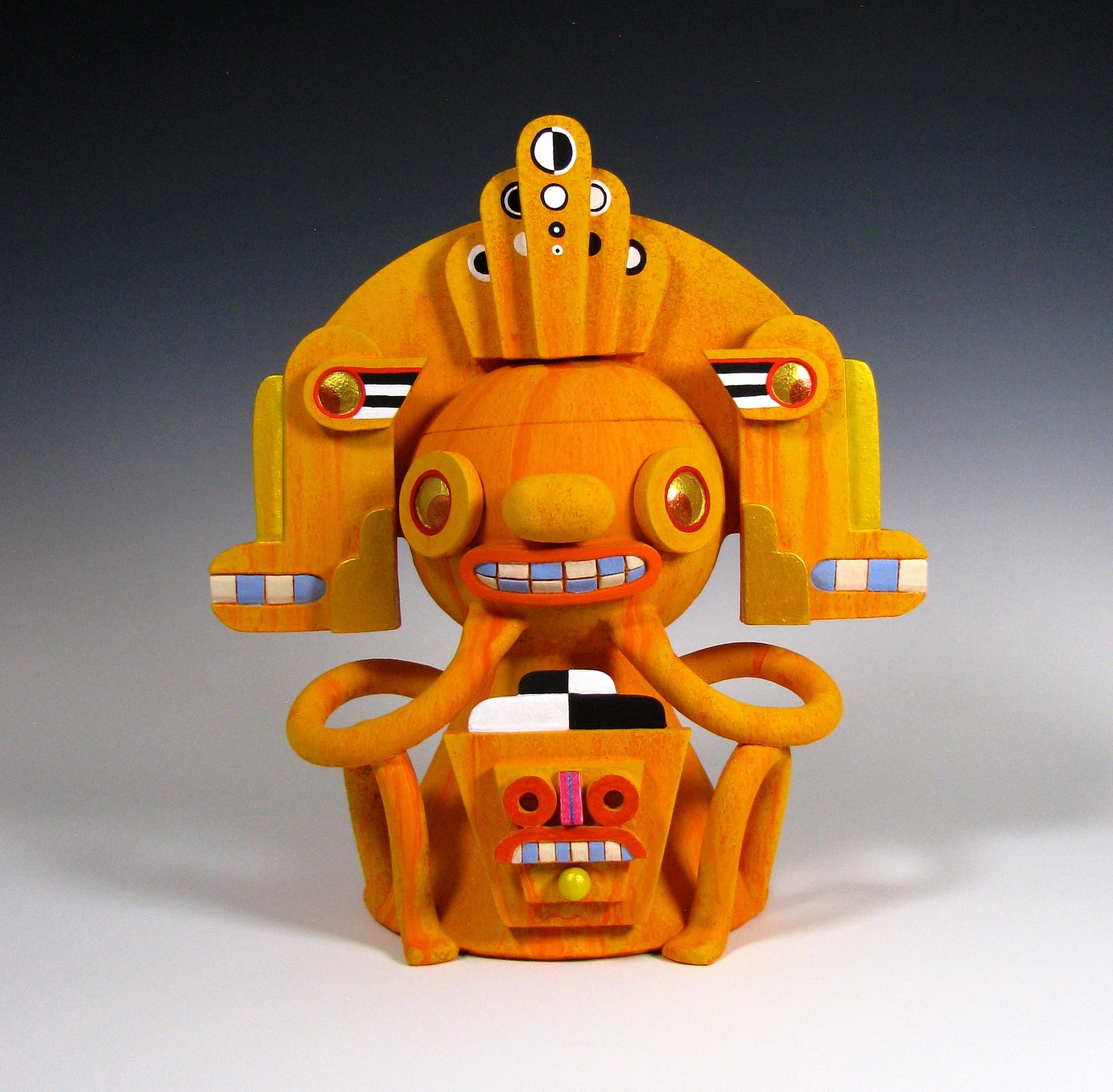
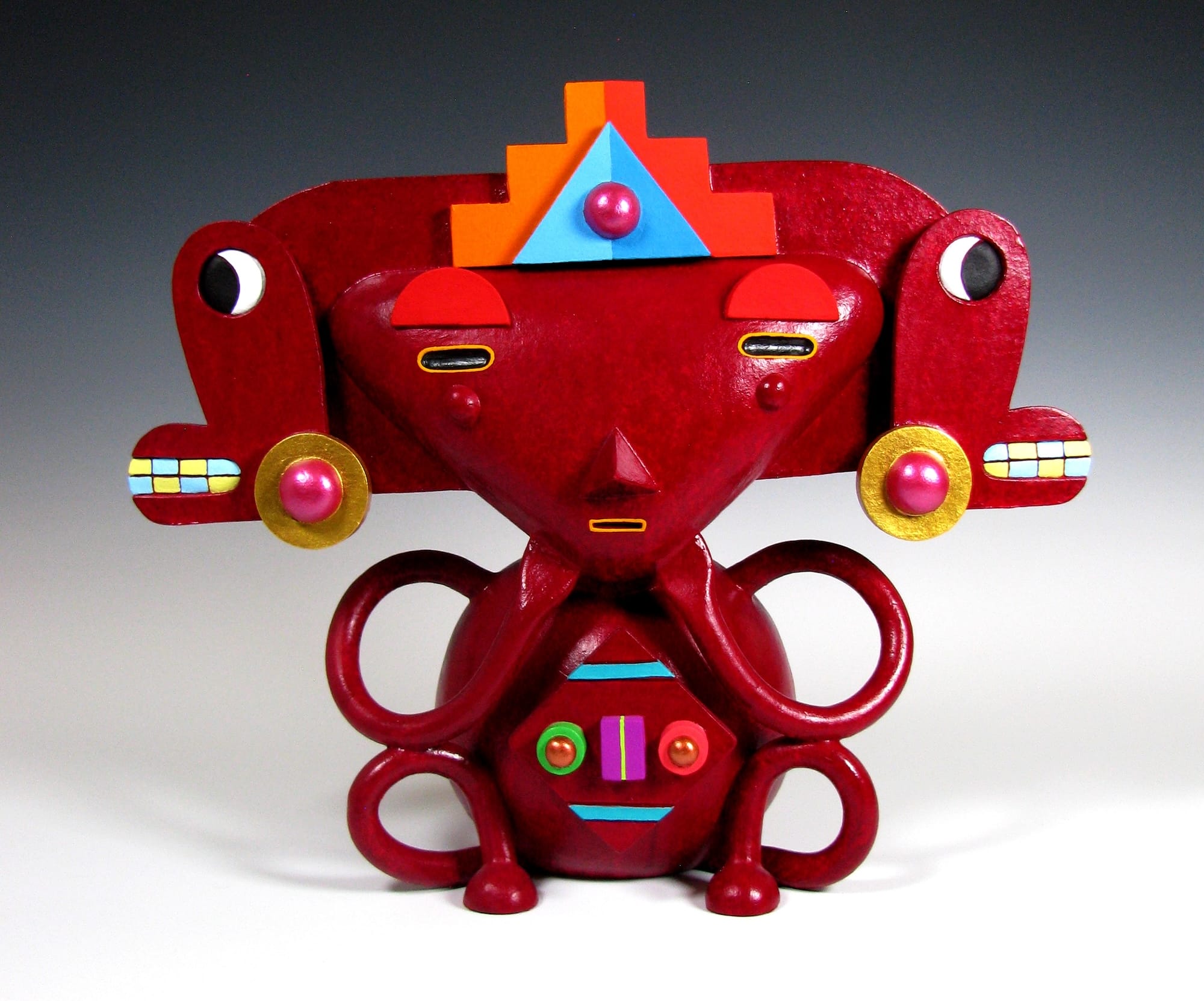
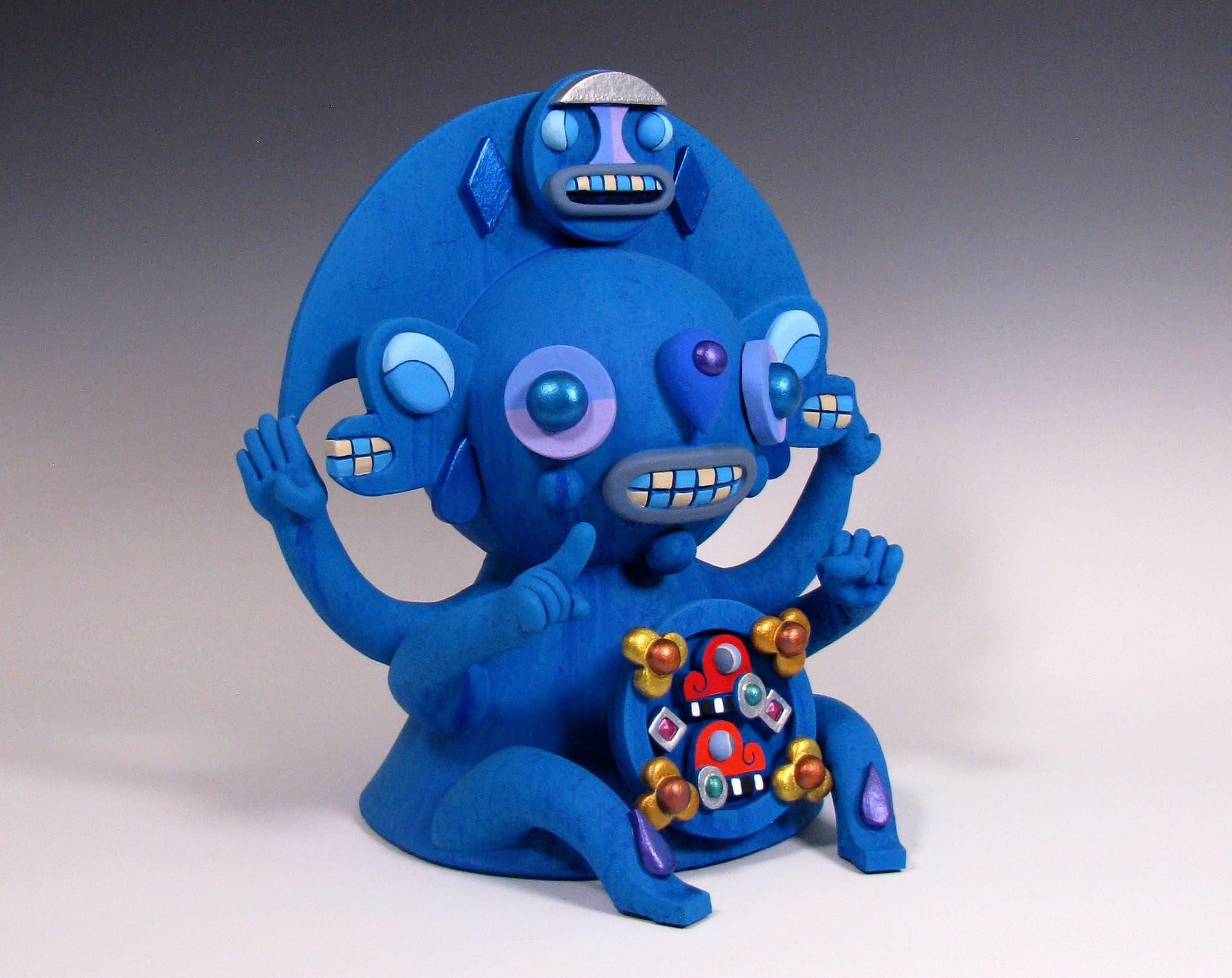
Lehman’s work has one foot in the advanced civilizations of the past and another in the distant future, a time long after today’s developments around robotic and machine learning technologies. His current show Ancestral Androids at Hecho a Mano delves into a kind of future past inspired by science fiction, where modern tech and prehistoric visual culture merge in unexpected and idiosyncratic ways.
The New Mexico-based artist imagines his pieces being excavated by archaeologists many years down the line, when their exact origin and function has been lost to time. “I resist providing complete explanations because archaeology rarely offers certainty,” Lehman says in a statement. “We reconstruct civilizations from fragments, projecting ourselves into the spaces left empty by time.”
Lehman’s work also nudges the nature of information itself, as we find ourselves in an era of data and archives (digital and otherwise) at a scale unprecedented in human history. It begs the question: in the next thousand years or more, what information will remain? And how will AI influence which stories are told and what is considered fact or myth? These technologies are already reshaping our minds.
“Artists understandably worry about AI appropriating their ideas,” Lehman says. “My own work, however, remains deeply rooted in the physical act of making—there is still no machine that can throw a ceramic vessel with the intuition, hesitation, and accumulated experience of human hands. Clay continues to preserve evidence of the maker in ways that cannot be simulated.”
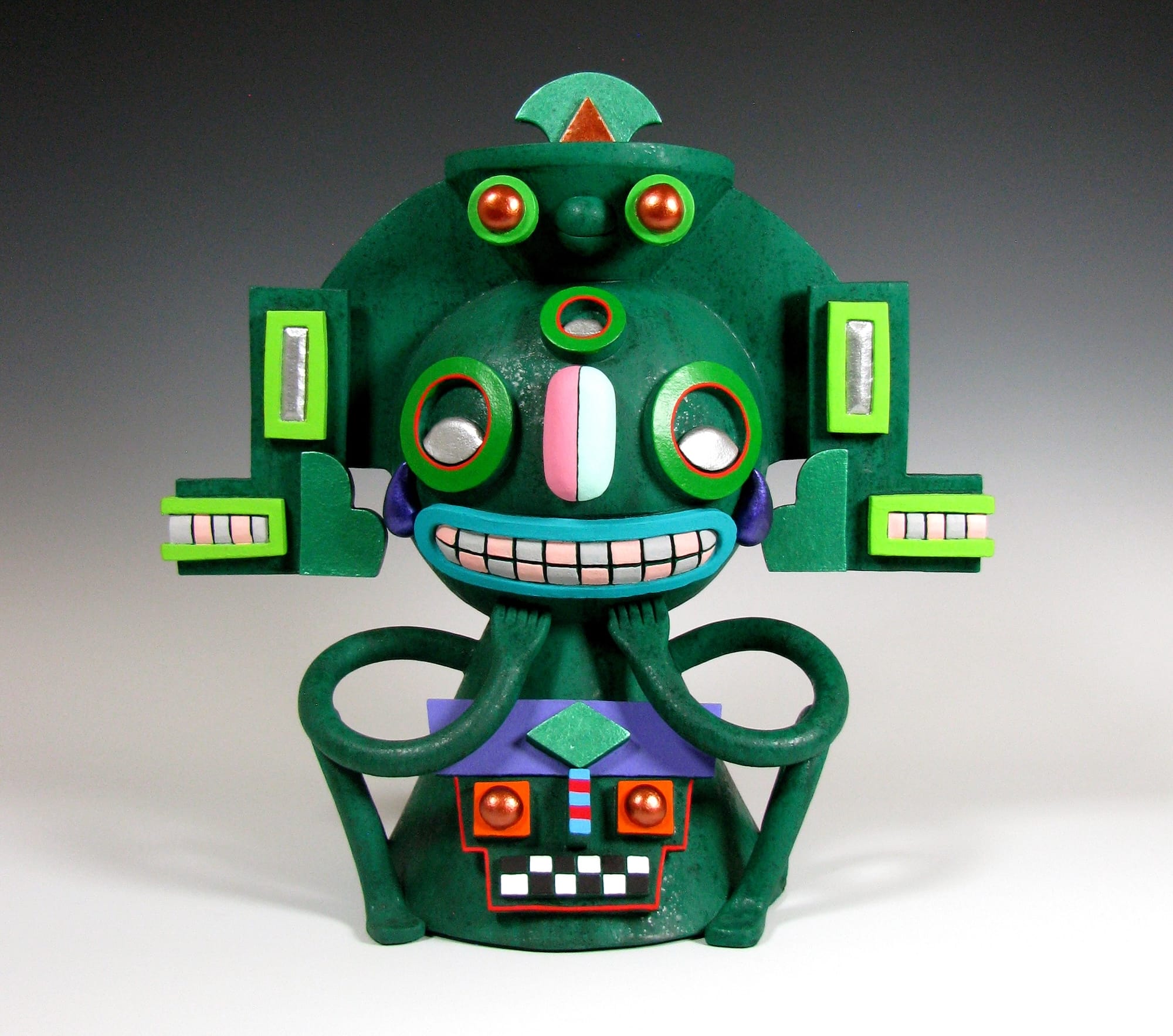
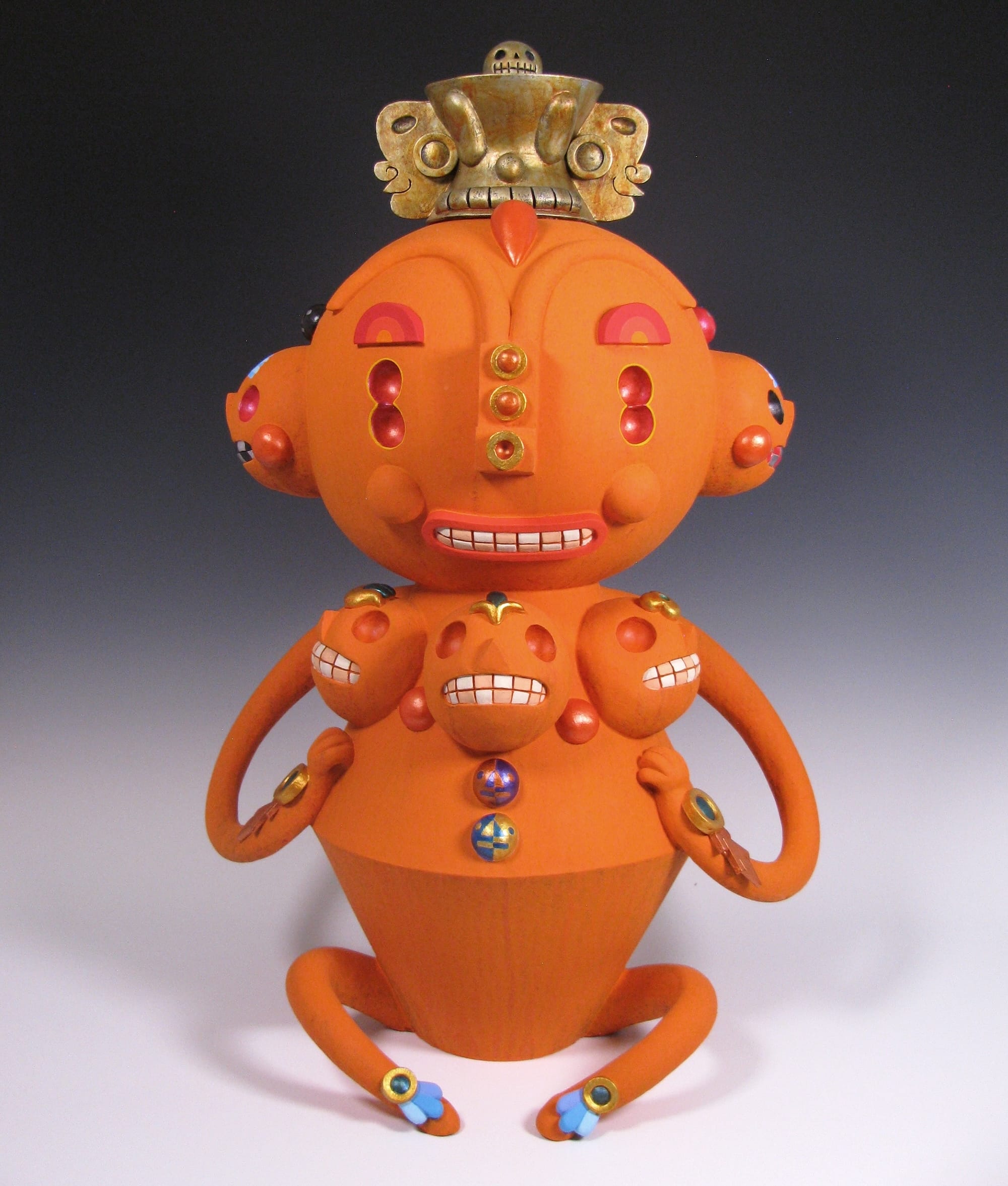
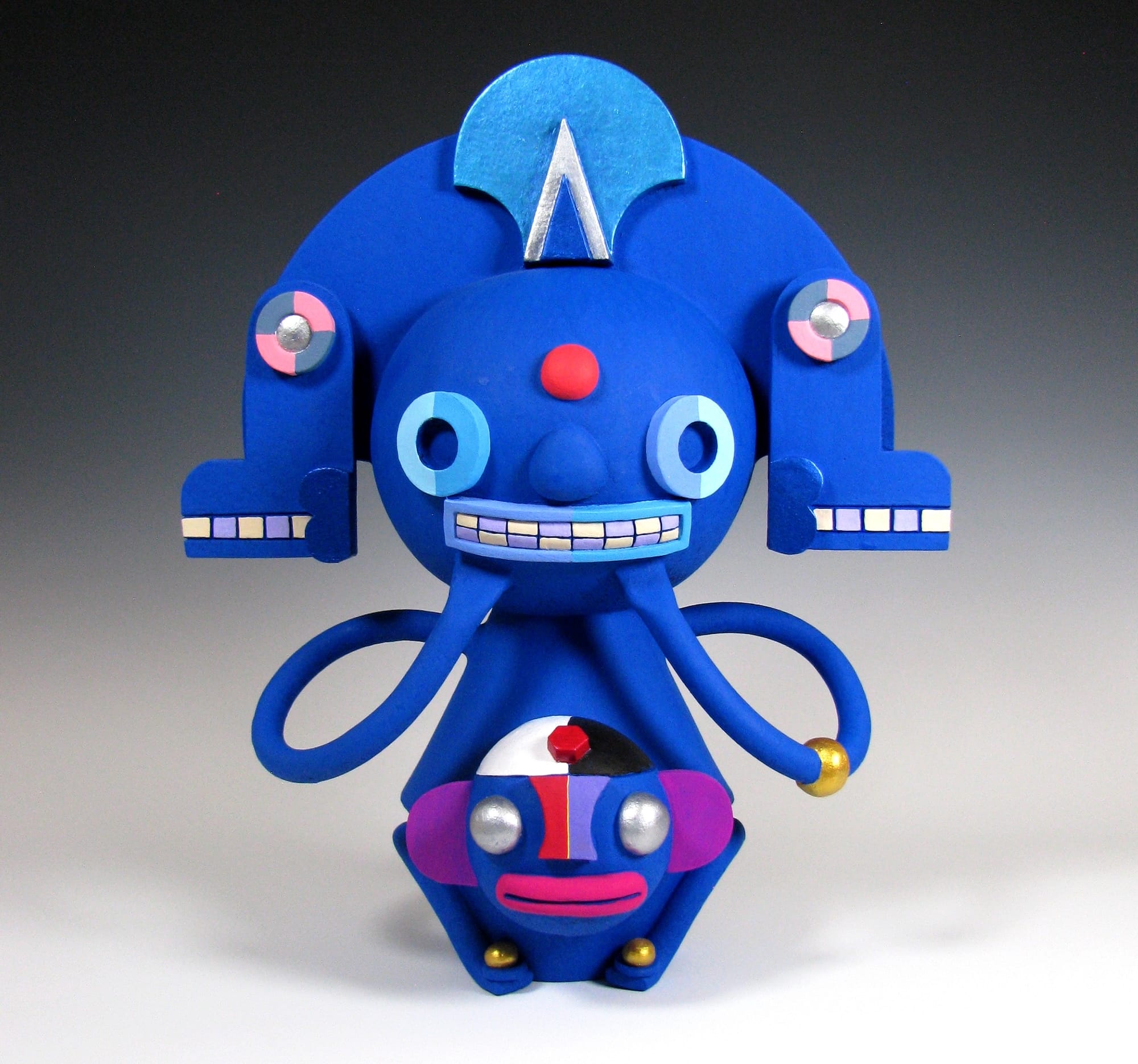
Vividly colorful characters with titles like “The Mother of Machines” and “Sapphire Sage” nod to sacred figures with enigmatic associations. They’re cartoonish, and occasionally clownish, with expressions that read as slightly unsettling. It’s almost as if the characters are devoid of any real feeling, like both a robot or a carved stone. Additional faces often appear on bellies or foreheads, suggesting collectivity and shared consciousness. “The sculptures ask us to consider what happens when artificial beings become old enough to have ancestors, old enough to leave ruins, and old enough for their own history to become myth,” the artist says.
Ancestral Androids continues through November 1 in Santa Fe. See more on Lehman’s Instagram.