Timeless Totemic Figures by Izumi Kato Coexist in an Otherworldly Aquatic Realm
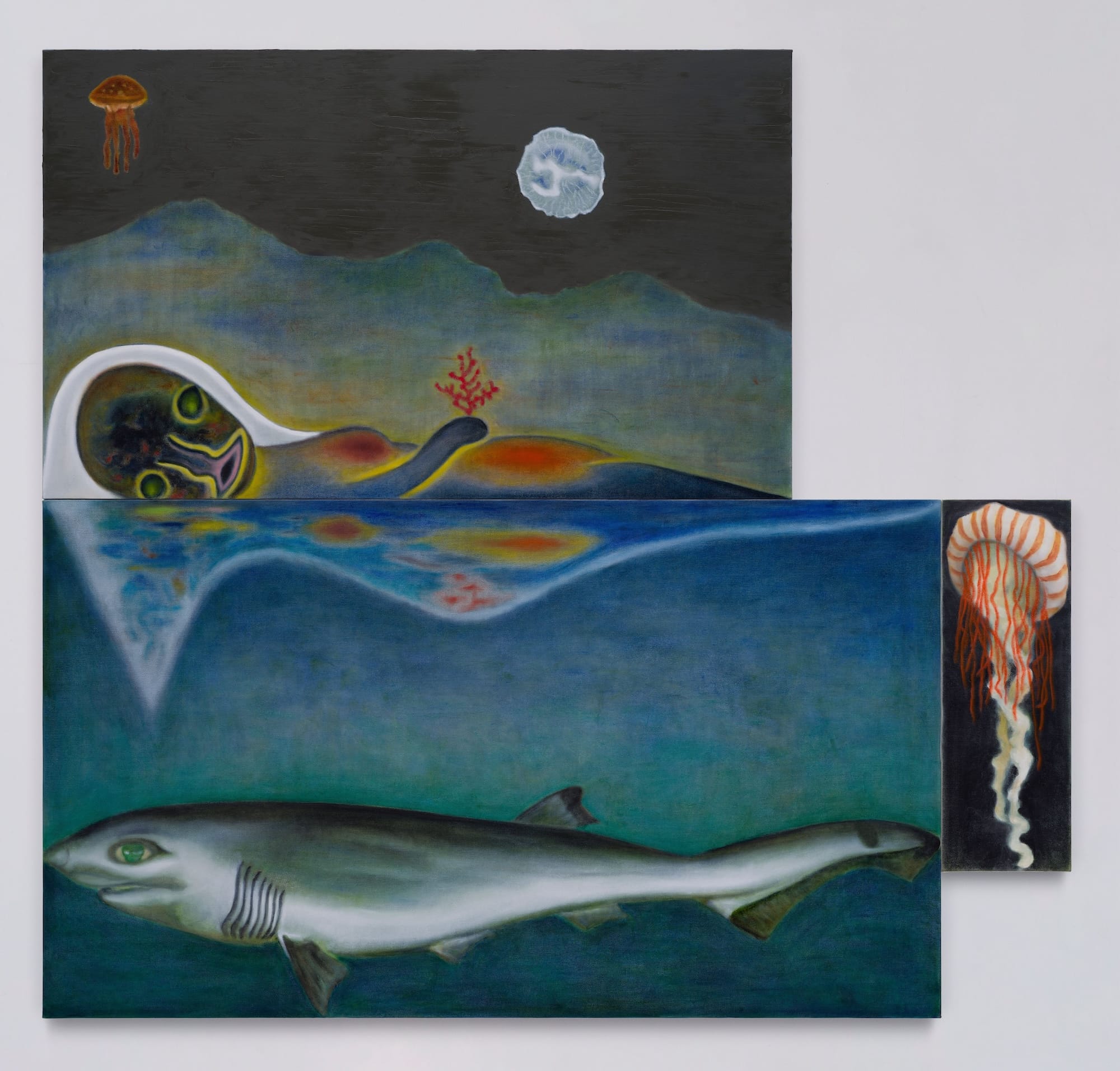
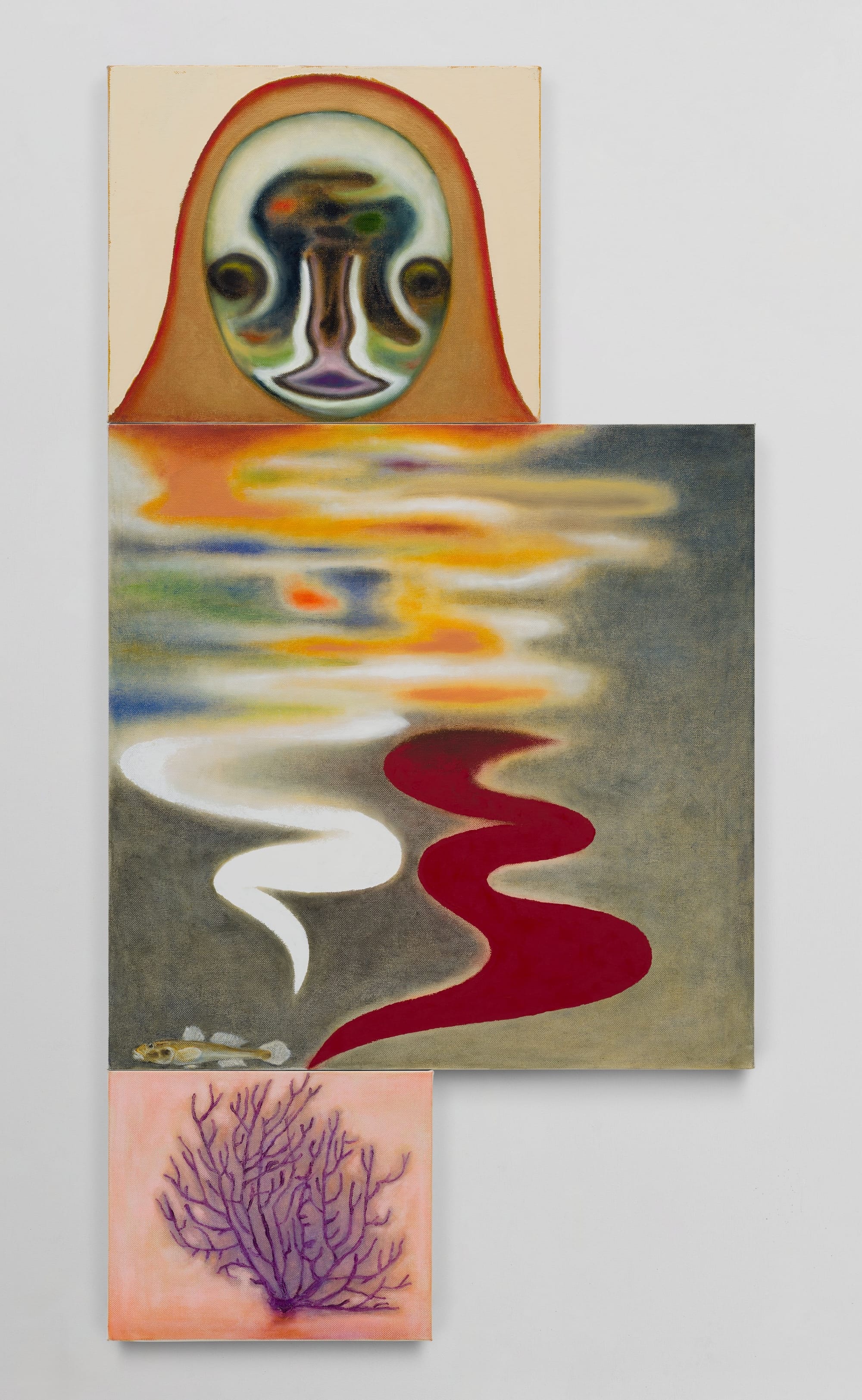
In Izumi Kato’s surreal paintings, stones appear to float, bodies disappear in water, and feet become fish tails. In his new eponymous solo exhibition at Perrotin, two- and three-dimensional works converge in a dreamlike grouping where time slips, bodies morph, and space is simultaneously flattened, compartmentalized, and stretched.
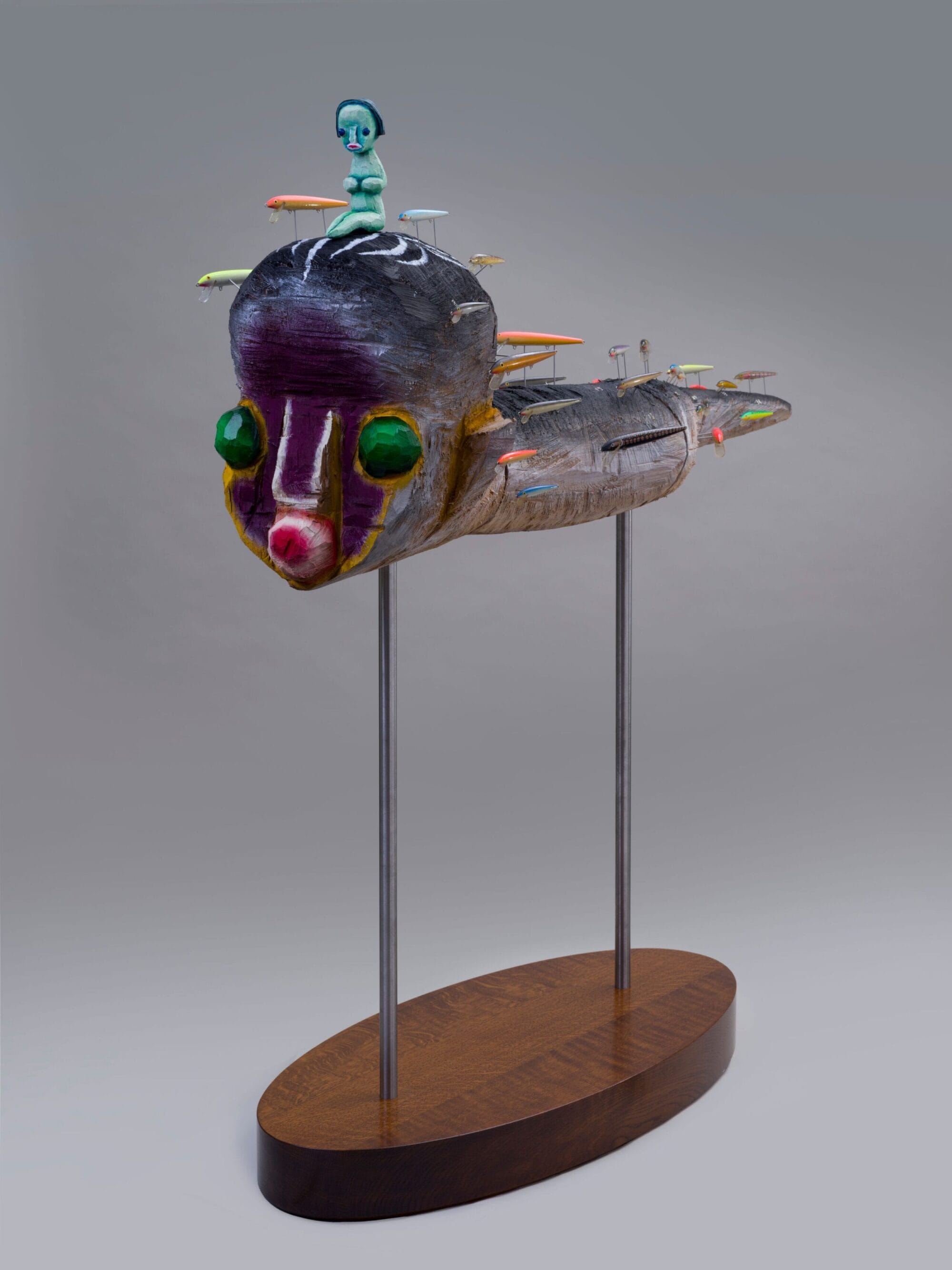
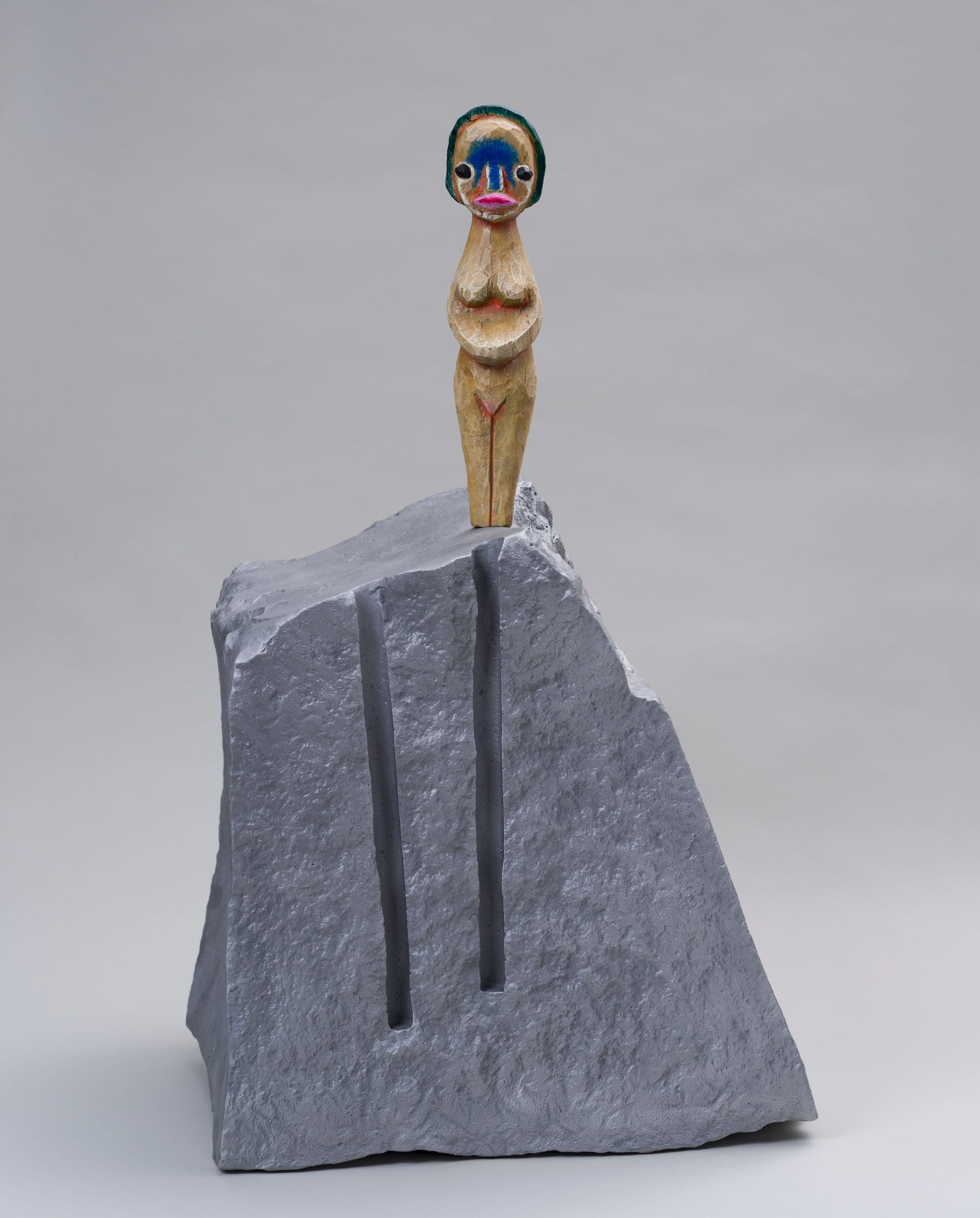
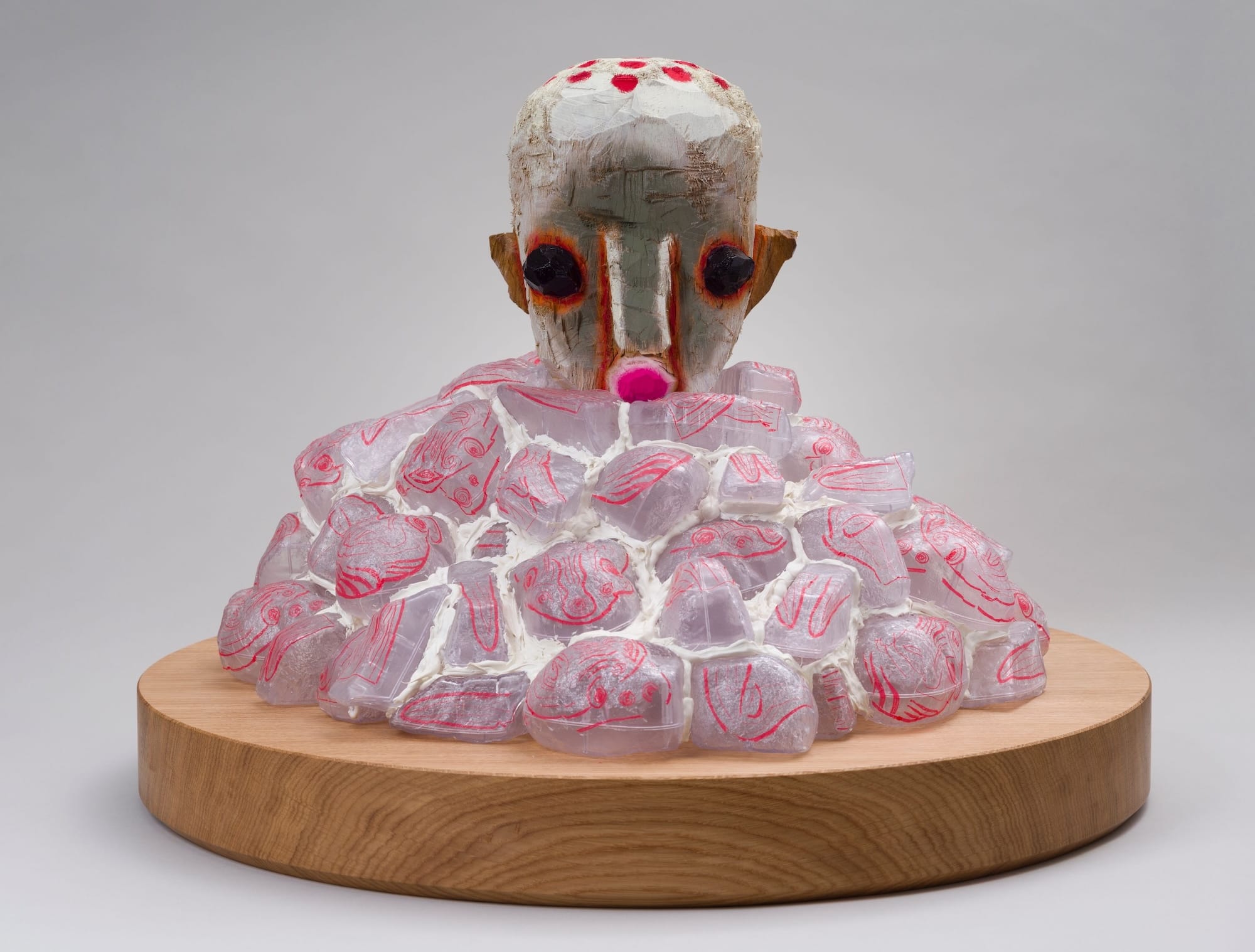
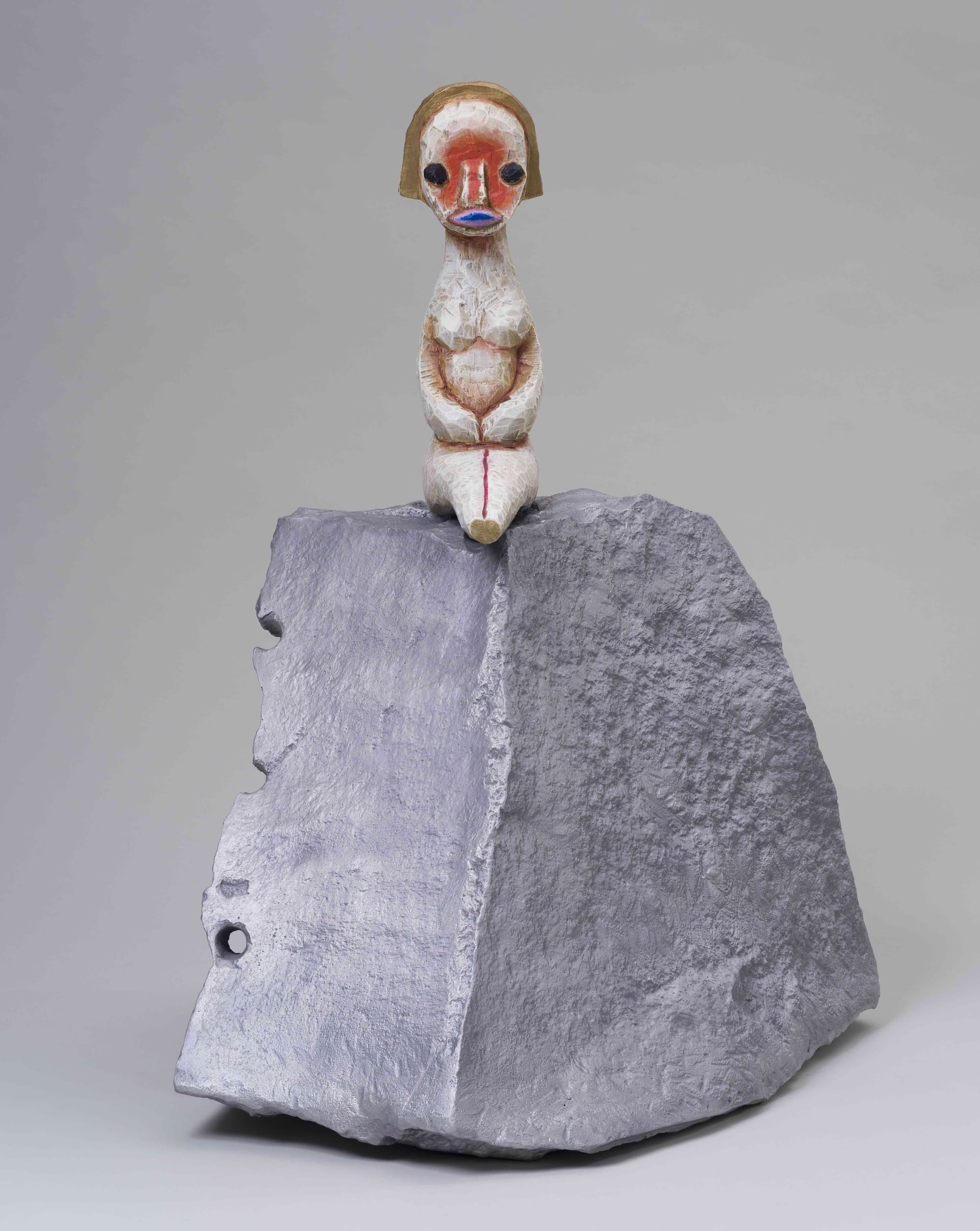
The Tokyo- and Hong Kong-based artist’s practice has evolved from painting to include wood forms, soft vinyl sculptures, and cast metal. As Kato explores materiality, his sculptures emerge from the same almost alchemical approach to canvas. He paints the tiny wooden figures with the same approach he does a flat surface, and the stones are actually lightweight cast aluminum, which at times the artist suspends from the ceiling in a play on perception.
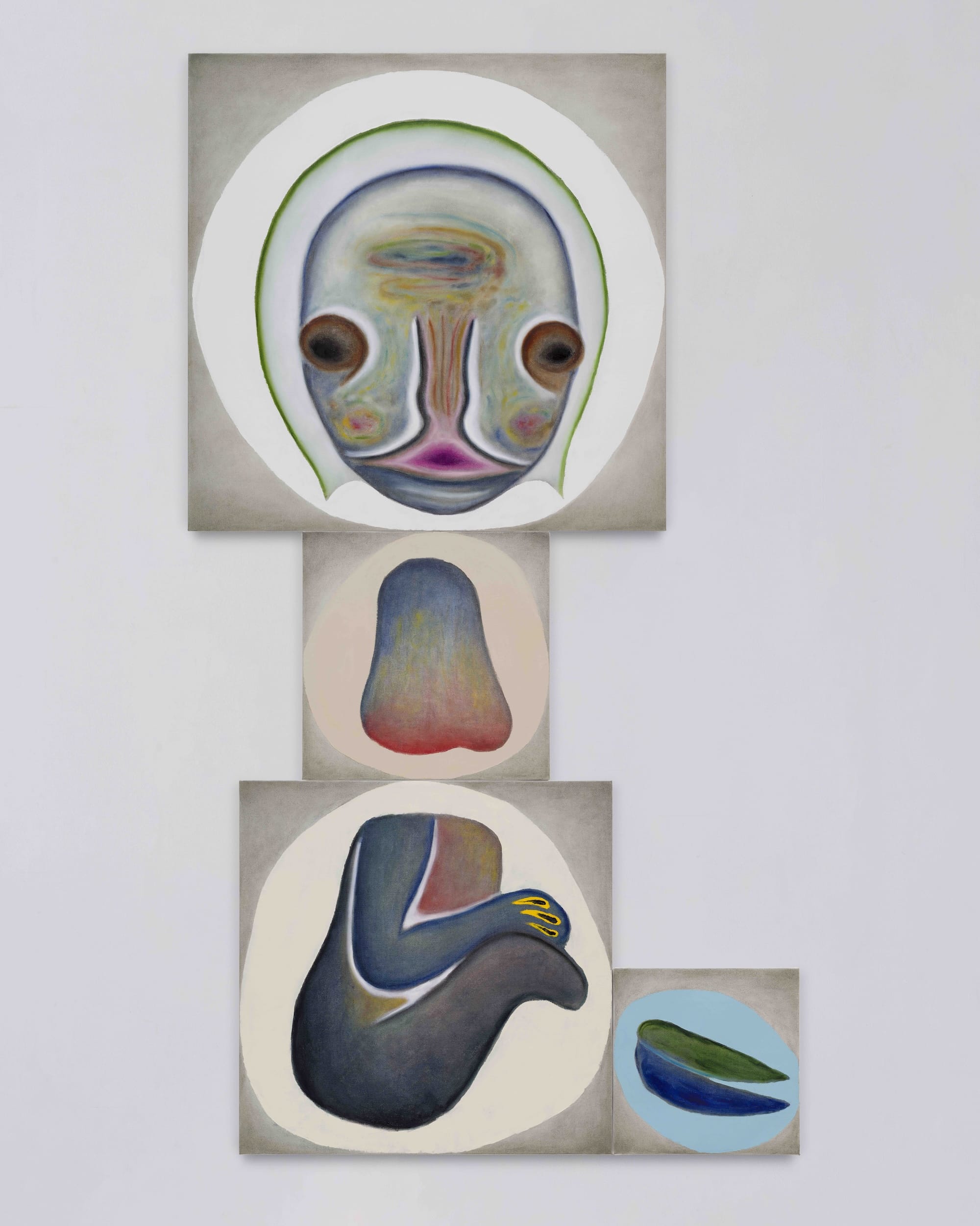
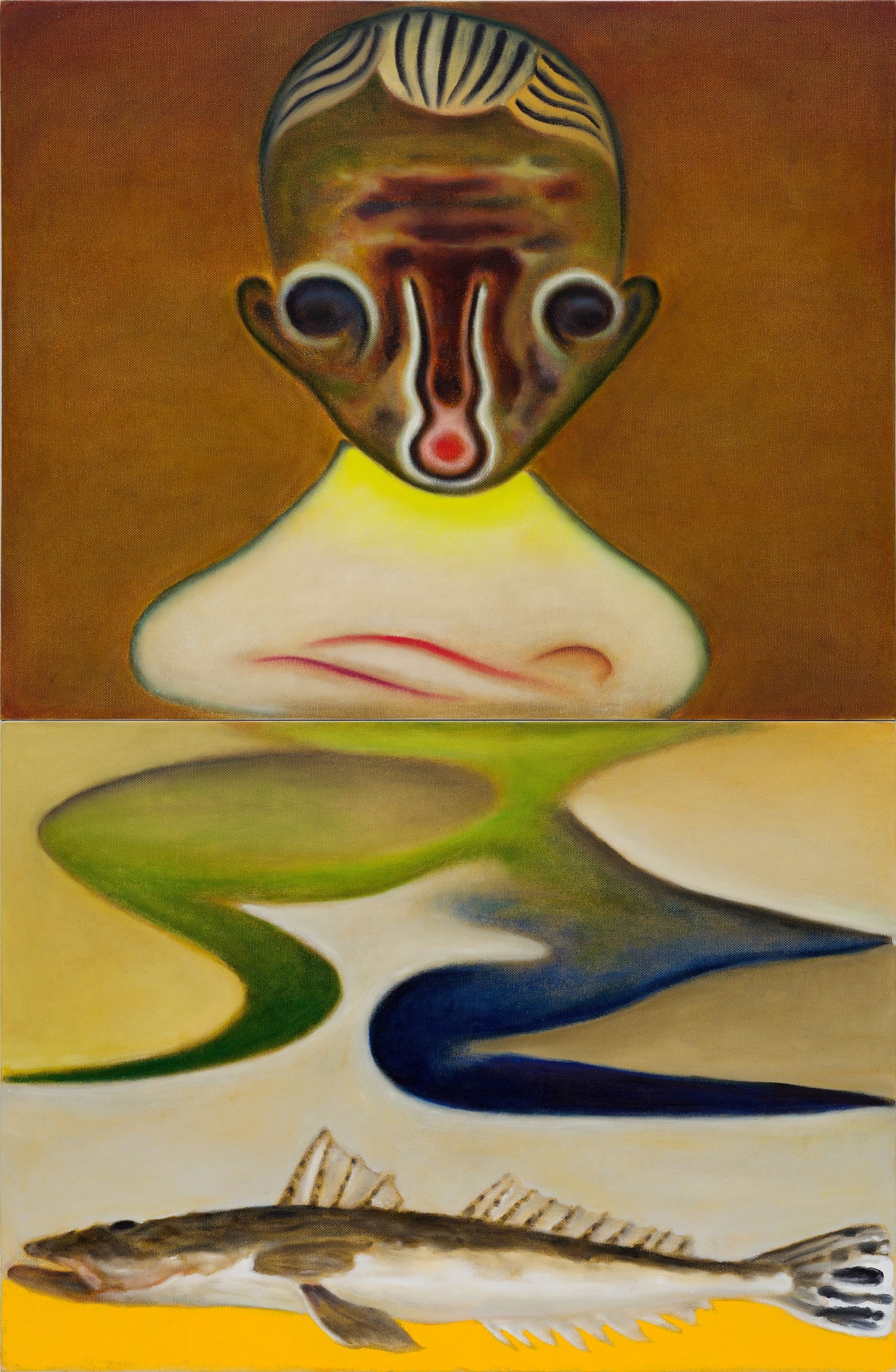
Kato has long painted what he refers to as hitogata, which literally means “dolls” in Japanese. These humanoid figures often emerge from totem-like stacks of multiple canvases that evoke the surrealist drawing technique of cadavre exquis, or exquisite corpse. The figures’ eyes swirl like tiny pools, and their noses and mouths uncannily merge, blending into nebulous forms around the forehead or the mind. Sometimes their limbs or torsos transmogrify into amphibious legs or the refractions of light in water. Their enigmatic features and vacant stares transcend time; they may be visiting from the future, or they could be ancients.
A repeating motif of marine creatures nods to Kato’s longtime love of fishing, itself a primordial human activity. An uncanny wooden sculpture perched on a stand consisting of two rods, for instance, has the trophy-like appearance of an aquatic animal or a lure, and its small rider evokes a kind of spiritual or metaphysical connection between humans and the sea. Other compositions incorporate an above-and-below view of pelagic ecosystems replete with coral, jellyfish, and a shark.
Kato’s protagonists seem to alternate between appearing and disappearing into their surroundings, their expressions inscrutable. Do they feel threatened? Hopeful? Concerned? In an exhibition essay, Katonah Museum of Art director and chief curator Michelle Yun Mapplethorpe says, “When considered as a whole, this new body of work affirms the undeniable bond between humanity and nature, and the enduring continuum of the creative impulse across chronologies and geographies to seek the answer of what it means to be human.”
The exhibition opens tomorrow and continues through December 19 in New York City.