Woo Jin Joo Conjures Mythic Tales from Uncanny Sculptures of Fiber and Found Objects
Stumbling upon a battered end table or lost mitten is an opportunity for magic in Woo Jin Joo’s mind. The Seoul-born artist is known to gather furniture, garments, and other objects that have been left behind while walking near her home in London or commuting to her studio in Deptford. “I am not actively looking for anything in particular, but I discover them by happenstance, and they become meaningful; they provoke my imagination,” she says. “This is how I feel like we conjure meaning in our lives.”
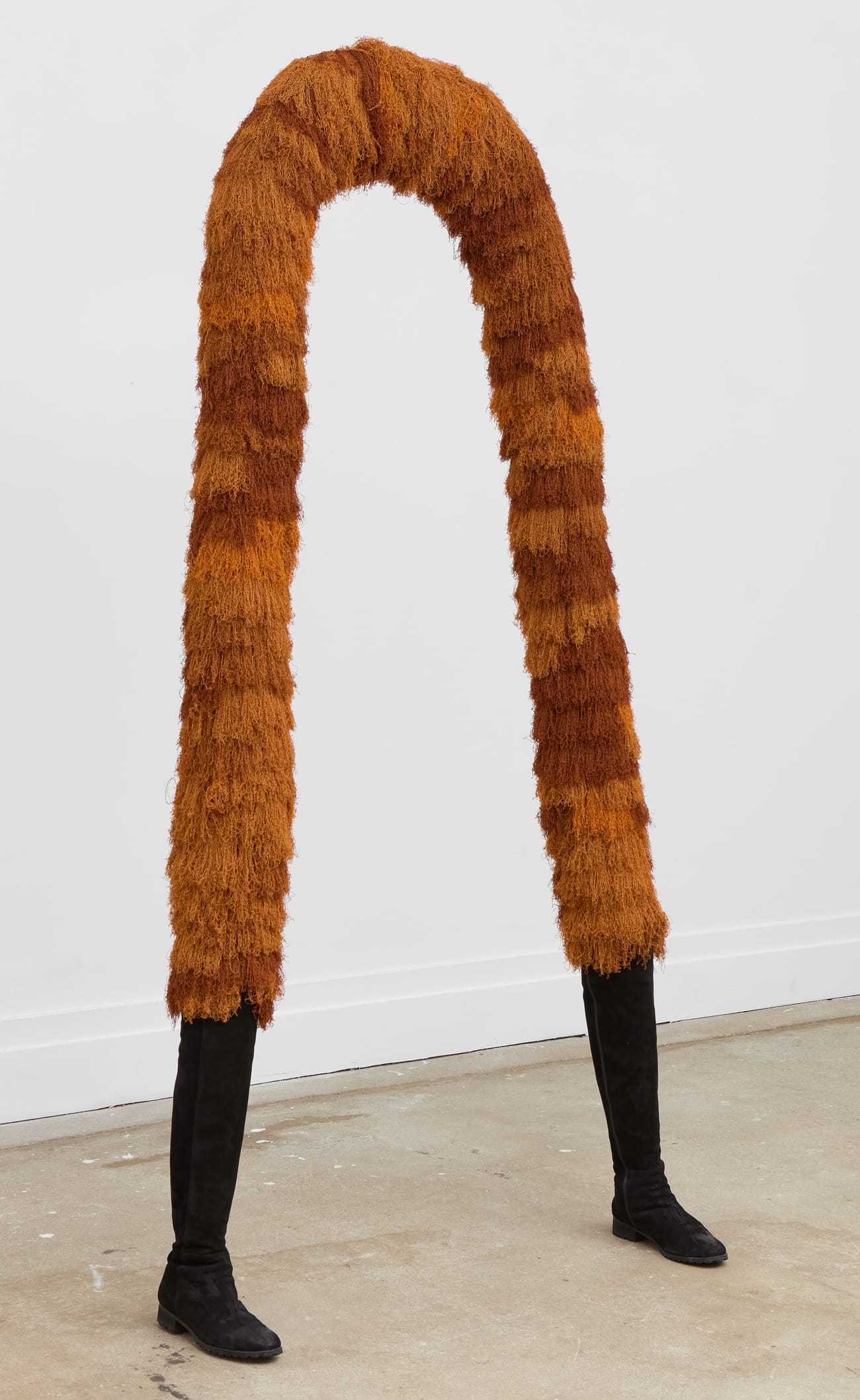
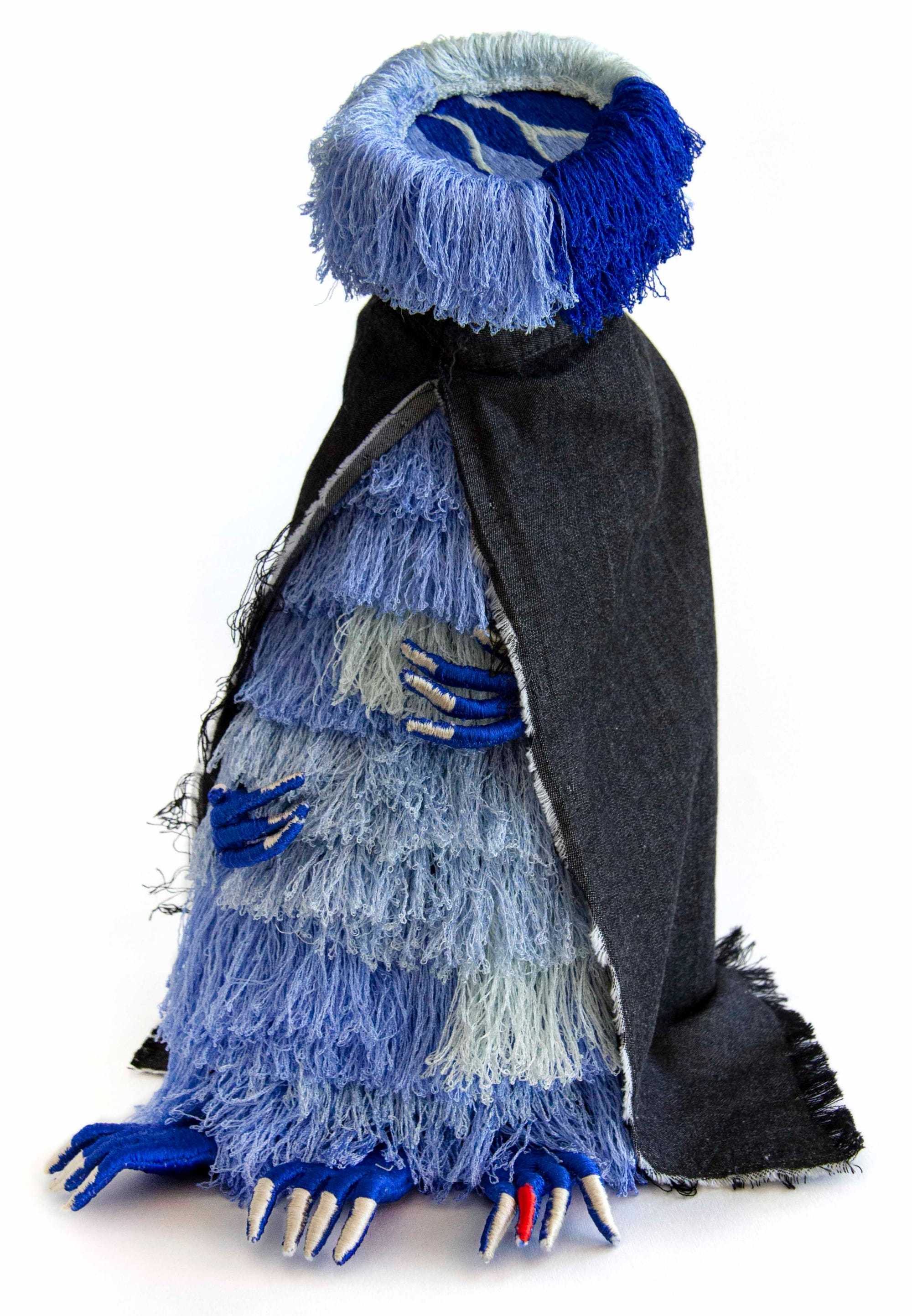
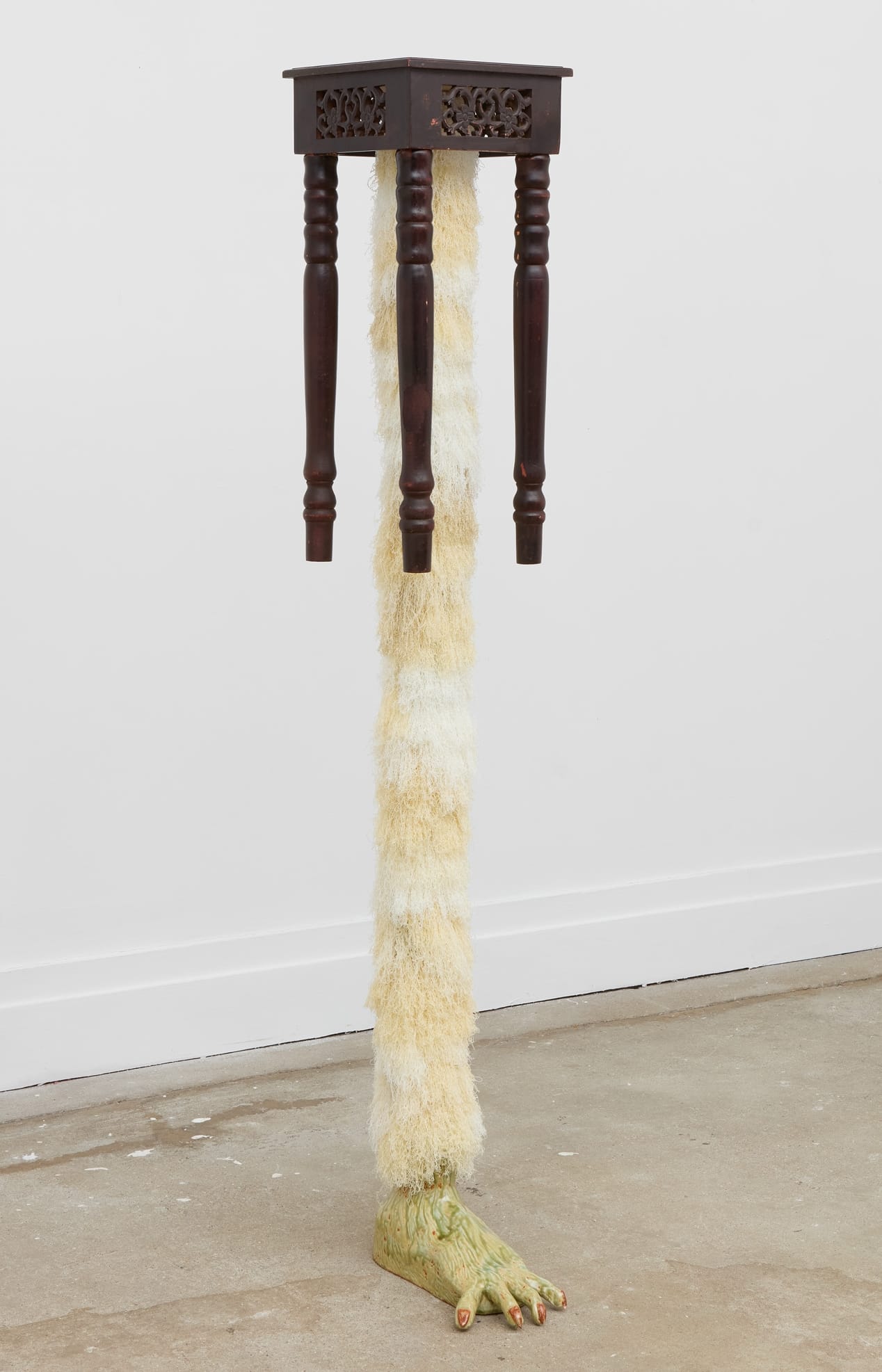
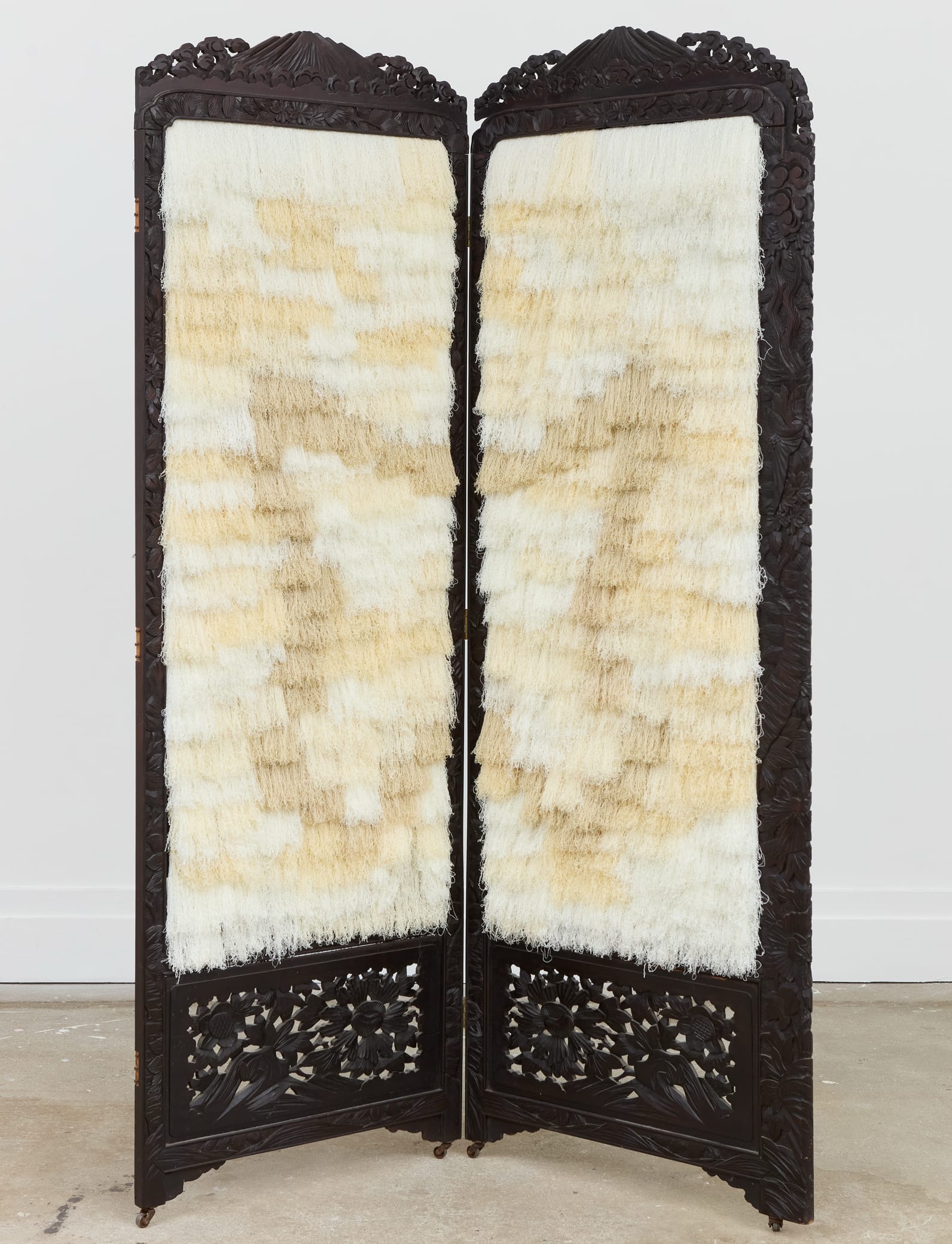
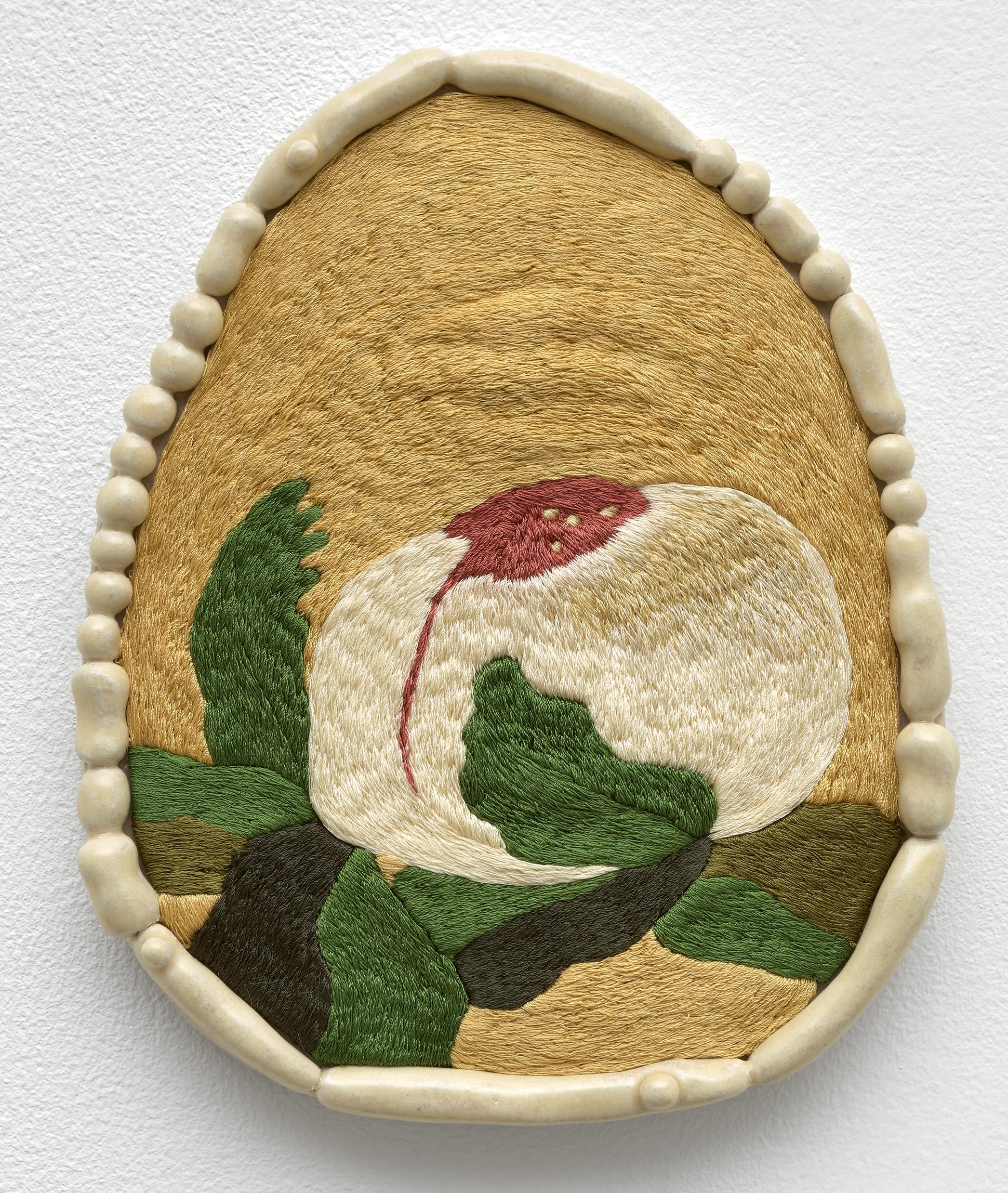
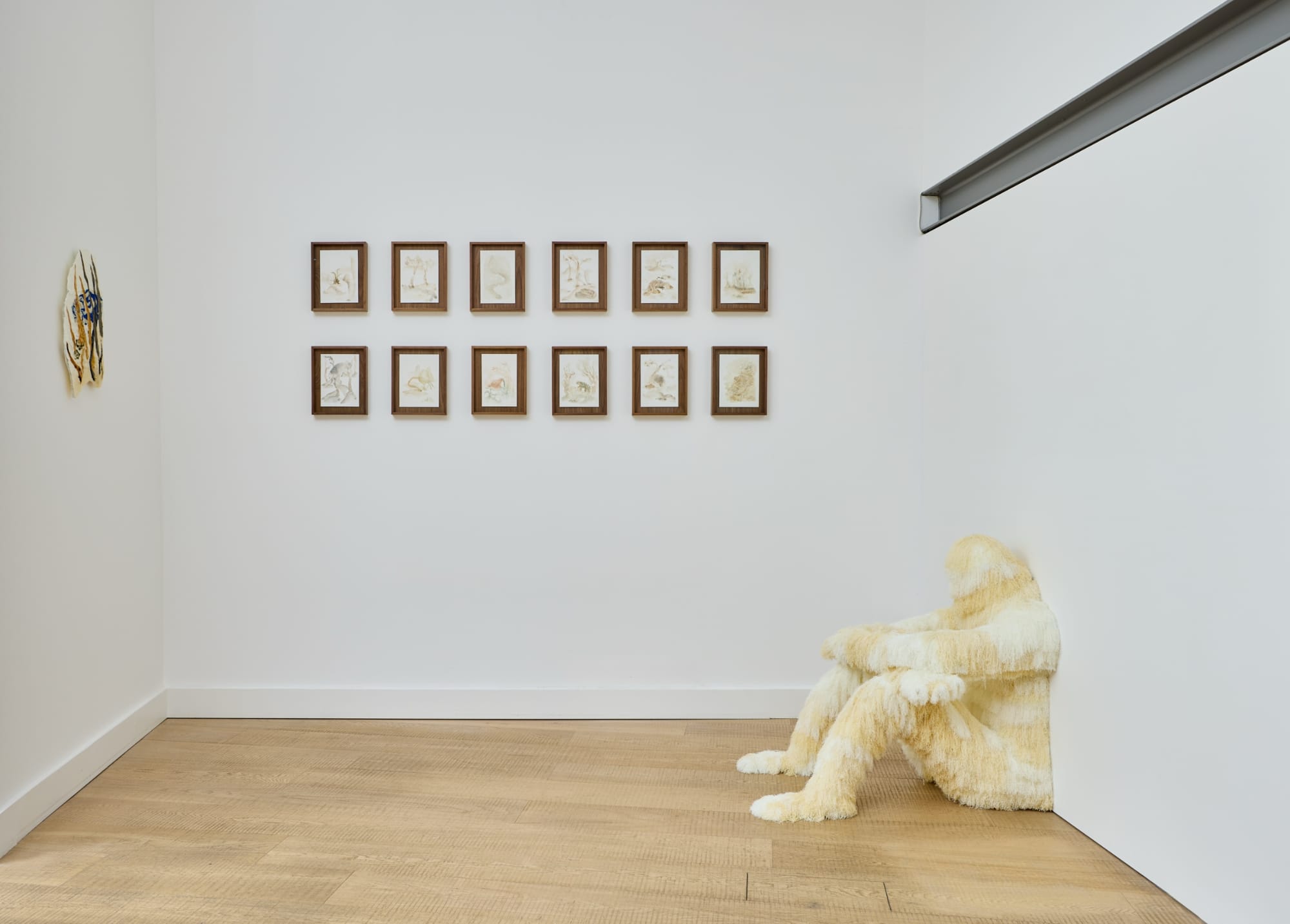
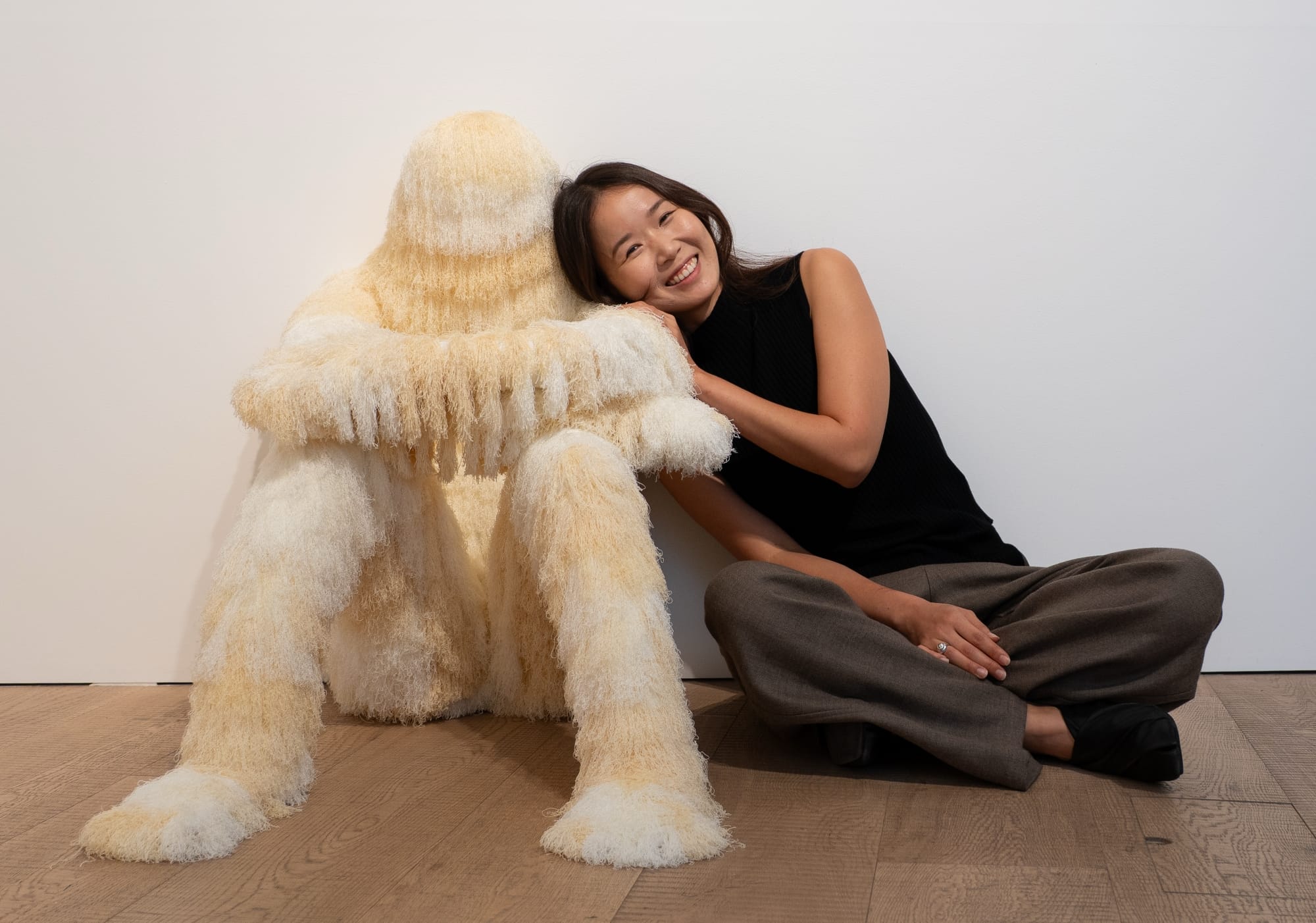
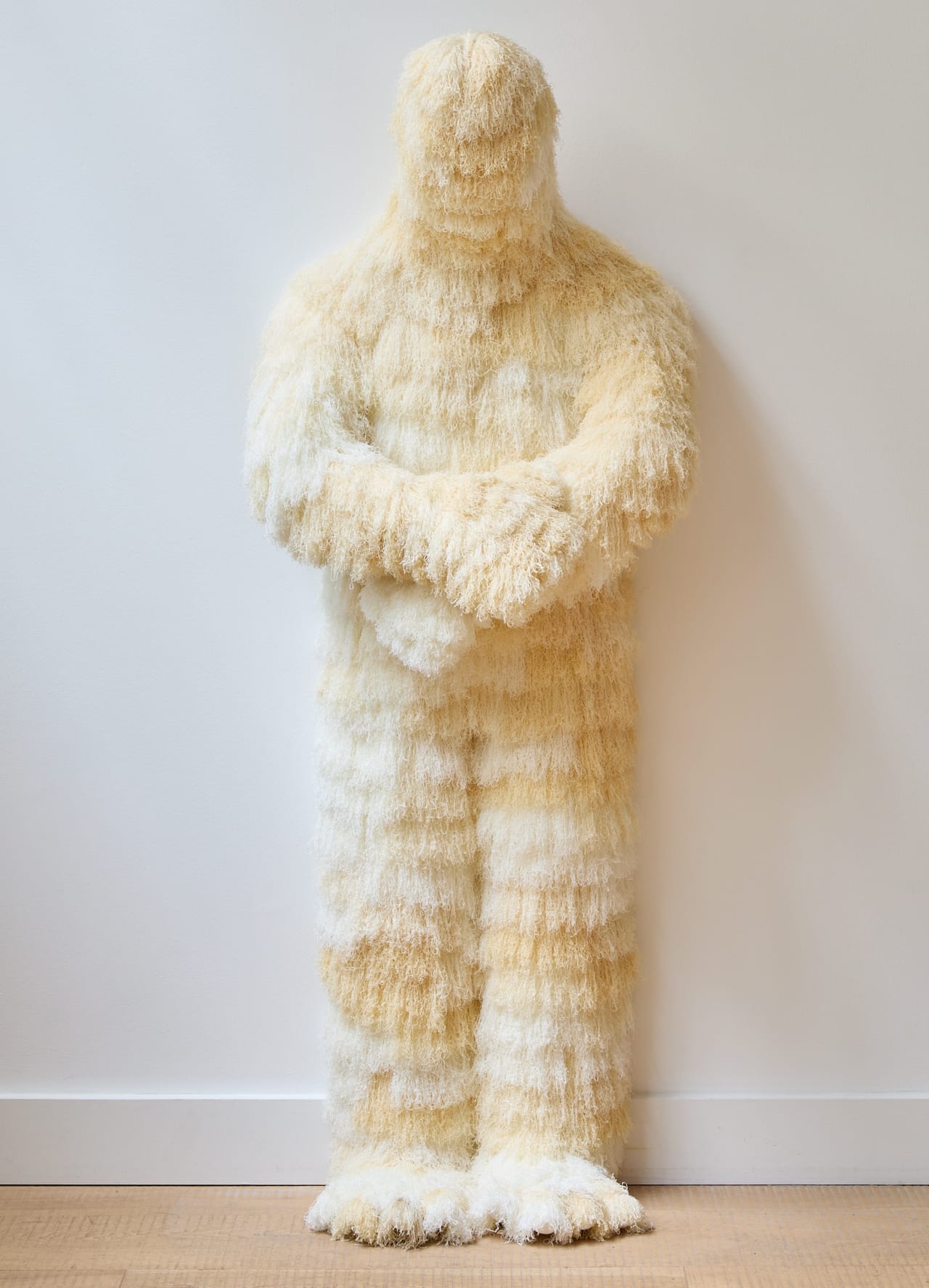
Combined with clay and shiny, viscose thread, these found items transform into uncanny sculptures that often meld animal bodies with domestic fixtures. Human-sized figures cloaked in costumes of white and beige fringe slump on the floor or stand calmly against the wall, as if waiting to be spoken to. Other works similarly merge body parts with unusual shapes and forms, including the black boot-wearing ochre arch of “For Those Who Wade” or the totemic leg topped with a carved wooden table in “Murmur.”
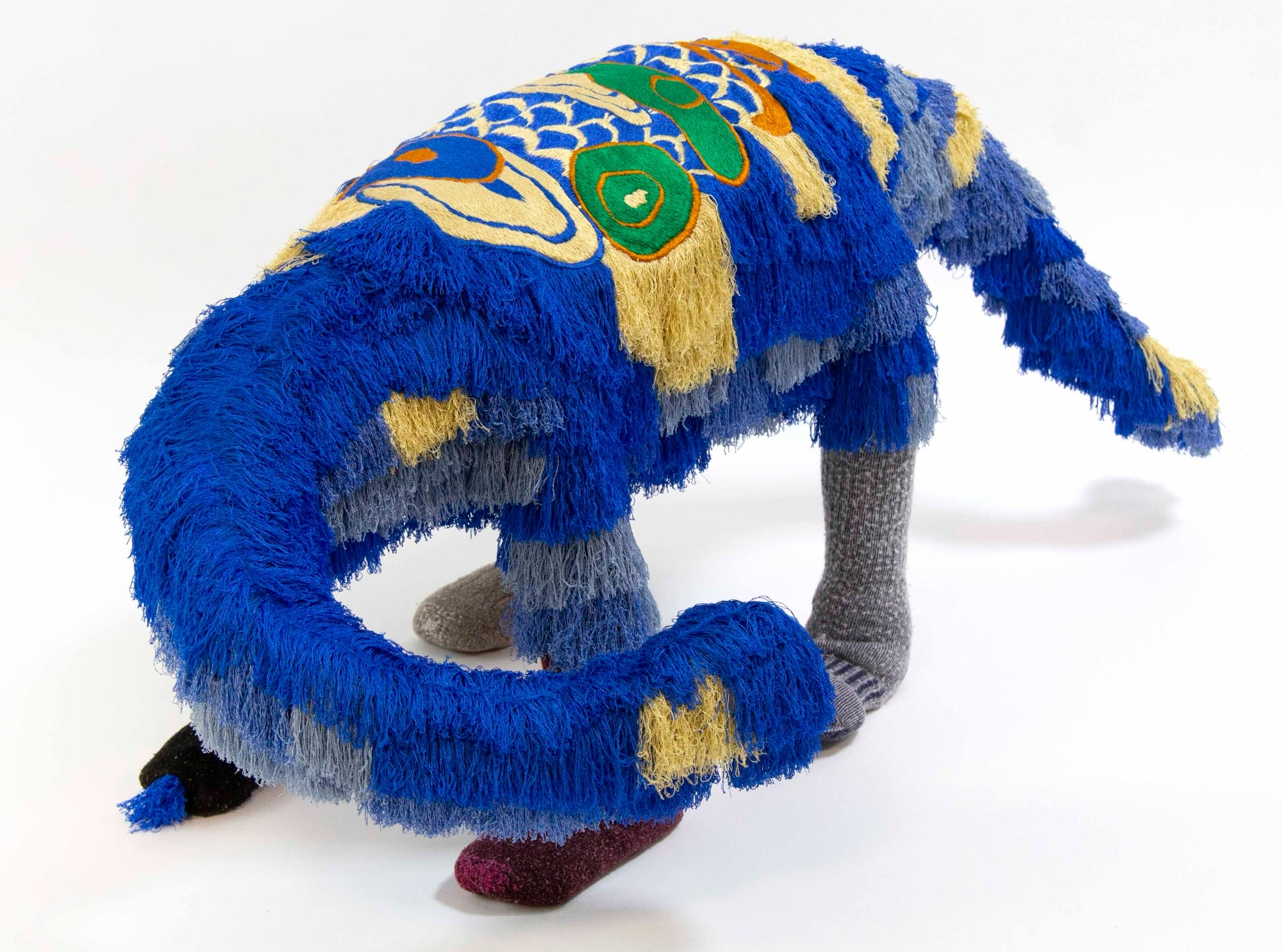
Tapping into the strange and surreal is a way for Joo to transcend the limits of our perception and explore how mythology and folklore might provide different ways of gaining knowledge and wisdom. She believes that “even the most mundane interactions can harbour potential for meaning and transformation” and that her own experience living between cultures has allowed for a more fluid approach. “I’m Korean-Chinese, and I have been raised between the two countries. The culture and stories from these East Asian countries form my memory and psyche. But equally, the physicality of my living in London, and the physical encounter with certain objects is what brings out certain imagery or ideas,” she shares.
Like many artists who gravitate toward found objects, part of the appeal of a forgotten or discarded material, Joo explains, is the lives they’ve lived before coming into her possession, adding: “I am left to imagine, build, and find meaning in objects that has its own history. Naturally, it is not always that I discover an object that draws me, but I still have other creative ideas that exist within my imagination that I can turn to.”
Scale is also important for Joo, and several works stand as tall as the artist. Height and heft have a presence that a smaller piece hung on the wall can’t match, prompting viewers to move around the sculptures and consider the size of the works in comparison to their own bodies. “The larger sculptures feel extra enchanting to me too as the artist, from the process of ideation to production, of how what once lived in my mind comes to inhabit a corner of my studio space as a fully animated being,” she says.
If you’re in London, stop by Ruup & Form before November 13 to see Joo’s solo exhibition Bodily Inbetweenness. In early 2027, she’ll also have work on view at the Harley Foundation in Nottinghamshire. Until then, keep up with her practice on Instagram.